The Lost Fabergé Eggs: Eight Imperial Treasures Still Waiting to Be Found
 Romanov dynasty" class="hero-image">
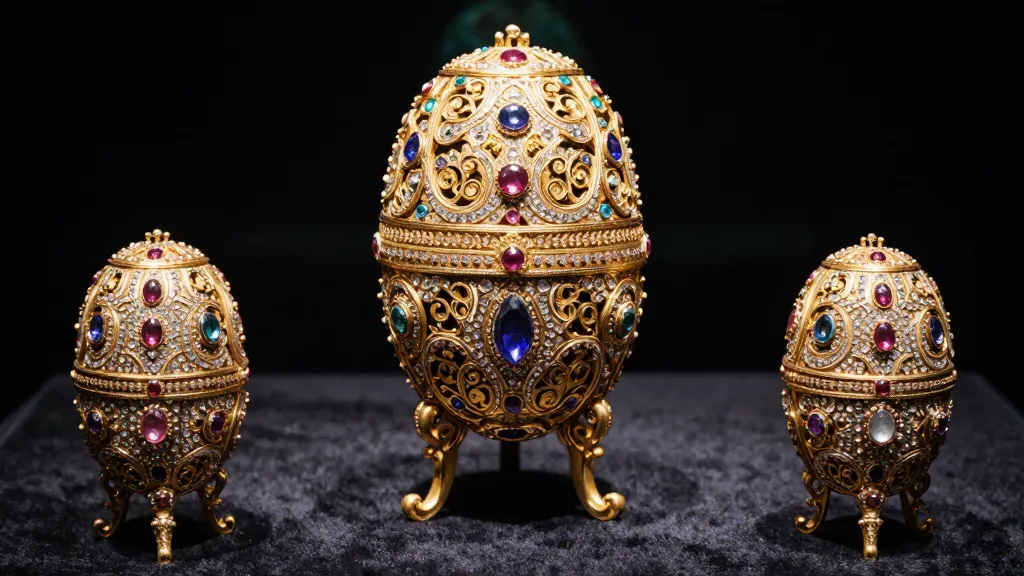
Somewhere in the world — in a private collection, an attic, a safety deposit box, or perhaps sitting unrecognized on a dusty shelf — there may be a small, ornate jewelled object worth tens of millions of dollars whose owner has no idea what they possess. This is not a fantasy. It has already happened at least once. In 2014, a man in the American Midwest who had purchased a small gold egg at a flea market for approximately $14,000, intending to sell it for scrap metal, discovered that the object sitting on his kitchen counter was in fact the Third Imperial Fabergé Egg of 1887, one of the legendary jewelled Easter eggs created by Peter Carl Fabergé for the Russian royal family — an artifact valued at approximately $33 million. The egg had been bought at a junk market in the 1960s for about $500, sat in obscurity for half a century, and was nearly melted down for its gold content before its true identity was recognized. The Third Imperial Egg was one of 50 Imperial Easter eggs created by the House of Fabergé for the Romanov dynasty between 1885 and 1916, each a masterpiece of goldsmithing, enameling, and mechanical ingenuity containing intricate surprises — tiny portraits, mechanical animals, working clocks, miniature replicas of imperial carriages and palaces. Of the 50 Imperial eggs, 43 are accounted for. The remaining seven are missing — lost during the chaos of the Russian Revolution, sold off by a desperate Soviet government, scattered across the globe through decades of private dealings, and possibly sitting unrecognized in collections whose owners have no inkling of the extraordinary treasures in their possession.
The story of the Fabergé eggs begins with the Romanov dynasty, the imperial family that ruled Russia for over three centuries until their violent overthrow in the Russian Revolution of 1917. The tradition of Easter eggs as gifts was deeply rooted in Russian Orthodox culture, where eggs symbolize resurrection and new life. In 1885, Tsar Alexander III commissioned the House of Fabergé, one of the most prestigious jewellery firms in Saint Petersburg, to create a special Easter egg as a gift for his wife, Tsarina Maria Fedorovna. The result was the Hen Egg — a seemingly simple white enamel egg that opened to reveal a gold yolk, which in turn contained a small gold hen with ruby eyes, which itself concealed a miniature imperial crown and a tiny ruby pendant. The Tsarina was enchanted, and Alexander III established a tradition that would endure for over thirty years: every Easter, the Tsar would commission a new Fabergé egg, each one unique, each containing a surprise, and each representing the pinnacle of the goldsmith’s art. After Alexander’s death in 1894, his son Nicholas II continued the tradition with even greater extravagance, commissioning two eggs per year — one for his mother and one for his wife, Alexandra Fedorovna. Each egg took nearly a full year to create, involving a team of master craftsmen working in gold, silver, enamel, diamonds, rubies, sapphires, and other precious materials.
The 50 Imperial Fabergé eggs represent some of the finest examples of decorative art ever created — objects so intricate, so perfectly crafted, that they have been compared to the work of Renaissance goldsmiths and medieval reliquary makers. Each egg was unique in design, and the surprises they contained ranged from charming to breathtaking. The Trans-Siberian Railway Egg (1900), commissioned to commemorate the completion of the transcontinental railway, contained a working miniature gold locomotive with a platinum headlight and a ruby lantern that could be wound up and set running along a tiny track. The Coronation Egg (1897), created to commemorate Nicholas II’s coronation, was made of gold and translucent yellow enamel and contained a precise miniature replica of the imperial coronation carriage, complete with working doors, moving wheels, and a tiny folding step — a model so detailed that it took craftsmen fifteen months to complete. The Winter Egg (1913), perhaps the most visually stunning of all, was carved from a single piece of quartz and decorated with over 1,300 diamonds set in platinum to resemble frost flowers; its surprise was a tiny basket of spring flowers carved from quartz and gold. The Winter Egg sold at Christie’s auction in 2002 for $9.6 million, and again in 2025 for a staggering $30.2 million, making it one of the most expensive decorative objects ever sold.
The artistry of the Fabergé eggs went far beyond their materials. Carl Fabergé himself was famous for insisting that the eggs should be beautiful and surprising rather than merely expensive. The value lay not in the quantity of precious stones but in the ingenuity of the design and the perfection of the craftsmanship. The eggs incorporated mechanical marvels: tiny singing birds, spinning globes, miniature paintings on ivory, clockwork mechanisms, and photorealistic enamel portraits. The Lilies of the Valley Egg (1898) featured three tiny portraits of Nicholas II and his daughters that rose from the top of the egg when a pearl button was pressed. The Bay Tree Egg (1911) was disguised as a carved nephrite tree whose leaves concealed a singing mechanical bird that emerged from the top. Each egg was a demonstration of the House of Fabergé’s unrivalled technical mastery and its army of specialist craftsmen — enamelers, jewellers, goldsmiths, engravers, and miniaturists — who worked in conditions of strict secrecy to create surprises that would delight the imperial family. The very first egg, the Hen Egg of 1885, established the template: an elaborate jeweled shell concealing a series of surprises that could only be discovered by opening the egg. The Hen Egg survived the Russian Revolution and is now in the collection of the Virginia Museum of Fine Arts.
The world of the Romanovs came to an abrupt and violent end in 1917. The February Revolution forced Nicholas II to abdicate, and the Bolsheviks seized power in the October Revolution. The imperial family was imprisoned and ultimately executed by firing squad in July 1918 in the cellar of the Ipatiev House in Yekaterinburg. The Fabergé eggs, along with the rest of the imperial treasures, were confiscated by the Bolsheviks from the imperial palaces — the Winter Palace, the Anichkov Palace, and the Alexander Palace — and transported to the Kremlin Armory in Moscow for safekeeping. For a few years, the eggs sat in the Kremlin, catalogued but unused, while the new Soviet government struggled with civil war, economic collapse, and international isolation. The last Imperial egg, the Constellation Egg (1917), was never completed; it was found in the Fabergé workshop in various stages of assembly, its surprise — believed to be a mechanical rotating globe — unfinished.
In the late 1920s and early 1930s, the Soviet government under Joseph Stalin made a fateful decision: it would sell off many of the imperial treasures, including the Fabergé eggs, to raise foreign currency for industrial development. The sales were conducted through a network of intermediaries and dealers, most prominently Armand Hammer, an American businessman who had established commercial ties with the Soviet Union and who would later become famous as the head of Occidental Petroleum. Hammer and other dealers purchased Fabergé eggs from the Soviet government at what were, by any standard, bargain prices, and resold them to wealthy collectors in the United States and Europe. The sales were conducted with little documentation, and the provenance of many eggs was obscured or lost in the process. Some eggs passed through multiple owners in rapid succession, disappearing into private collections where they remained unseen for decades. The combination of the chaotic confiscation during the revolution, the secretive Soviet sales, and the passage of decades through private hands created the perfect conditions for objects to be lost, misidentified, or forgotten.
Of the 50 Imperial Fabergé eggs, seven remain unaccounted for as of 2026. These are the eggs whose current whereabouts are unknown and whose fates are uncertain. They are: the Hen with Sapphire Pendant (1886), the Cherub with Chariot (1888), the Necessaire (1889), the Empire Nephrite (1902), the Royal Danish (1903), the Alexander III Commemorative (1909), and the Constellation (1917). Some of these eggs may have been destroyed during the revolution or in the decades since. Others may be in private collections whose owners are unaware of their significance — as was the case with the Third Imperial Egg before its rediscovery in 2014. The Necessaire Egg (1889), an elaborate egg containing a set of miniature gold and enamel toiletry instruments, was last seen in 1952 at a London dealer’s shop and has not been seen since. The Alexander III Commemorative Egg (1909), which contained a gold bust of the late tsar, disappeared after being confiscated by the Bolsheviks and has never surfaced on the art market.
The story of the Third Imperial Egg’s rediscovery is the most dramatic chapter in the modern Fabergé saga — and the strongest evidence that the missing eggs might still be found. In the 1960s, someone purchased a small gold egg at a junk market in the United States for approximately $500. The buyer had no idea what the object was; it was simply an attractive gold trinket that seemed worth the price. The egg sat in the buyer’s possession for years, eventually passing to a family member. Decades later, in approximately 2012, a man — described only as a resident of the American Midwest — purchased the egg from the estate for about $14,000, intending to sell it for its scrap gold value at a modest profit. He contacted several buyers, but the scrap value of the gold was less than he had paid. Disappointed, he set the egg aside. One evening, the man was browsing the internet and came across an article about the missing Fabergé eggs. He noticed that one of the eggs described — the Third Imperial Egg of 1887 — bore a striking resemblance to the gold egg sitting on his kitchen counter. He began researching, comparing his egg to photographs and descriptions of the missing artifact, and grew increasingly convinced that he might have something extraordinary. He contacted Kieran McCarthy, a director of Wartski, the renowned London-based Fabergé dealers. McCarthy flew to the United States to examine the egg in person. Upon seeing it, he immediately recognized it as the Third Imperial Egg — an 18-karat gold egg in the Louis XVI style, resting on gold legs with lion-paw feet, decorated with sapphires and diamonds, and containing its original surprise: a Vacheron and Constantin lady’s watch with a white enamel dial. The authentication was confirmed, and Wartski purchased the egg on behalf of an unidentified private collector. The man who had nearly melted it down for scrap gold was now the owner of an object worth an estimated $33 million.
The Fabergé eggs are among the most valuable decorative objects in the world. The most expensive Fabergé egg ever sold at auction was the Rothschild Egg, which fetched $18.5 million at Christie’s in 2007. In 2004, Russian oligarch Viktor Vekselberg purchased a collection of 9 Imperial eggs assembled by American publisher Malcolm Forbes for a reported $90 to $120 million — the largest single purchase of Fabergé eggs in history. Vekselberg’s collection is now displayed at the Fabergé Museum in St. Petersburg, which opened in 2013. The Kremlin Armory in Moscow holds the largest institutional collection with 10 Imperial eggs. The Virginia Museum of Fine Arts owns 5 Imperial eggs, and the Royal Collection of the United Kingdom holds 3. The rediscovery of the Third Imperial Egg has fueled speculation that the seven remaining missing Imperial eggs might still be found in private collections, antique shops, estate sales, or even flea markets. The conditions that allowed it to disappear for over a century apply equally to the other missing eggs: chaotic dispersal during the Russian Revolution, secretive Soviet sales, passage through multiple owners who may not have known their significance, and the simple fact that not everyone recognizes a Fabergé egg when they see one.
The lost Fabergé eggs are not merely expensive objects — they are physical links to a vanished world. Each egg represents months of painstaking labor by master craftsmen working at the absolute peak of their art, creating objects of breathtaking beauty for a royal family that would be swept away by revolution within a few short years. The 43 surviving Imperial eggs are distributed among museums, royal collections, and private owners around the world, each one a treasure worth more than most houses. But the seven missing eggs are the ones that capture the imagination — because they might still be out there, waiting to be found. The rediscovery of the Third Imperial Egg proved that extraordinary treasures can hide in the most ordinary places, unrecognized by their owners for decades. The missing Necessaire Egg was seen in London in 1952; someone, somewhere, may have it on a shelf. The missing Alexander III Commemorative Egg, with its gold bust of the slain tsar, may be in a private vault. The Constellation Egg, the last Imperial egg ever begun, may survive in some form. Until every egg is accounted for, the hunt for the lost Fabergé eggs will continue — a real-world treasure hunt where the prizes are objects of incalculable beauty and value, and where the next discovery might be waiting at a flea market near you.
References & Further Reading
📚 Recommended Reading: Fabergé Imperial Eggs & Other Fa by A. Kenneth Snowman (on Amazon) — As an Amazon Associate, we earn from qualifying purchases.
Editorial note: The Fabergé egg collection is one of the best-documented decorative art collections in history, with extensive records in Russian archives, auction catalogues, and museum databases. See our Editorial Policy.