D.B. Cooper: The Only Unsolved Skyjacking in American History
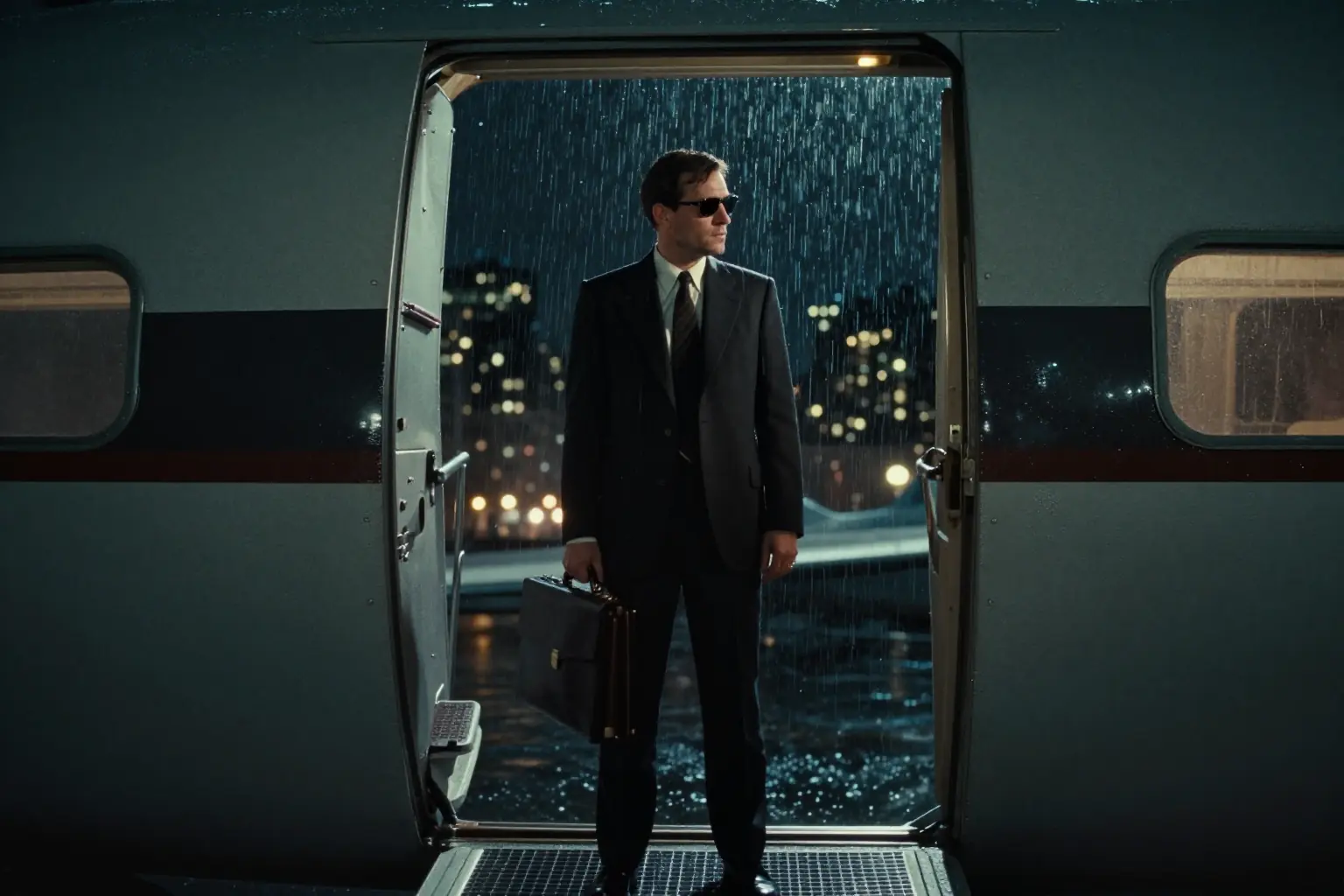
On the afternoon of Wednesday, November 24, 1971 — the day before Thanksgiving, one of the busiest travel days of the year — a quiet, unremarkable man in a dark business suit walked up to the counter of Northwest Orient Airlines at Portland International Airport in Oregon and purchased a one-way ticket to Seattle, Washington for $18.52 in cash. He gave his name as Dan Cooper. A few hours later, that man would pull off the most audacious and baffling crime in the history of American aviation — a skyjacking so bold, so perfectly planned, and so completely successful that it remains the only unsolved case of air piracy in the history of commercial aviation. Cooper boarded Flight 305, a Boeing 727-100 carrying 36 passengers and 6 crew members, ordered a bourbon and soda, and then calmly handed a note to flight attendant Florence Schaffner that read: “I have a bomb in my briefcase. I will use it if necessary. I want you to sit next to me. You are being hijacked.” He showed her what appeared to be a bomb — red sticks, wires, and a battery — and demanded $200,000 in negotiable U.S. currency and four parachutes. He got exactly what he asked for. And then, somewhere over the dark, rainy forests of the Pacific Northwest, at an altitude of 10,000 feet in temperatures near 7 degrees below zero, he opened the rear stairway of the Boeing 727, stepped out into the night, and vanished. No body was ever found. No parachute was ever recovered. No conclusive trace of the man or the money was ever discovered in the initial search.
The early 1970s were a different era in American air travel. Airport security was virtually nonexistent — there were no metal detectors, no baggage X-rays, no identification checks of any significance. A person could walk onto a commercial airliner with virtually anything concealed on their person or in their luggage. Hijackings were startlingly common: between 1968 and 1972, there were more than 130 attempted hijackings of U.S. commercial aircraft — an average of one every two weeks. Most were committed by individuals demanding to be flown to Cuba, and most ended without serious injury to passengers. Airlines had developed protocols for dealing with hijackers that emphasized cooperation and de-escalation. It was in this environment — one of routine aerial chaos — that Dan Cooper boarded Flight 305 on that rainy November afternoon. The Boeing 727 was an ideal aircraft for a skyjacking: it was one of the few commercial jets of the era equipped with a rear stairway (called an “aft airstair”) that could be deployed in flight, allowing passengers or crew to exit the aircraft from the tail section while in the air. This feature, designed for emergency evacuations and ground boarding at airports without jet bridges, would prove critical to Cooper’s plan.
Cooper boarded Flight 305 and took seat 18E in the rear of the aircraft, a window seat in the last row. He was described as a white male, approximately mid-40s, between 5 feet 10 inches and 6 feet tall, with an average build. He wore a dark business suit, white dress shirt, black tie with a mother-of-pearl tie clip, and a raincoat. After takeoff, he ordered a bourbon and soda and lit a cigarette. Shortly after 3:00 PM, he handed a note to flight attendant Florence Schaffner, who initially ignored it, thinking it was a lonely businessman’s phone number. Cooper leaned in and told her to read it. The note, written in neat capital letters, informed her that he had a bomb and was hijacking the aircraft. Schaffner showed the note to flight attendant Tina Mucklow, who was just 22 years old and relatively new to the job. Cooper then opened his briefcase, revealing what appeared to be eight red cylinders (resembling dynamite sticks), a mass of wires, and a battery. He instructed Schaffner to write down his demands and convey them to the captain.
Cooper’s demands were precise and professional. He wanted $200,000 in negotiable U.S. currency — specifically in twenty-dollar bills. He wanted four parachutes: two primary and two reserve. And he wanted a fuel truck standing by in Seattle to refuel the aircraft. The message was relayed to the cockpit, and Captain William Scott contacted Northwest Orient Airlines president Donald Nyrop, who authorized full payment and cooperation. The airline had a policy of complying with hijackers’ demands to protect passengers and crew, and Nyrop saw no reason to deviate from it. The FBI was notified while the plane was still in the air. Flight 305 landed at Seattle-Tacoma International Airport at 5:39 PM, approximately two hours late. Cooper released all 36 passengers and flight attendant Schaffner. The money — 10,000 twenty-dollar bills, all with serial numbers recorded by the FBI — was delivered in a canvas bank bag. The four parachutes were provided. Cooper kept four crew members: Captain Scott, First Officer Bob Rataczak, Flight Engineer H.E. Anderson, and flight attendant Tina Mucklow, who remained calm and professional throughout the ordeal, later providing the most detailed witness description of the hijacker.
The $200,000 in ransom money delivered to Cooper was carefully prepared by the FBI and the Seattle bank that supplied it. Every one of the 10,000 twenty-dollar bills had its serial number recorded by the FBI before delivery. The bills were a mixture of Series 1963A and Series 1969 Federal Reserve Notes, all with serial numbers beginning with the letter “L” (indicating issuance from the San Francisco Federal Reserve Bank). The money was bundled into stacks and placed in a canvas bank bag. Cooper also received the four parachutes he requested: two NB-6 navy parachutes (primary) and two NB-8 reserve parachutes. Notably, Cooper specifically requested military-style parachutes rather than civilian sport chutes, and he inspected each one carefully before the plane took off again. One of the reserve parachutes was later found to be non-functional — it had been used for demonstration purposes and was sewn shut. Cooper did not use it.
After refueling in Seattle, Flight 305 took off again at approximately 7:40 PM, headed southeast with a filed flight plan for Mexico City. Cooper had specified precise flight conditions: the aircraft was to fly at 10,000 feet (rather than the typical cruising altitude of 30,000+ feet), with the wing flaps set to 15 degrees and the landing gear down to maintain a low speed of approximately 100 knots (115 mph). He ordered the cabin unpressurized and the rear stairway deployed. The crew attempted to dissuade him, warning that the aircraft could not reach Mexico City at that altitude and speed, but Cooper was unconcerned. “It’s not a problem,” he said. He appeared to have detailed knowledge of the Boeing 727’s performance characteristics and the airstair deployment system. He also showed familiarity with the local terrain, suggesting he had studied the route. The crew noticed that he recognized the city lights of Tacoma, Washington as they flew south, indicating he knew the Pacific Northwest geography.
At approximately 8:13 PM, somewhere over southern Washington state or northern Oregon, the crew felt a pressure bump — a sudden change in cabin pressure indicating that the rear stairway had been opened. The crew noticed the cabin temperature drop sharply as cold air rushed in. The aft stairway deployment warning light illuminated in the cockpit. Captain Scott called back over the intercom: “Is everything all right back there?” The response came from flight attendant Mucklow: “He’s gone.” Cooper had jumped — or more precisely, had lowered himself out of the rear stairway into the dark, rainy, freezing night. The weather conditions were brutal: temperatures at 10,000 feet were approximately minus 7 degrees Fahrenheit (-14 degrees Celsius), with freezing rain, strong winds, and thick cloud cover. The terrain below was densely forested, mountainous wilderness — steep ravines, fast-flowing rivers, and thick stands of Douglas fir and western hemlock. The estimated jump zone was narrowed to an area near the Lewis River, north of Portland, in Clark or Cowlitz County, Washington. The plane continued to Reno, Nevada, where it landed safely. Cooper was gone. The FBI launched one of the largest manhunts in American history, code-named NORJAK (Northwest Hijacking). Ground teams, helicopters, and fixed-wing aircraft scoured the wilderness for weeks. They found nothing — no body, no parachute, no money, no clothing, no trace of Dan Cooper.
The D.B. Cooper hijacking had an immediate and lasting impact on aviation security. Within months of the skyjacking, the Federal Aviation Administration (FAA) required all Boeing 727 aircraft to be equipped with a device that became known as the “Cooper vane” — a small aerodynamic wedge installed on the aft stairway that prevented it from being deployed in flight. The device was simple but effective: it used air pressure to lock the stairway in the closed position whenever the aircraft was in motion, making it impossible for anyone to open the rear door during flight. The Cooper vane remains standard equipment on Boeing 727s to this day. More broadly, the hijacking was a catalyst for the transformation of American airport security. In 1973, the FAA mandated metal detectors at all U.S. airports — a direct response to the epidemic of hijackings that had plagued the late 1960s and early 1970s. The era of walking onto a plane without any screening was over.
The FBI’s NORJAK investigation into the D.B. Cooper hijacking was one of the longest and most exhaustive investigations in the Bureau’s history. The case file eventually grew to over 60 volumes containing thousands of leads, witness statements, forensic reports, and suspect profiles. Over the 45 years of active investigation, the FBI interviewed hundreds of suspects and followed thousands of tips from the public. The investigation employed the most advanced forensic techniques available at the time, including analysis of Cooper’s black J.C. Penney clip-on necktie, which he removed before jumping and which yielded a DNA profile (though the profile was partial and has never been matched to any individual). Cigarette butts Cooper smoked during the flight were also collected and analyzed. The FBI maintained a working theory that Cooper likely did not survive the jump due to the extreme weather conditions, his apparent lack of specialized skydiving equipment, and the rugged, densely forested terrain. In July 2016, the FBI announced that it was redirecting resources away from the Cooper case to focus on other investigative priorities, effectively suspending the active investigation after 45 years. The case remains officially open but inactive.
The most significant physical evidence in the D.B. Cooper case was discovered not by the FBI but by an eight-year-old boy. In February 1980, Brian Ingram was playing on the sandy banks of the Columbia River near Tena Bar, west of Vancouver, Washington, when he found three bundles of deteriorated, rotting twenty-dollar bills buried in the sand. The discovery was reported to authorities, and the FBI confirmed that the serial numbers on the bills matched the recorded ransom money. A total of $5,880 was recovered — 294 individual bills, all from the ransom payment. The bills were in poor condition, heavily weathered and partially decomposed, but still identifiable. The discovery electrified the investigation. The FBI launched an intensive search of the Tena Bar area, using divers, metal detectors, and ground-penetrating radar, but no additional money or evidence was found.
The discovery of the money raised more questions than it answered. How did the money end up on a sandbar hundreds of miles downstream from the estimated jump zone? The Tena Bar location was not in the direct path of the Lewis River watershed where Cooper was believed to have jumped. Some investigators theorized that the money had been carried downstream by river currents over the nine years since the hijacking. Others suggested that Cooper had survived the jump and had buried or lost the money at the Tena Bar location sometime after landing. The condition of the bills — rotting but still largely intact — suggested they had been exposed to the elements for a significant period, but the exact timeline was impossible to determine. In 1986, a decaying parachute was found in the general search area, but it could not be conclusively linked to Cooper. In February 1978, a placard containing instructions for lowering the aft stairs of a Boeing 727 had been found near the search zone by a deer hunter, confirming that at least some debris from the aircraft had reached the ground in the general area. In 2003, the FBI returned some of the recovered money to Brian Ingram, now an adult, and he sold portions of it at auction, where individual bills fetched prices many times their face value as collector’s items.
Over the decades, the FBI investigated hundreds of suspects in the D.B. Cooper case. None was ever charged. The most prominent suspects included Richard Floyd McCoy Jr., who committed a nearly identical hijacking in April 1972 — just five months after Cooper — using the same Boeing 727 rear-stairway technique. McCoy was caught, convicted, and sentenced to 45 years in federal prison. He escaped in 1974 and was killed in a shootout with FBI agents. Despite the similarities, McCoy did not match the physical description given by the flight attendants and was eliminated as a suspect. Duane Weber, a career criminal who died in 1995, was proposed by his wife Jo Weber, who claimed he had confessed on his deathbed, saying, “I’m Dan Cooper.” The FBI investigated Weber extensively but found no conclusive match. Kenneth Christiansen, a former Army paratrooper and airline employee, had some circumstantial connections, but the FBI found no definitive evidence. Robert Rackstraw, a Vietnam veteran and demolitions expert, was proposed by author Tom Colbert, but the FBI found no conclusive evidence linking him to the crime. Other suspects included William Gossett (proposed by his son), Barbara Dayton (a transgender pilot), Sheridan Peterson, and dozens of others. In every case, the evidence was circumstantial, inconclusive, or contradictory. The man calling himself Dan Cooper remains unidentified.
The hijacker never actually called himself “D.B. Cooper.” He gave his name as “Dan Cooper” when purchasing his airline ticket. The “D.B.” prefix was the result of a media error — an early wire service report confused Cooper’s alias with that of a different suspect who was briefly investigated and cleared. Despite the error, the name “D.B. Cooper” stuck in the public imagination and became one of the most famous aliases in American criminal history. The real “Dan Cooper” name may itself have been borrowed from a popular Belgian comic book character — a Canadian fighter pilot who had adventures including skydiving — that was published in the 1960s and 1970s. Whether the hijacker chose the name as a deliberate reference to the comic book character or simply selected a common, unremarkable name is unknown. Cooper was described by flight attendants as calm, polite, and well-spoken, ordering a second bourbon and soda during the hijacking and tipping the flight attendants. He showed no signs of nervousness or anxiety, even when handling what he claimed was a bomb. “No funny stuff,” he told Schaffner at one point — the closest he came to a threat. The combination of meticulous planning, calm execution, and complete disappearance has made D.B. Cooper an enduring American folk hero — a criminal who outsmarted the system and got away clean.
D.B. Cooper remains one of the most compelling mysteries in American history — a story that combines the daring of a Hollywood thriller with the enduring frustration of a cold case that will not be solved. The evidence is contradictory and tantalizing. The recovered ransom money on the Columbia River sandbar proves that at least some of the cash survived, but its location raises more questions than it answers. The absence of a body suggests Cooper either survived the jump and escaped, or that his remains were lost in the vast, rugged wilderness of the Pacific Northwest — an area so densely forested and remote that bodies can go undiscovered for decades. The FBI’s working theory is that Cooper likely did not survive, given the extreme conditions and his apparent lack of specialized equipment. But the Bureau has acknowledged that this is only a theory, not a conclusion. The case file sits in the National Archives, a monument to the limits of investigative science and the enduring power of a good mystery. Whether Cooper died in the wilderness that November night, lived out his days under an assumed identity, or simply ceased to exist — absorbed into the myth and legend that bears his false name — is a question that may never be answered. And perhaps that is exactly how he wanted it.
References & Further Reading
Wikipedia: Boeing 727 — The aircraft type used in the hijacking, notable for its aft airstair
📚 Recommended Reading: The D.B. Cooper Hijacking by Kay Melchisedech Olson (on Amazon) — As an Amazon Associate, we earn from qualifying purchases.
Editorial note: The D.B. Cooper case is documented through FBI investigation files, National Archives records, and extensive journalistic and historical research. See our Editorial Policy.