Amelia Earhart: 88 Years Later, Are We Close to Finding Her Plane?
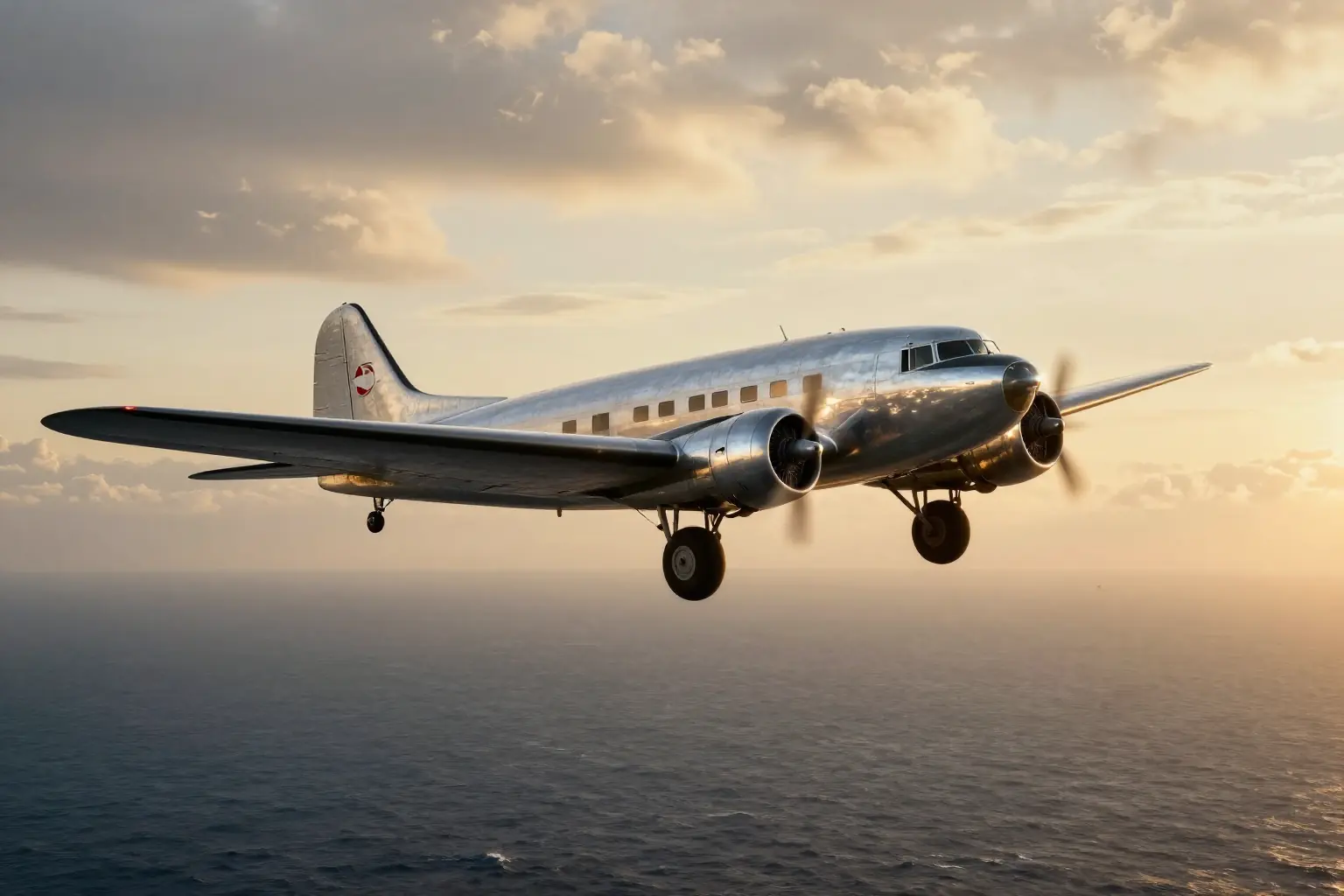
Amelia Earhart and her Lockheed Electra, shortly before the 1937 around-the-world attempt that would become aviation's greatest mystery
At 8:43 AM local time on July 2, 1937, one of the most famous voices in aviation history crackled across the radio waves of the central Pacific Ocean. Amelia Earhart, flying her silver Lockheed Model 10 Electra somewhere over the vast emptiness of the Pacific, transmitted a desperate message to the US Coast Guard cutter Itasca, stationed near tiny Howland Island: “We are on the line 157-337… We are running north and south.” Minutes earlier, she had reported: “We must be on you, but cannot see you — gas is running low.” The Itasca’s crew strained to spot the aircraft against the glare of the tropical sky, pumping out black smoke from the ship’s funnel as a visual beacon. But the sky remained empty. Earhart’s voice grew fainter with each transmission, then fell silent. She, her navigator Fred Noonan, and their Lockheed Electra had vanished into the immensity of the Pacific Ocean — an expanse so vast that it covers roughly one-third of the Earth’s surface. The United States Navy launched the largest search and rescue operation in its history up to that time, scouring 250,000 square miles of ocean over sixteen days at a cost of $4 million (roughly $90 million in today’s dollars). They found nothing. Not a piece of wreckage, not an oil slick, not a life raft, not a single trace of the world’s most famous female aviator or her aircraft. The disappearance of Amelia Earhart remains one of the greatest unsolved mysteries of the twentieth century — a puzzle that has consumed researchers, inspired conspiracy theories, and defied resolution for nearly 90 years.
The mystery of Earhart’s disappearance is all the more remarkable because of who she was. Amelia Mary Earhart (1897–1937) was not merely a pilot — she was a global icon, a symbol of female courage and capability in an era when women were still fighting for basic rights. In 1932, she became the first woman to fly solo across the Atlantic Ocean, five years after Charles Lindbergh’s historic flight. She set altitude records, speed records, and became a bestselling author, a fashion designer, and a tireless advocate for women in aviation. Her attempted around-the-world flight in 1937 was to be her crowning achievement — a 29,000-mile journey following the equator, the longest distance ever attempted by a circumnavigating aircraft. By the time she reached Lae, New Guinea, on June 29, 1937, she had completed approximately 22,000 miles of the journey. Only 2,556 miles of Pacific Ocean lay between her and Howland Island, a tiny atoll of 1.7 square miles — one of the most remote pieces of land on Earth — where she planned to refuel before continuing to Hawaii and home. The leg should have been routine. Instead, it became the most famous missing-persons case in aviation history.
Earhart’s final approach to Howland Island was plagued by a cascade of problems — mechanical, navigational, and communicative. The Lockheed Model 10 Electra (registration NR16020) was a twin-engine, all-metal monoplane that had been extensively modified for the around-the-world flight, with extra fuel tanks installed in the cabin that gave it a range of approximately 4,000 miles. The Howland Island leg was 2,556 miles — well within the aircraft’s range, but with little margin for error. Howland Island was, by any measure, a preposterously difficult target. At just 1.5 miles long and 0.5 miles wide, it was a speck of coral and sand in the vast blue expanse of the central Pacific, barely visible from the air even under ideal conditions. The US government had constructed a rudimentary unpaved airstrip on the island specifically for Earhart’s stop, but the island had no permanent population, no tall landmarks, and was easily confused with the countless other low coral atolls and reefs that dotted the region.
The communication and navigation failures were critical. Earhart’s Electra was equipped with a modern radio navigation receiver designed to pick up signals from the Itasca, which was stationed off Howland to provide radio direction-finding bearings. However, for reasons that remain unclear, Earhart was apparently transmitting on the wrong frequency for parts of the flight — she was using 3105 kHz for voice transmissions while the Itasca was monitoring multiple frequencies, but she never seemed to hear the ship’s transmissions to her. The Itasca’s crew reported that Earhart’s transmissions were loud and clear — indicating she was relatively close — but she repeatedly reported that she could not hear the ship’s signals. This one-way communication meant that the Itasca could not send Earhart the directional bearings she needed to find Howland. Additionally, there were reports of heavy cloud cover in the area, which would have made visual identification of the tiny island even more difficult. Earhart’s last confirmed transmissions suggested she was flying a search pattern — running north and south along the 157/337 degree line — trying to spot the island or the Itasca’s smoke signal. Then silence. The most likely explanation, accepted by the US Navy and most aviation historians, is the “crash and sink” theory: the Electra simply ran out of fuel and ditched in the ocean, probably within 100 miles of Howland Island, and sank in water that is thousands of feet deep.
The most persistent alternative to the crash-and-sink theory centers on Nikumaroro (formerly Gardner Island), an uninhabited coral atoll in the Phoenix Islands group, approximately 350 nautical miles south-southeast of Howland Island. The theory, championed by the International Group for Historic Aircraft Recovery (TIGHAR) and its executive director Ric Gillespie, proposes that Earhart and Noonan, unable to find Howland Island and running low on fuel, turned southeast on the 157-degree heading mentioned in their last transmission and flew toward the Phoenix Islands, eventually landing the Electra on a flat coral reef near Nikumaroro. The theory’s supporters argue that the plane landed safely on the reef at low tide, that Earhart and Noonan survived for days or possibly weeks on the island, and that they sent distress signals from the aircraft’s radio until rising tides swept the plane off the reef and into the ocean.
The Nikumaroro hypothesis has been sustained by a series of tantalizing discoveries. In 1940, British colonial officer Gerald Gallagher discovered a partial human skeleton on Nikumaroro, along with a woman’s shoe, a sextant box, and a bottle that appeared to have been used as a compass bowl. Gallagher, who was aware of the Earhart mystery, reported the find to his superiors and speculated that the remains might be Earhart’s. The skeleton was sent to Fiji for analysis, where a colonial medical officer initially assessed it as belonging to a male of mixed Polynesian and European ancestry — but modern reanalysis of the original measurements by forensic anthropologists, including Dr. Karen Burns, has suggested that the skeleton is consistent with a female of European descent matching Earhart’s height and build. Unfortunately, the skeleton itself was lost in Fiji during World War II and cannot be re-examined with modern DNA techniques. TIGHAR has conducted over a dozen expeditions to Nikumaroro since 1989, recovering artifacts including a jar of freckle cream consistent with a brand Earhart was known to use, fragments of aluminum aircraft skin that may match the Electra’s construction, pieces of a woman’s shoe from the 1930s, and a sextant box of a type consistent with Noonan’s equipment. In 2012, a TIGHAR expedition using side-scan sonar detected an anomaly at 600 feet depth off the reef that some researchers interpreted as possible aircraft wreckage, but the sonar image was ambiguous.
The Nikumaroro theory received its most high-profile test in 2017, when Robert Ballard — the oceanographer famous for discovering the wreck of the RMS Titanic in 1985 — led an expedition to Nikumaroro funded by National Geographic. Ballard, who had previously expressed skepticism about the Nikumaroro hypothesis, brought state-of-the-art deep-sea exploration technology, including remotely operated vehicles (ROVs) capable of searching the ocean floor around the atoll at depths of up to 3,000 feet. After an intensive search of the waters around Nikumaroro, Ballard’s team found no definitive evidence of the Lockheed Electra. They did not find aircraft wreckage, engine components, or any artifact that could be conclusively linked to Earhart’s aircraft. The expedition did recover some artifacts from the island itself and documented features consistent with the castaway theory, but the absence of underwater wreckage was a significant blow to the Nikumaroro hypothesis.
In January 2024, the mystery generated fresh excitement when Deep Sea Vision (DSV), a marine robotics company based in South Carolina, announced the discovery of a sonar anomaly on the Pacific Ocean floor approximately 100 miles from Howland Island. The anomaly, detected at a depth of approximately 16,000 feet using a Kongsberg HUGIN 6000 autonomous underwater vehicle (AUV), appeared to show a shape consistent with a Lockheed Model 10 Electra — roughly the right size, with features that some analysts interpreted as wings and a fuselage. DSV’s CEO, Tony Romeo, a former US Air Force intelligence officer, stated that the anomaly was located within the general area where the crash-and-sink theory predicts the Electra went down. The discovery generated worldwide media attention and renewed hope that the mystery might finally be solved. However, experts urged caution: sonar images at 16,000 feet are inherently ambiguous, and the anomaly could be a natural geological feature, wreckage from a different aircraft or vessel, or an artifact of the sonar imaging process. As of early 2026, the anomaly has not been visually confirmed, and the search continues.
The second major alternative theory proposes that Earhart and Noonan survived their flight but were captured by the Japanese military in the Marshall Islands, which were then administered by Japan under a League of Nations mandate. According to this theory, Earhart and Noonan either crashed or landed in the Marshall Islands, were taken into custody by Japanese forces who suspected them of being American spies, and were transported to Saipan in the Mariana Islands, where they were imprisoned and possibly executed. The theory draws on a body of anecdotal evidence, including accounts from residents of Saipan and the Marshall Islands who claimed, decades later, to have seen or heard about a white female pilot in Japanese custody during the late 1930s.
The Japanese capture theory gained significant public attention in 2017 when the History Channel broadcast a documentary titled “Amelia Earhart: The Lost Evidence,” which featured a photograph purportedly showing Earhart and Noonan alive on Jaluit Atoll in the Marshall Islands after their disappearance. The black-and-white photograph, discovered in the US National Archives by retired federal agent Les Kinney, appeared to show a woman with short hair and a man standing on a dock alongside a Japanese ship, with a blurred shape on a barge that some interpreted as the Electra. However, within days of the broadcast, the photograph was debunked by independent researchers who found that it had been published in a 1935 Japanese travel book — two full years before Earhart’s disappearance — and therefore could not possibly show the aviator in 1937. The History Channel subsequently removed the documentary from its schedule and issued a statement acknowledging the error.
A more speculative variant of the Japanese capture theory holds that Earhart was secretly working as a spy for the US government, specifically for President Franklin D. Roosevelt, who was a personal friend. According to this theory, Earhart’s around-the-world flight was a cover for a covert intelligence-gathering mission to photograph Japanese military installations in the Pacific. Proponents point to the unusual level of US government support for Earhart’s flight — including the construction of the airstrip on Howland Island and the deployment of the Itasca — as evidence that the mission had official backing beyond what a civilian record attempt would warrant. However, no documentary evidence has ever been found to support the spy theory, and mainstream historians regard it as speculative. A related but even more controversial theory, popularized by author Joe Klaas in his 1970 book “Amelia Earhart Lives,” proposed that Earhart survived her captivity, returned to the United States under a new identity, and lived as Irene Bolam, a New Jersey housewife, until her death in 1982. Bolam vigorously denied the claim during her lifetime and even filed a lawsuit, and subsequent forensic analysis has conclusively disproved the theory.
One of the most intriguing — and controversial — pieces of evidence in the Earhart mystery is the so-called “Betty’s Notebook” account. In July 1937, Betty Klenck, a 15-year-old girl living in St. Petersburg, Florida, claimed that she picked up distress signals from Amelia Earhart on her family’s shortwave radio. According to Klenck, she heard a woman’s voice — distraught, pleading — identify herself as Earhart and describe running out of fuel, being stranded on land near water, and having an injured male companion. Klenck wrote down what she heard in a notebook, which she kept for over sixty years before sharing it with researchers. TIGHAR has argued that Klenck’s account is consistent with the theory that Earhart landed on Nikumaroro and transmitted distress calls for several days before the radio died. Skeptics point out that shortwave radio reception across 5,000 miles of ocean is extremely unreliable, that there is no way to verify the voice was actually Earhart, and that the notebook was not shared until decades after the fact. The account remains unverified but haunting — a possible window into the final hours of a woman who refused to give up.
Nearly 90 years after Amelia Earhart’s disappearance, the mystery remains as compelling as ever — not because the answer is likely to be supernatural or conspiratorial, but because it is so human. A brave woman pushed the boundaries of what was possible, flew into the vast emptiness of the Pacific, and simply did not come back. The crash-and-sink theory remains the most probable explanation: the Electra ran out of fuel and ditched in the ocean within 100 miles of Howland Island, sinking in water too deep to be searched with 1937 technology. The Nikumaroro hypothesis keeps hope alive that physical evidence might still be found on a remote island, and the 2024 Deep Sea Vision sonar anomaly offers the tantalizing possibility that modern technology can solve what 1937 technology could not. The Japanese capture theories, while largely unsupported by credible evidence, reflect the political tensions of the era and the human need to believe that a heroic figure did not simply vanish. What keeps the mystery alive is not just the absence of an answer but the presence of a question: how can a person this famous, in an aircraft this well-equipped, on a flight this carefully planned, simply disappear? The answer, most likely, is that the Pacific Ocean is very, very big, and that even the most famous people on Earth are small compared to its immensity. Somewhere in the Pacific, beneath miles of water, the answer may be waiting. We just haven’t found it yet.
References & Further Reading
Wikipedia: Howland Island — The tiny Pacific atoll that was Earhart’s intended destination
Wikipedia: Nikumaroro (Gardner Island) — The island at the center of the TIGHAR castaway theory
Wikipedia: Lockheed Model 10 Electra — The aircraft type Earhart flew on her final flight
Britannica: Amelia Earhart — Authoritative biography from Encyclopaedia Britannica
📚 Recommended Reading: Lost Star: The Search for Amelia Earhart by Randall Brink (on Amazon) — As an Amazon Associate, we earn from qualifying purchases.
Editorial note: the search for Amelia Earhart’s aircraft continues, with new expeditions and sonar surveys announced regularly. See our Editorial Policy.