Wilmer McLean: The Man Who Couldn't Escape the Civil War
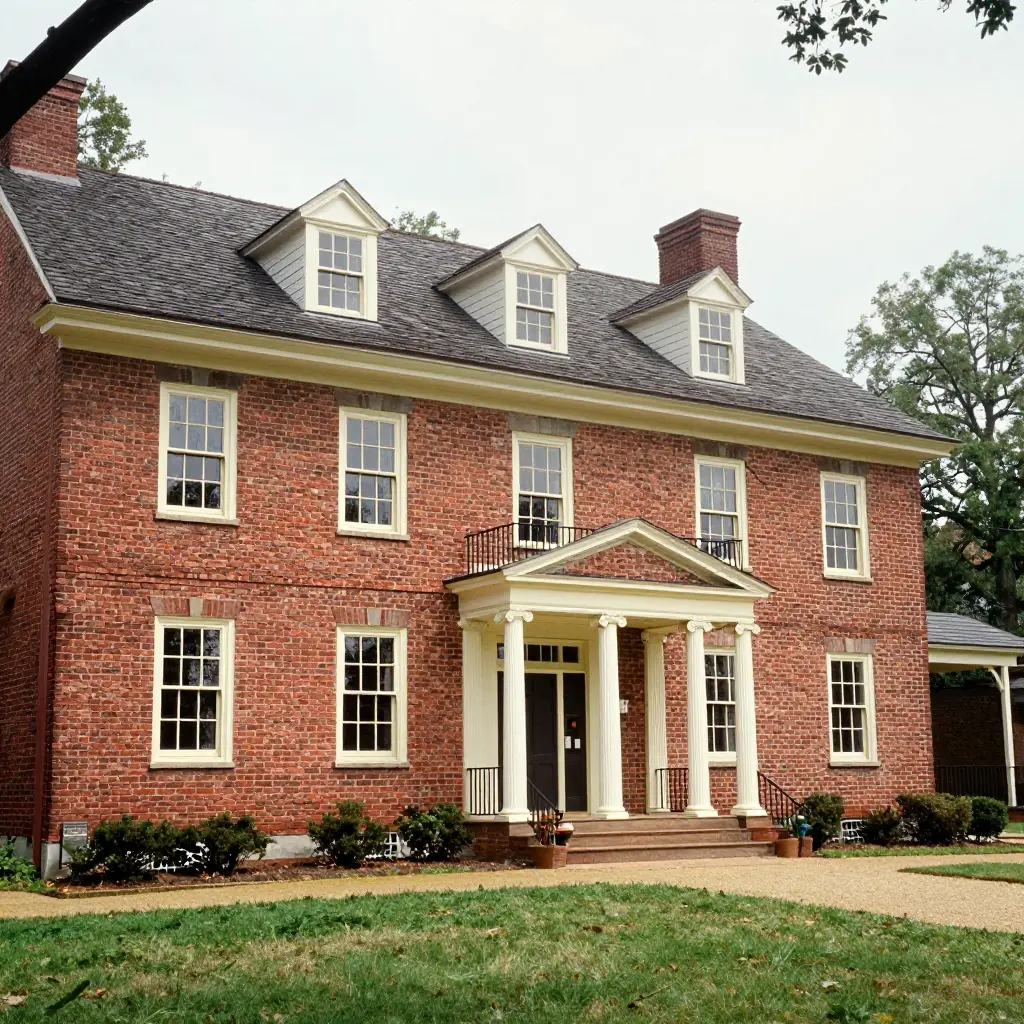
In the long and bloody history of the American Civil War, no figure embodies the conflict’s cruel irony more perfectly than Wilmer McLean (1814–1882), a wholesale grocer from Virginia whose two homes bookended the entire war. On July 21, 1861, the opening engagement of the First Battle of Bull Run — the war’s first major land battle — erupted on McLean’s Yorkshire Plantation in Manassas, Virginia. A Union artillery shell crashed through his kitchen chimney, destroying the dinner being prepared for Confederate General P.G.T. Beauregard and his staff, who were using McLean’s house as their headquarters. The shell landed in the fireplace, scattering pots, pans, and the general’s supper across the kitchen floor. It was, Beauregard later wrote, “a comical effect” — though the comedy was surely lost on McLean, whose home had just become a battlefield. Four years later, after moving his family 120 miles south to the quiet village of Appomattox Court House to escape the fighting, McLean found the war literally on his doorstep once again. On April 9, 1865, General Robert E. Lee surrendered to General Ulysses S. Grant in McLean’s parlor, ending the bloodiest conflict in American history. The war that had begun with a shell in McLean’s kitchen ended with a signature in his living room. As McLean himself reportedly said: “The war began in my front yard and ended in my front parlor.”
Wilmer McLean was not a general, not a politician, not a statesman. He was a merchant — a wholesale grocer and sugar broker who made his living buying and selling commodities in the wartime South. He was too old to fight (he was 47 when the war began) and had no particular desire to be involved in the conflict. He married a wealthy widow named Virginia Mason in 1853, and the couple settled into the Yorkshire Plantation near Manassas, where they raised a family and lived what appeared to be a comfortable, unremarkable life. But the Civil War had a way of finding ordinary people and pulling them into its maw. McLean’s story is not just a historical curiosity; it is a parable about the impossibility of escaping history — a reminder that when nations tear themselves apart, no one, not even a quiet grocer in the Virginia countryside, can remain untouched.
By the time the Civil War broke out in April 1861, Wilmer McLean had been living on the Yorkshire Plantation near Manassas, Virginia, for nearly a decade. The property, which he had acquired through his marriage to Virginia Mason, was a working farm in Prince William County, situated near the junction of two important railroads and near a meandering stream called Bull Run. It was, by all accounts, a peaceful spot — rolling Virginia farmland, quiet country roads, and the slow rhythm of agricultural life. McLean, a retired major in the Virginia militia, identified with the Confederate cause but was too old for active service. Instead, he supported the war effort through his commercial activities, supplying sugar and other goods to the Confederate Army.
The trouble began in June 1861, when Confederate General P.G.T. Beauregard — the flamboyant Louisiana-born officer who had commanded the bombardment of Fort Sumter in April — arrived in Manassas and established his headquarters. Beauregard chose McLean’s house, the finest dwelling in the area, as his command post. McLean moved his family to safety and allowed the Confederate officers to use the property. On July 18, 1861, the first engagement of what would become the First Battle of Bull Run took place on McLean’s farm, when Union forces under General Irvin McDowell clashed with Confederate troops along Bull Run Creek. The full battle erupted on July 21, 1861, and the fighting engulfed McLean’s property. Union artillery targeted the house, correctly deducing that it was being used as a Confederate headquarters. During the bombardment, a Union cannonball dropped through the kitchen chimney and landed in the fireplace, destroying the dinner that Beauregard and his staff were about to eat. After the battle — a chaotic, bloody Confederate victory that shocked both sides with its ferocity — McLean’s house was converted into a field hospital and military prison. The wounded and dying were treated in his rooms; Confederate officers ate at his table; Union prisoners were held on his grounds. The Yorkshire Plantation had been transformed from a peaceful farm into a charnel house.
The experience of having his home turned into a battlefield, hospital, and prison was enough for Wilmer McLean. By 1862, with a second Battle of Bull Run raging near his property, McLean decided he had had enough. He moved his family approximately 120 miles southwest to the tiny village of Appomattox Court House, in Appomattox County, Virginia. The village — not a town with a courthouse, but a community literally named “Appomattox Court House” — was a quiet, remote settlement on the Lynchburg-Richmond Stage Road. It was far from the major battlefields, far from the rail junctions that attracted armies, and, McLean hoped, far from the war. He settled his family into a comfortable two-story house on the main road and resumed his business as a sugar broker, trading with the Confederate Army and trying to maintain some semblance of normal life in the midst of a collapsing nation.
For nearly three years, McLean’s gamble seemed to have paid off. The war raged across Virginia — at Antietam, Fredericksburg, Chancellorsville, Gettysburg, the Wilderness, Spotsylvania, Petersburg — but Appomattox Court House remained largely untouched. By the spring of 1865, General Robert E. Lee’s Army of Northern Virginia was in its final throes, cornered by General Ulysses S. Grant’s vastly superior forces. Lee’s army was starving, out of ammunition, and cut off from supplies. On April 8, 1865, Lee’s troops retreated westward through Appomattox County, pursued by Grant’s forces. The tiny village of Appomattox Court House found itself, once again, in the path of history.
On the morning of April 9, 1865, Lee’s army made a final, desperate attempt to break through Union lines west of Appomattox Court House. When it became clear that the breakout had failed, Lee sent a message to Grant requesting a meeting to discuss surrender terms. Grant, who had been suffering from a severe headache, received the message near the Appomattox River and immediately felt his headache lift. The two generals needed a neutral, convenient location for their meeting. Colonel Charles Marshall, Lee’s military secretary, was sent into the village to find a suitable house. Marshall approached Wilmer McLean — whose house was one of the finest in the village and was conveniently located on the main road — and asked if he would allow the surrender meeting to take place in his home. McLean, who had been trying to avoid the war for four years, agreed.
General Robert E. Lee arrived first, dressed immaculately in his finest uniform, accompanied by Colonel Marshall. General Ulysses S. Grant arrived shortly after, wearing a muddy private’s blouse with his general’s shoulder straps sewn on — a deliberate contrast to Lee’s formality. Grant was accompanied by his military secretary, Colonel Ely S. Parker, a Seneca Indian who wrote out the final copy of the surrender terms. Also present were several members of Grant’s staff, including General Edward Ord, General Philip Sheridan, and General George Armstrong Custer. The meeting was remarkably cordial. Grant and Lee, who had served together in the Mexican-American War, reminisced briefly about old times before getting down to business. Grant wrote out generous surrender terms that allowed Confederate officers to keep their sidearms and horses. Lee signed the document at approximately 4:00 PM. When Lee emerged from the house and mounted his horse, Traveller, Union soldiers began cheering, but Grant quickly silenced them. “The war is over,” Grant said. “The rebels are our countrymen again.”
Almost as soon as the surrender meeting ended, the McLean House became the target of an extraordinary act of spontaneous looting — not by common criminals, but by Union Army officers who understood that they had just witnessed one of the most important events in American history and wanted physical mementos. General Edward Ord took the table at which Lee had sat during the surrender. General Philip Sheridan purchased the table at which Grant had sat for $20 in gold and immediately gave it to General George Armstrong Custer as a gift for Custer’s wife, Libbie. Custer would later ride through the Union camps waving the table like a trophy. Officers took chairs, inkstands, paperweights, candlesticks, and anything else that could be carried. One officer reportedly took the pencil that Lee had used to make corrections to the surrender terms. McLean’s parlor was stripped virtually bare within hours. For McLean, it was one final indignity. He had opened his home to the surrender meeting as a gesture of cooperation, and in return, his furniture was carted away by the victors.
The looted items eventually found their way into museums and private collections across the country. The table where Lee signed the surrender is now in the Chicago History Museum. The table where Grant sat is in the Smithsonian National Museum of American History. Other artifacts are housed at the West Point Museum and various private collections. The McLean House itself, stripped and abandoned after the war, fell into disrepair and was dismantled in the 1890s. An investor attempted to have the house rebuilt as a tourist attraction at the Chicago World’s Fair, but the plan fell through. The house materials were left in a pile and gradually scattered. It was not until the 1930s and 1940s that the National Park Service began efforts to reconstruct the McLean House, using photographs and detailed descriptions to recreate the building as it appeared in 1865. The reconstructed house opened to the public in April 1950 and is now the centerpiece of the Appomattox Court House National Historical Park.
The end of the Civil War did not bring peace or prosperity to Wilmer McLean. Far from it. The surrender meeting at his house, far from being a financial windfall, left him poorer than before. After the war, McLean found himself deeply in debt. His wartime business activities — speculating in sugar and other commodities — had been lucrative during the conflict but collapsed in the post-war economy. He had borrowed heavily against his properties and was unable to repay his loans. In 1867, McLean defaulted on his mortgage and was forced to give up the Appomattox house. He moved his family to Alexandria, Virginia, where he took a job with the Internal Revenue Service — an ironic fate for a man who had spent the war supplying the Confederate Army and was now working for the federal government that had defeated it. McLean lived out his remaining years in relative obscurity. He died on June 5, 1882, at the age of 68, and was buried in St. Paul’s Episcopal Cemetery in Alexandria.
Wilmer McLean’s story is so perfectly symmetrical that it borders on the mythological. The war began in his front yard with a cannonball and ended in his parlor with a pen. He tried to escape the conflict by moving 120 miles south, only to find that history had already booked his living room for its grand finale. McLean was not a hero or a villain; he was an ordinary man caught in extraordinary times, a civilian whose two homes became bookends for the most traumatic event in American history. His financial ruin after the war adds a bitter note to the story — the man who hosted the most important meeting in American military history was left with nothing, his furniture stolen or sold for a pittance, his properties lost to debt, his final years spent as a minor federal employee in the government that had defeated the cause he supported. But McLean’s legacy endures in ways he could never have imagined. The reconstructed McLean House at Appomattox is one of the most visited historic sites in the United States. Wilmer McLean could not escape history. But history, in the end, could not forget him.
References & Further Reading
Wikipedia: Wilmer McLean — Comprehensive biography covering both Bull Run and Appomattox connections
National Park Service: Wilmer McLean — Official NPS biography with details on both properties
Wikipedia: First Battle of Bull Run — The battle that began on McLean's property on July 21, 1861
Wikipedia: Appomattox Campaign — The final campaign of the Civil War in Virginia
📚 Recommended Reading: Appomattox (on Amazon) — As an Amazon Associate, we earn from qualifying purchases.
Editorial note: historical narratives are continuously refined as new primary sources and scholarly analyses emerge. See our Editorial Policy.