The Oak Island Money Pit: 200 Years of Treasure Hunting and the World's Most Famous Hole
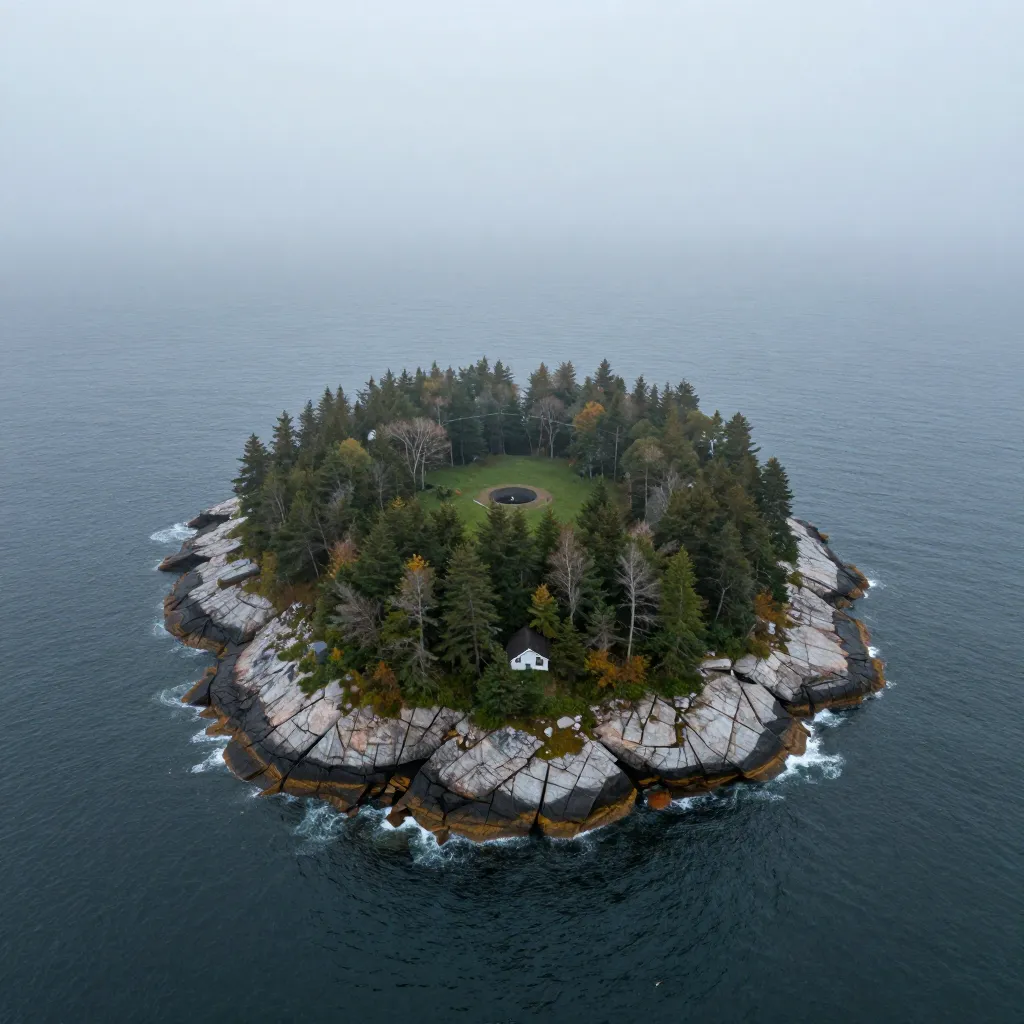
In the summer of 1795, a teenager named Daniel McGinnis was exploring a small, heavily wooded island in Mahone Bay, Nova Scotia, when he noticed something strange: a circular depression in the ground, approximately 13 feet in diameter, beneath an old oak tree with a sawed-off branch. A ship’s tackle block hung from the branch directly above the hole. To a young man living in a region thick with tales of pirate treasure, the implications were unmistakable. Someone had buried something here — and had gone to considerable effort to do so. The next day, McGinnis returned with two friends, John Smith and Anthony Vaughan. Armed with picks and shovels, they began to dig. Just two feet down, they struck a layer of carefully laid flagstones. At ten feet, a platform of solid oak logs. At twenty feet, another. At thirty feet, yet another. Each platform was identical: oak logs spanning the entire shaft, their ends firmly embedded in the clay walls. The pattern was unmistakable — someone had engineered a deep, layered shaft designed to protect whatever lay at the bottom. The boys dug as far as they could, then abandoned the effort. But they had started something that would not stop for over 230 years. The Oak Island Money Pit has since consumed fortunes, ruined lives, and claimed at least six deaths, becoming one of the most enduring treasure hunts in history — and one of the most debated.
The story of Oak Island is not just a treasure hunt. It is a mirror of the human obsession with hidden wealth and secret knowledge — an obsession that has driven men to spend fortunes, dedicate their lives, and literally dig themselves into the ground. The Money Pit has attracted everyone from Franklin Delano Roosevelt (who visited the island in 1909 and maintained a lifelong interest) to the modern Lagina brothers, whose quest is broadcast on the History Channel’s The Curse of Oak Island. It has generated theories ranging from the plausible to the fantastical — Captain Kidd’s treasure, Marie Antoinette’s jewels, the Holy Grail, the Ark of the Covenant, and the lost manuscripts of Francis Bacon. It has also attracted skeptics who argue that the entire mystery is a geological coincidence — a natural sinkhole that generations of treasure hunters have mistaken for an engineered vault.
After McGinnis and his friends abandoned their dig at 30 feet, the Money Pit sat undisturbed for nearly a decade. In 1803, the Onslow Company was formed to resume the excavation. They dug through the oak log platforms at 40, 50, 60, 70, and 80 feet, discovering layers of coconut fiber and a blue clay putty that appeared to be a waterproof sealant — materials completely foreign to Nova Scotia. At 90 feet, they found a flat stone tablet approximately two feet long inscribed with mysterious symbols. The inscription was later translated (controversially) as: “Forty feet below two million pounds are buried.” The Onslow Company continued digging, but when they reached approximately 95 feet, disaster struck. The shaft suddenly flooded with seawater, filling it to the tide line despite frantic pumping. The water could not be cleared.
The flooding was not accidental. Investigators discovered that the pit had been connected to the Atlantic Ocean through an ingenious flood tunnel system. A man-made channel ran from Smith’s Cove, on the eastern shore of Oak Island, to the Money Pit, approximately 500 feet inland. The tunnel was lined with coconut fiber (which acted as a filter), beach stones, and box drains, creating a self-activating hydraulic trap. When diggers reached the flood tunnel’s intake level, the ocean poured in automatically. The system was so effective that over 200 years of pumping, drilling, and engineering have never been able to permanently clear the shaft. Whoever designed the flood tunnels understood hydraulic engineering at a level that was remarkable for the 17th or 18th century. In 1850, investigators discovered that the entire beach at Smith’s Cove had been artificially constructed as a giant drainage system — a “drain” that funneled seawater through filter layers into the flood tunnel. The sophistication of this system has led some researchers to conclude that it could only have been built by a well-funded, technically skilled organization. Others argue that natural geological features — the limestone bedrock under Oak Island is riddled with natural cavities — could explain the flooding without any human engineering at all.
In 1849, the Truro Company resumed the hunt, using a pod auger drill — a hollow drill bit that could extract core samples from deep underground. They bored into the Money Pit and found compelling evidence that something significant lay below. At 98 feet, the drill struck what appeared to be a wooden platform or chest. The auger brought up fragments of wood, coconut fiber, and — most tantalizingly — three small gold chain links. Deeper drilling encountered a layer of material described as “metal in fragments” and a cement-like substance. The Truro Company also attempted to block the flood tunnels by building a cofferdam at Smith’s Cove, but the pit continued to flood — suggesting that additional, undiscovered flood tunnels existed.
Over more than two centuries of treasure hunting, Oak Island has claimed at least six lives, fueling a legend that the Money Pit is cursed. The most famous version of the curse states that seven men must die before the treasure will be found. A worker was killed in 1861 when a boiler exploded during pumping operations, making him the first recorded death. But the deadliest incident occurred on August 17, 1965. Robert Restall Sr., who had been working on Oak Island since 1959, was overcome by carbon monoxide (or possibly hydrogen sulfide) fumes in a shaft and collapsed. His son, Robert Restall Jr., dove in to save him and was also overcome. Two other men — Carl Graeser and Cyril Hiltz — attempted a rescue and also died. Four men died in a single day, making it the darkest chapter in Oak Island history. Whether the curse is real or merely a statistical artifact of 230 years of dangerous excavation, it has become an inseparable part of the Oak Island mythology.
In 2014, the History Channel premiered The Curse of Oak Island, following brothers Rick and Marty Lagina from Michigan as they pursued their lifelong dream of solving the Money Pit mystery. The show became a massive hit, running for over ten seasons and bringing the Oak Island story to millions of viewers worldwide. The Laginas, working with a team of experts including metal detection specialists, geologists, and historians, have deployed modern technology including ground-penetrating radar, seismic surveys, sonar mapping, and advanced drilling equipment. What they have found is intriguing but inconclusive: bone fragments at depth (human and animal), a small piece of parchment or book-binding material, fragments of old wood consistent with 18th-century construction, coconut fiber deep underground, metallic objects detected by sonar but not yet recovered, and various artifacts of uncertain origin. As of the most recent seasons, no definitive treasure has been recovered.
The proposed contents of the Money Pit range from the historically plausible to the wildly speculative. The most traditional theory holds that Captain Kidd, the notorious pirate who was executed in 1701, buried his plunder on the island. Others propose Spanish plunder from New World galleons, or Marie Antoinette’s jewels, supposedly sent to Nova Scotia for safekeeping during the French Revolution. Perhaps the most sensational theory proposes that the Knights Templar buried the Holy Grail, the Ark of the Covenant, or other sacred relics on Oak Island after the order’s suppression in 1307. Some believe Francis Bacon buried original manuscripts proving he wrote the works attributed to Shakespeare. And skeptics argue that the Money Pit is simply a natural geological formation — a sinkhole in limestone bedrock, and that 230 years of treasure hunting have been chasing a geological phantom.
The skeptics make a strong case. Several geologists have argued that Oak Island’s limestone bedrock is riddled with natural cavities and sinkholes that could explain the pit’s features without any human construction. The oak log platforms could be natural debris that fell into a sinkhole and became lodged at intervals. The flooding could be caused by natural underground channels connecting to the ocean through porous limestone. The famous inscribed stone tablet has never been photographed, measured, or subjected to scientific analysis — its existence is based entirely on second-hand accounts from the 19th century, and it may be a fabrication. No verified treasure has ever been recovered from Oak Island despite over 230 years of excavation. But the skeptics cannot fully explain why the flooding appears to be directional (connected to Smith’s Cove), why the “drain” at Smith’s Cove shows signs of artificial construction, or why the oak log platforms were found at such precise intervals.
After more than 230 years of digging, drilling, pumping, and dreaming, the Oak Island Money Pit remains exactly what it has always been: a mystery. No verified treasure has been found. No definitive proof of artificial construction has been established. No theory has been confirmed or ruled out. The pit has consumed millions of dollars, multiple fortunes, and at least six human lives. It has attracted presidents, scholars, engineers, and dreamers. Perhaps there really is a treasure at the bottom — a pirate’s hoard, a royal cache, a sacred relic of immeasurable value. Perhaps the pit is an elaborate 18th-century engineering marvel designed by geniuses to protect something precious for eternity. Or perhaps it is a sinkhole in Nova Scotia that a teenager stumbled upon in 1795, and every subsequent discovery has been a combination of wishful thinking, geological coincidence, and the human tendency to find patterns where none exist. The Lagina brothers are still drilling. The cameras are still rolling. And the Money Pit — whatever it is — is still down there, waiting beneath the earth and the water, keeping its silence as it has for over two centuries.
References & Further Reading
Wikipedia: Sinkhole — The geological phenomenon that skeptics argue explains the Money Pit
📚 Recommended Reading: The Secret Treasure of Oak Island by D'Arcy O'Connor (on Amazon) — As an Amazon Associate, we earn from qualifying purchases.
Editorial note: the Oak Island mystery is documented through contemporary accounts, excavation records, and geological surveys spanning over two centuries. See our Editorial Policy.