The Crystal Skulls: Ancient Mayan Artifacts or Elaborate Modern Forgeries?
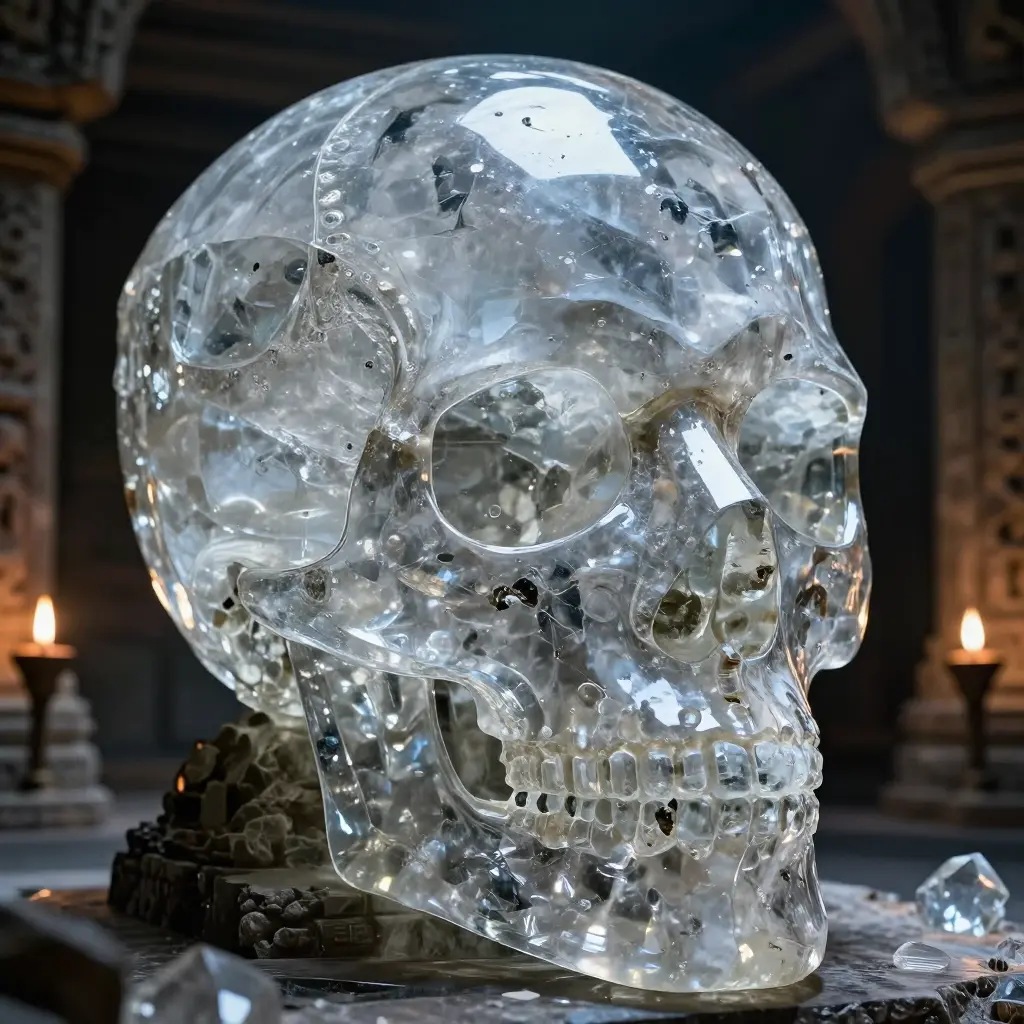
Of all the artifacts that have ever been presented as evidence of ancient civilizations possessing knowledge and technology lost to the modern world, few have captured the public imagination as powerfully as the crystal skulls. These life-sized human skull carvings, fashioned from single blocks of clear or milky quartz crystal, have been displayed in major museums, featured in blockbuster films, and imbued by New Age believers with extraordinary mystical properties — healing powers, psychic communication, even the ability to generate energy fields. The most famous, the so-called “Skull of Doom,” was allegedly discovered by a young girl beneath a collapsed altar at the ancient Maya ruins of Lubaantun in Belize in the 1920s, and has been described as impossible to have been made with any known ancient technology. The crystal skulls have been the subject of television documentaries, countless books, and the 2008 film Indiana Jones and the Kingdom of the Crystal Skull. They have been examined by scientists at the British Museum, the Smithsonian Institution, and the laboratories of Hewlett-Packard. And yet, despite decades of investigation and an aura of ancient mystery, the scientific evidence tells a very different story — one that involves not ancient Maya priests or lost civilizations, but 19th-century German gem carvers, a shady French antiquities dealer, and a British adventurer with a gift for tall tales.
The crystal skulls first emerged into public awareness during the late 19th century, a period when European and American museums were engaged in fierce competition to acquire artifacts from ancient civilizations around the world. The pre-Columbian cultures of Mesoamerica — the Maya, Aztec, Mixtec, and others — were of particular interest, and museums and private collectors eagerly purchased objects attributed to these civilizations. This insatiable demand created a booming market for antiquities — and an equally booming market for forgery. The skulls are carved from clear or milky quartz crystal (rock crystal), a material that is extraordinarily hard (7 on the Mohs scale, harder than steel) and notoriously difficult to work without modern tools. Genuine Mesoamerican cultures did carve stone extensively — the Maya worked jade, obsidian, and other hard stones with remarkable skill — but no known pre-Columbian Mesoamerican culture had a tradition of carving crystal skulls. The Aztec and Mixtec cultures did create skull imagery in stone and bone, and skulls played an important role in Mesoamerican cosmology as symbols of death, rebirth, and ancestor veneration, but the specific form of the crystal skull — a life-sized, anatomically detailed human cranium carved from a single block of quartz — has no precedent in the archaeological record of the Americas.
The most famous crystal skull in the world is the Mitchell-Hedges Crystal Skull, a remarkably detailed carving of a human skull that includes a detachable mandible (lower jaw) carved from the same piece of crystal. The skull is approximately life-sized and is carved from a single block of exceptionally clear quartz crystal. According to the story promulgated by Frederick Albert (“Mike”) Mitchell-Hedges (1882–1959), a British adventurer, stockbroker, and author, the skull was discovered by his adopted daughter Anna Mitchell-Hedges at the Maya ruins of Lubaantun in British Honduras (now Belize) in 1924 or 1926 — accounts vary. Mitchell-Hedges claimed that Anna found the skull hidden under a collapsed altar or inside a pyramid, and that local Maya workers recognized it as a powerful artifact. The story was dramatic, romantic, and perfectly calibrated to capture the imagination of a public hungry for tales of ancient mystery.
The problem is that virtually every element of this origin story appears to be false. No mention of the skull appears anywhere in Mitchell-Hedges’ writings before 1954 — not in his expedition accounts, not in his books, not in his correspondence. His 1931 book Land of Wonder and Fear, which describes his Central American adventures in detail, makes no mention of a crystal skull. The skull first appears in public records in 1933, when it was offered for sale at Sotherby’s auction house in London by the art dealer Sydney Burney. Mitchell-Hedges himself later wrote in his 1954 book Danger My Ally: “How it came into my possession I have reason for not revealing.” This hardly sounds like a man who had discovered an extraordinary archaeological find at a Maya site decades earlier. In 1943, Mitchell-Hedges purchased the skull at auction from Burney’s estate — buying, it appears, the same skull he had previously claimed to have discovered in the jungle. The truth, as Smithsonian anthropologist Jane MacLaren Walsh has documented through extensive archival research, is that the skull was almost certainly purchased at auction in London in the 1930s or 1940s and that the Lubaantun discovery story was fabricated to enhance both its value and the Mitchell-Hedges legend.
In 1970, the Mitchell-Hedges skull was taken to the laboratories of Hewlett-Packard in Santa Clara, California, for scientific analysis under the supervision of Frank Dorland, an art conservator and crystal enthusiast. The HP tests produced results that were widely cited by crystal skull believers as evidence of ancient or even supernatural origin. The most dramatic finding was that the skull appeared to have been carved against the crystal axis — the natural grain of the quartz — which, according to HP engineers, should have caused the crystal to shatter during carving. The tests also revealed that the skull and its detachable mandible were carved from the same single block of quartz, with no microscopic evidence of how the two pieces had been separated. However, these findings — while intriguing — do not prove ancient origin. As later studies would demonstrate, skilled 19th-century lapidaries working in Germany had the tools and expertise to carve quartz crystal to extraordinary standards of finish, and the HP tests did not include the microscopic analysis of tool marks that would later prove decisive in determining the skull’s true age.
The key figure in the true history of the crystal skulls is Eugene Boban (1834–1918), a French antiquarian, dealer, and self-proclaimed archaeologist who operated in Mexico City from the 1860s through the 1880s. Boban was a complex figure — he served as the official archaeologist to Emperor Maximilian I, the Austrian archduke installed as ruler of Mexico by Napoleon III in 1864, and he did handle genuinely ancient artifacts. But he was also known to deal in forgeries, mixing genuine pre-Columbian pieces with fabricated objects to satisfy the insatiable demand of European and American collectors. Boban first appeared in the crystal skull story in 1886, when he moved his business and collection from Mexico City to New York City and held a major auction of thousands of archaeological artifacts, colonial manuscripts, and books. At this auction, Tiffany & Co. purchased a crystal skull for $950. A decade later, Tiffany’s sold the skull to the British Museum, where it was catalogued as BM Am1897,-662 and placed on display as a presumed pre-Columbian Mesoamerican artifact.
Boban’s role as the common thread connecting multiple crystal skulls is central to understanding the forgery. Smithsonian researcher Jane MacLaren Walsh has traced the provenance of several skulls back to Boban’s dealings, establishing that he was the source of the British Museum skull, the Paris skull (now at the Musée du Quai Branly, catalogued as MQB 71.1933.3.1), and possibly others. Boban had already been denounced as a dealer of fakes during his time in Mexico City. Walsh’s research, published in major archaeological journals and popularized through the Smithsonian Institution, demonstrated that Boban was selling crystal skulls at a time when the market for pre-Columbian antiquities was booming and when the capacity of European gem-cutting workshops to produce convincing forgeries was at its peak.
The most likely birthplace of the crystal skulls is not a Maya temple in Central America but a small town in western Germany. Idar-Oberstein, located in the state of Rhineland-Palatinate, was one of the world’s great centers for gem cutting and lapidary work during the 19th century. The town’s artisans were renowned for their ability to work with hard stones including agate, jasper, and quartz, and they had access to abundant supplies of Brazilian quartz imported specifically for carving. The town’s workshops used rotary tools powered by water wheels and, later, steam engines, equipped with abrasive compounds including carborundum (silicon carbide) and diamond dust — materials that were available in the 19th century but not in the pre-Columbian Americas. Walsh and other researchers have concluded that the crystal skulls were almost certainly manufactured in Idar-Oberstein workshops during the late 19th century, using Brazilian quartz and modern rotary cutting tools, and then sold through dealers like Boban to unsuspecting (or not-so-unsuspecting) collectors and museums as ancient Mesoamerican artifacts.
The definitive scientific studies of the crystal skulls were conducted in 2008 by researchers at the British Museum and the Smithsonian Institution, using scanning electron microscopy (SEM) and other advanced analytical techniques. The results were devastating to claims of ancient origin. Both the British Museum skull and the Smithsonian skull showed clear evidence of modern tool marks — parallel striations and patterns consistent with rotary cutting tools and carborundum abrasive, which was not invented until 1891. Pre-Columbian Mesoamerican artisans used percussive tools (hammer stones, chisels) and abrasive techniques using natural materials like quartz sand and stone grinders, which leave a distinctive, irregular pattern of tool marks very different from the clean, parallel lines left by rotary equipment. The electron microscope images showed regular, evenly spaced parallel grooves on the skulls’ surfaces — the unmistakable signature of a spinning rotary tool. Jane MacLaren Walsh also examined the Mitchell-Hedges skull using the same techniques and found similar evidence of modern manufacture. The Smithsonian’s crystal skull (Catalog No. A407731-0), which had been received anonymously in 1992, was confirmed as a modern creation. The British Museum removed its skull from display as a genuine pre-Columbian artifact and relabelled it as a 19th-century European creation.
Despite the overwhelming scientific evidence that the crystal skulls are 19th-century European creations, they have inspired a vast and lucrative paranormal and New Age industry. Crystal skull believers attribute extraordinary properties to the objects: healing powers, the ability to induce visions, psychic communication, energy generation, and even the capacity to store the knowledge of ancient civilizations. Joshua Shapiro, a self-described “crystal skull explorer,” has written multiple books promoting the paranormal properties of the skulls and organizes events where people can “commune” with them. Anna Mitchell-Hedges herself became a fixture on the New Age and paranormal lecture circuit, displaying the skull and describing its purported mystical properties, until her death in 2007 at the age of 100.
Perhaps the most elaborate paranormal narrative surrounding the crystal skulls is the legend of the Thirteen Crystal Skulls. According to this story, there exist 13 ancient crystal skulls that, when reunited, will unlock ancient wisdom and save humanity from catastrophe. This legend was popularized by Nick Nocerino, a self-styled psychic and paranormal researcher who claimed to have discovered the prophecy. The 13-skulls legend has no basis in any known indigenous Mesoamerican mythology or oral tradition — it appears to be an entirely modern creation, a synthesis of New Age spirituality, Hollywood storytelling, and the human desire for ancient wisdom that will solve modern problems. The legend was further amplified by the 2008 Indiana Jones film, in which the crystal skulls are portrayed as artifacts of an interdimensional alien civilization. While the film was fiction, it introduced millions of viewers to the concept of mystical crystal skulls and lent the mythology a cultural legitimacy that the scientific evidence could not counter. Indigenous Mesoamerican cultures viewed skulls very differently from the modern Western imagination — not as objects of horror or doom but as symbols of rebirth, ancestors, and the continuity of life. The crystal skull mythology, as it has evolved in popular culture, represents a Western projection onto Mesoamerican cultures that has little to do with their actual beliefs or practices.
The scientist most responsible for debunking the crystal skulls is Jane MacLaren Walsh, an anthropologist at the Smithsonian National Museum of Natural History and a specialist in Mexican archaeology. Walsh began investigating the crystal skulls in the 1990s when she was asked to research the anonymously donated Smithsonian skull. Her investigation spanned over a decade and involved examining multiple skulls under high-powered light microscopes, ultraviolet light, CT scans, and scanning electron microscopes. She also conducted extensive archival research, tracing the provenance of the skulls through auction records, museum catalogues, and the correspondence of dealers like Eugene Boban. Walsh published her findings in 2008 in the journal American Anthropologist and in the Smithsonian Institution’s publications, demonstrating conclusively that the skulls were modern creations. Her work on the Mitchell-Hedges skull, published in Archaeology Magazine in 2010, was particularly significant: she obtained silicone molds of tool marks from the skull and analyzed them under scanning electron microscopes, finding clear evidence of high-speed, diamond-coated lapidary tools — technology that did not exist in the pre-Columbian Americas. Walsh’s research has been described as one of the most thorough and convincing archaeological debunkings in modern history, and she is widely credited with solving the crystal skull mystery once and for all.
The crystal skulls are one of the great cautionary tales in the history of archaeology — a story about the power of wishful thinking, the profitability of mystery, and the difficulty of separating fact from fabrication in a world that desperately wants to believe in ancient secrets. The scientific evidence is now overwhelming and unambiguous: the crystal skulls examined to date were manufactured in the mid-19th century or later, almost certainly in European workshops — most likely in the gem-cutting town of Idar-Oberstein, Germany — using rotary tools and modern abrasives that did not exist in the pre-Columbian Americas. The trail of provenance leads not to Maya temples but to the shop of the French antiquities dealer Eugene Boban and the auction houses of London and New York. The “ancient” mythology surrounding the skulls — the 13-skull prophecy, the mystical healing powers, the alien origins — has no basis in any indigenous Mesoamerican tradition. And yet the legend persists, fueled by New Age belief, Hollywood storytelling, and the enduring human desire to find evidence that the ancients knew things we do not. The crystal skulls may not be ancient artifacts, but they are fascinating nonetheless — as artifacts not of the Maya, but of the 19th-century antiquities market and the 20th-century paranormal industry. They remind us that the most interesting mysteries are sometimes not about what ancient people did, but about what modern people want to believe.
References & Further Reading
Wikipedia: Mesoamerican Art — The genuine artistic traditions of pre-Columbian cultures
📚 Recommended Reading: The Mystery of the Crystal Skulls: Unlocking the Secrets of the Past, Present, and Future by Chris Morton and Ceri Louise Thomas (on Amazon) — As an Amazon Associate, we earn from qualifying purchases.
Editorial note: The crystal skulls are documented through scientific studies by the British Museum and Smithsonian Institution (2008), archaeological research by Jane MacLaren Walsh, and historical provenance research tracing the skulls to Eugene Boban and 19th-century German workshops. See our Editorial Policy.