The Bermuda Triangle: Why Do Ships and Planes Keep Disappearing?
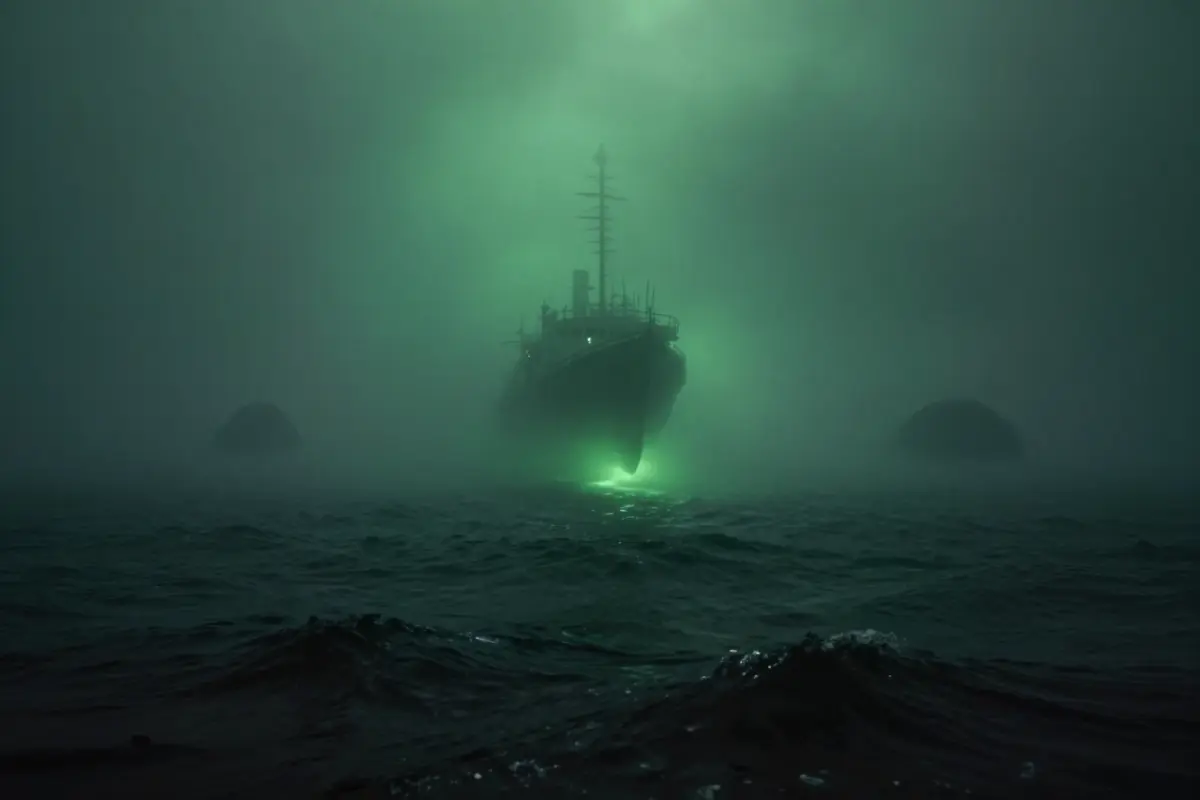
The Bermuda Triangle — a vast stretch of the western North Atlantic where ships and aircraft have vanished under mysterious circumstances
Stretching across roughly 500,000 square miles of the western North Atlantic Ocean, between the sun-drenched coasts of Florida, the island of Bermuda, and the Commonwealth of Puerto Rico, lies a stretch of water that has captured the darker corners of the human imagination for more than a century. They call it the Bermuda Triangle — or sometimes, more ominously, the Devil’s Triangle. It is a place where, according to popular legend, ships vanish without distress calls, aircraft fly into clouds and never emerge, and entire crews disappear as though swallowed by the sea itself. The stories are electrifying: five Navy torpedo bombers lost on a routine training flight in 1945, a massive cargo ship with 309 souls aboard vanishing without a trace in 1918, a tanker carrying molten sulfur disintegrating into the Atlantic in 1963. The Bermuda Triangle has been the subject of bestselling books, blockbuster films, and countless television documentaries, each promising to reveal the truth behind the legend. And yet, despite decades of investigation by scientists, historians, and government agencies, the mystery endures — a tantalizing blend of genuine tragedy, statistical exaggeration, and the ancient human fear of the unknown sea.
The Bermuda Triangle is not an officially recognized geographic feature — it appears on no government maps, and its boundaries are loosely defined at best. The most commonly cited vertices are Miami, Florida; San Juan, Puerto Rico; and the island of Bermuda, roughly 640 miles east of Cape Hatteras, North Carolina. The resulting triangle encompasses a vast expanse of open ocean, portions of the Sargasso Sea, the Bahamas, and some of the busiest shipping lanes in the Western Hemisphere. The area is traversed daily by commercial cargo vessels, cruise ships, military aircraft, and private boats. The Gulf Stream — one of the most powerful ocean currents in the world — flows directly through the triangle at speeds of up to 4.5 miles per hour, carrying warm water from the Gulf of Mexico northward along the eastern seaboard and out into the Atlantic. The climate is subtropical, with weather that can change from placid to violent with stunning speed. The region lies directly in the path of Atlantic hurricane tracks, and sudden squalls, waterspouts, and fierce thunderstorms are common occurrences. Christopher Columbus himself documented strange compass readings and a “great flame of fire” — likely a meteor — while sailing through the area in 1492, marking the first recorded association of the region with the unusual.
The single incident most responsible for launching the Bermuda Triangle into popular mythology occurred on December 5, 1945, when five TBM Avenger torpedo bombers — collectively designated Flight 19 — disappeared during a routine navigation training exercise over the Atlantic Ocean. The flight had departed from Naval Air Station Fort Lauderdale, Florida, at approximately 2:10 PM, led by Lieutenant Charles C. Taylor, an experienced combat veteran. The exercise, called “Navigation Problem No. 1,” was a standard overwater navigation and bombing training run that other squadrons had completed without incident. The plan was simple: fly east toward the Bahamas, conduct a practice bombing run at a target area known as “Hen and Chickens Shoals,” then turn north and return to Fort Lauderdale. But somewhere over the open water, something went terribly wrong.
At approximately 3:40 PM, more than 90 minutes after departure, radio operators at Fort Lauderdale began receiving confused transmissions from Flight 19. Taylor reported that both of his compasses had malfunctioned. “I don’t know where we are,” he told his flight. “We must have got lost after that last turn.” The situation deteriorated rapidly. Taylor appeared to believe the flight was over the Florida Keys — far to the south and west of their actual position — and directed his planes to fly northeast, which would have taken them further out over the open Atlantic rather than back toward the Florida coast. As the afternoon wore on, the radio transmissions grew increasingly desperate and confused. The weather had worsened, with visibility dropping and seas becoming rough. By approximately 5:50 PM, the last faint transmissions from Flight 19 were received. “We’ll have to ditch unless landfall,” one pilot said. All 14 airmen aboard the five aircraft were lost. The Navy launched an immediate search, dispatching a Martin PBM Mariner flying boat from Naval Air Station Banana River to search for the missing squadron. The PBM, carrying 13 crew members, never returned. A merchant ship in the area reported seeing a fireball in the sky at approximately the time the PBM would have been over the search area, leading investigators to conclude that the aircraft had suffered a mid-air explosion — a known vulnerability of the PBM Mariner, which was prone to fuel vapor ignition. In total, six aircraft and 27 men were lost that day. No confirmed wreckage of Flight 19 has ever been found.
While Flight 19 is the most famous Bermuda Triangle incident, the disappearance of the USS Cyclops in March 1918 is arguably the most baffling — and the most deadly. The Cyclops was a Protector-class cargo ship operated by the United States Navy, displacing approximately 19,360 tons and measuring 542 feet in length. On March 4, 1918, the ship departed Barbados en route to Baltimore, Maryland, carrying a full cargo of manganese ore (used in steel production) and 309 crew members and passengers. The ship was never seen again. No distress signal was ever received. No wreckage was ever found. No bodies were ever recovered. The disappearance of the Cyclops remains the single largest loss of life in U.S. Naval history not involving combat. The Navy launched an extensive search, and the case was investigated multiple times over the decades, but no conclusive explanation has ever been established. Theories have ranged from structural failure (the ship was heavily overloaded with manganese ore, which may have shifted in rough seas) to German U-boat attack during World War I (though no German submarine ever claimed the sinking) to rogue waves and methane hydrate eruptions. The ship’s captain, Lieutenant Commander George W. Worley, was described by some crew members as erratic and unstable, leading to speculation about crew mutiny or deliberate sinking — but no evidence supports these theories. The Cyclops simply vanished, as completely and mysteriously as if it had never existed.
The pattern repeated itself in February 1963, when the SS Marine Sulphur Queen, a T2 tanker converted to carry molten sulfur, disappeared with 39 crew members while en route from Beaumont, Texas, to Norfolk, Virginia. The ship’s last communication was a routine radio report on February 4. When the ship failed to arrive, a massive search was launched. The only debris ever found was a small amount of wreckage — life jackets, a life ring, and some scattered debris — but no bodies, no survivors, and no definitive evidence of what had happened. The Coast Guard investigation concluded that the most likely cause was a rupture in the ship’s sulfur-heating system, which could have triggered a catastrophic explosion or fire. The sulfur itself, heated to approximately 275 degrees Fahrenheit to keep it in liquid form, was inherently dangerous — a leak could produce toxic hydrogen sulfide gas, and a fire could have been extraordinarily difficult to extinguish.
Other notable disappearances in the Bermuda Triangle include the Star Tiger (a British South American Airways aircraft that vanished on January 30, 1948, with 31 people aboard while approaching Bermuda), the Star Ariel (another BSAA aircraft that disappeared on January 17, 1949, with 20 people aboard en route from Bermuda to Kingston, Jamaica), and the USS Scorpion (SSN-589), a nuclear-powered submarine lost with 99 crew members in May 1968. The Scorpion was found in pieces on the ocean floor approximately 400 miles southwest of the Azores, but the cause of its loss has never been definitively determined.
The term “Bermuda Triangle” was coined by writer Vincent Gaddis in a 1964 article published in Argosy magazine, titled “The Deadly Bermuda Triangle.” Gaddis was the first to connect a series of maritime and aviation disappearances into a single narrative centered on the triangular region between Miami, Bermuda, and Puerto Rico. The article caught the public’s imagination, but it was Charles Berlitz’s 1974 book The Bermuda Triangle that truly launched the phenomenon. Berlitz, a linguist and author with a gift for dramatic storytelling, catalogued dozens of disappearances and proposed explanations ranging from extraterrestrial abductions to the lost continent of Atlantis, from magnetic anomalies to time warps. The book sold approximately 20 million copies worldwide and spawned a genre of Bermuda Triangle literature, films, and television specials.
But not everyone was convinced. In 1975, librarian and pilot Larry Kusche published The Bermuda Triangle Mystery — Solved, a meticulous investigation that systematically examined every major incident cited by Berlitz and other authors. Kusche’s findings were devastating to the legend. He discovered that many of the alleged “mysterious” disappearances had either not occurred in the Bermuda Triangle at all, had been grossly exaggerated in the retelling, or had mundane explanations that had been ignored or suppressed by sensationalist writers. Ships that were reported as vanishing “without a trace” had often sent distress signals that were ignored in the retellings. Aircraft described as disappearing in “clear weather” had actually been flying through storms. Some incidents cited by Berlitz had never happened at all. Kusche concluded that the Bermuda Triangle was essentially a manufactured mystery — a creation of selective reporting, sloppy research, and the human desire for the supernatural.
If the Bermuda Triangle were truly a zone of supernatural danger, you would expect the world’s marine insurers to know about it. Lloyd’s of London, the world’s largest and oldest marine insurance market, has been tracking shipping losses for more than 300 years. Their verdict on the Bermuda Triangle? It does not exist as a statistical hazard. Lloyd’s does not charge higher premiums for ships transiting the Bermuda Triangle, and their actuarial data shows that the rate of shipping losses in the triangle is no higher than in any other comparable region of the world’s oceans. The U.S. Coast Guard has stated officially that it does not recognize the Bermuda Triangle as a geographic area of hazard. The United States Navy has stated that “the Bermuda Triangle does not exist”. And a World Wildlife Fund (WWF) study conducted between 2000 and 2013 that identified the 10 most dangerous waters in the world for shipping based on actual loss data — the Bermuda Triangle was not on the list. The statistical reality is that the Bermuda Triangle is one of the most heavily traveled shipping lanes in the world, and given the volume of traffic, the absence of incidents is more remarkable than their occurrence.
While the supernatural explanations have been thoroughly debunked, the real science of the region is no less fascinating. Several genuine natural phenomena operate in the Bermuda Triangle that can, and do, create genuinely dangerous conditions for ships and aircraft. The most powerful of these is the Gulf Stream, a warm ocean current that flows through the triangle at speeds of up to 4.5 miles per hour — faster than many rivers. When a ship sinks in the Gulf Stream, the current can carry debris dozens of miles away from the sinking location within hours, making it extremely difficult for search teams to locate wreckage. This is one of the primary reasons why ships can appear to have “vanished without a trace” — the trace was simply carried away by the current before searchers arrived.
The region also produces some of the most unpredictable and violent weather in the North Atlantic. The convergence of warm tropical air from the south and cold continental air from the north creates a volatile atmospheric environment where sudden squalls, waterspouts, and severe thunderstorms can develop with little warning. Scientists have also identified rogue waves — sometimes called “freak waves” — as a possible explanation for some ship losses. Rogue waves are unusually large ocean surface waves that can reach heights of 100 feet (30 meters) or more, far exceeding the surrounding sea state. Long dismissed as sailor’s folklore, rogue waves were confirmed by satellite observation in 1997 and are now recognized as a genuine oceanographic phenomenon. A single rogue wave striking a vessel could cause catastrophic damage and rapid sinking, leaving little time for distress signals.
Among the more scientifically interesting explanations are methane hydrate eruptions. Methane hydrates are crystalline structures found on the ocean floor in which methane gas is trapped within a lattice of water ice. Under certain conditions — changes in temperature or pressure — these hydrates can destabilize rapidly, releasing enormous volumes of methane gas in a violent eruption. If such an eruption occurred beneath a ship, the release of gas would dramatically reduce the density of the water, potentially causing the vessel to lose buoyancy and sink almost instantly. Laboratory experiments have demonstrated this effect, and methane hydrate deposits have been identified in the continental shelf regions near the Bermuda Triangle. However, no confirmed methane eruption has been directly linked to a specific shipping loss in the triangle.
Another frequently cited factor is the region’s relationship with magnetic north. The Bermuda Triangle is one of the few places on Earth where true north and magnetic north align — a line known as the “agonic line.” Navigators relying on magnetic compasses without accounting for magnetic declination could theoretically become disoriented in this region. However, modern navigation relies on GPS and gyroscopic compasses that are unaffected by magnetic variation, making this explanation largely historical. It may have been relevant in the era of Flight 19 (1945), when compass malfunctions were reported, but it cannot account for modern incidents. The most parsimonious explanation for most Bermuda Triangle incidents is a combination of heavy maritime traffic, unpredictable weather, the powerful Gulf Stream, and human error — a set of factors entirely sufficient to explain the statistical rate of incidents without invoking the supernatural.
Lying within the broader region of the Bermuda Triangle is the Sargasso Sea — the only sea on Earth defined not by land boundaries but by ocean currents. Bounded by the Gulf Stream to the west, the North Atlantic Current to the north, the Canary Current to the east, and the Atlantic North Equatorial Current to the south, the Sargasso Sea is a vast, slow-circulating body of remarkably calm water covering approximately 1.1 million square miles. It is named for Sargassum, a genus of free-floating brown seaweed that accumulates in huge mats across the sea’s surface. The Sargasso Sea was known to sailors for centuries as a place of eerie calm, where ships could become becalmed for days or weeks, their hulls entangled in masses of drifting seaweed. Christopher Columbus documented the Sargasso Sea during his 1492 voyage, noting the strange seaweed and the unusually still water. While the Sargasso Sea poses no supernatural threat, its reputation for eerie calm and entangled vessels contributed to the Bermuda Triangle legend’s atmosphere of maritime dread.
The Bermuda Triangle occupies a unique position in the geography of human fear — a place where statistical reality and cultural mythology diverge so sharply that they seem to describe entirely different locations. The scientific evidence is clear: the rate of maritime and aviation incidents in the Bermuda Triangle is no higher than in any other comparably trafficked region of the world’s oceans. Lloyd’s of London does not charge higher premiums. The U.S. Coast Guard does not recognize it as a hazard zone. The Navy says it does not exist. And yet the stories persist. Five Navy bombers flying into oblivion. A massive cargo ship with 309 men vanishing without a whisper. A tanker carrying molten sulfur dissolving into the Atlantic. There is something about the Bermuda Triangle that speaks to a deep, primal fear of the sea — a fear that the ocean is vast, indifferent, and capable of swallowing anything without explanation. That fear is not irrational. The sea is vast and indifferent. Ships do sink, aircraft do crash, and people do disappear. The mystery of the Bermuda Triangle is not that these things happen — it is that we cannot stop telling stories about them. And perhaps that is the real lesson: that the human need to find patterns, to impose meaning on chaos, and to believe that the unknown has a shape and a name — even if that name is “the Devil’s Triangle” — is itself one of the deepest mysteries of all.
References & Further Reading
Wikipedia: USS Cyclops (AC-4) — The 1918 disappearance of the Navy cargo ship with 309 crew members
Wikipedia: Gulf Stream — The powerful Atlantic current that flows through the Bermuda Triangle
📚 Recommended Reading: The Bermuda Triangle Mystery--Solved by Lawrence David Kusche (on Amazon) — As an Amazon Associate, we earn from qualifying purchases.
Editorial note: The Bermuda Triangle is documented through decades of U.S. Navy and Coast Guard records, insurance industry data, and peer-reviewed oceanographic research. See our Editorial Policy.