The Marfa Lights: Texas Desert's Glowing Mystery
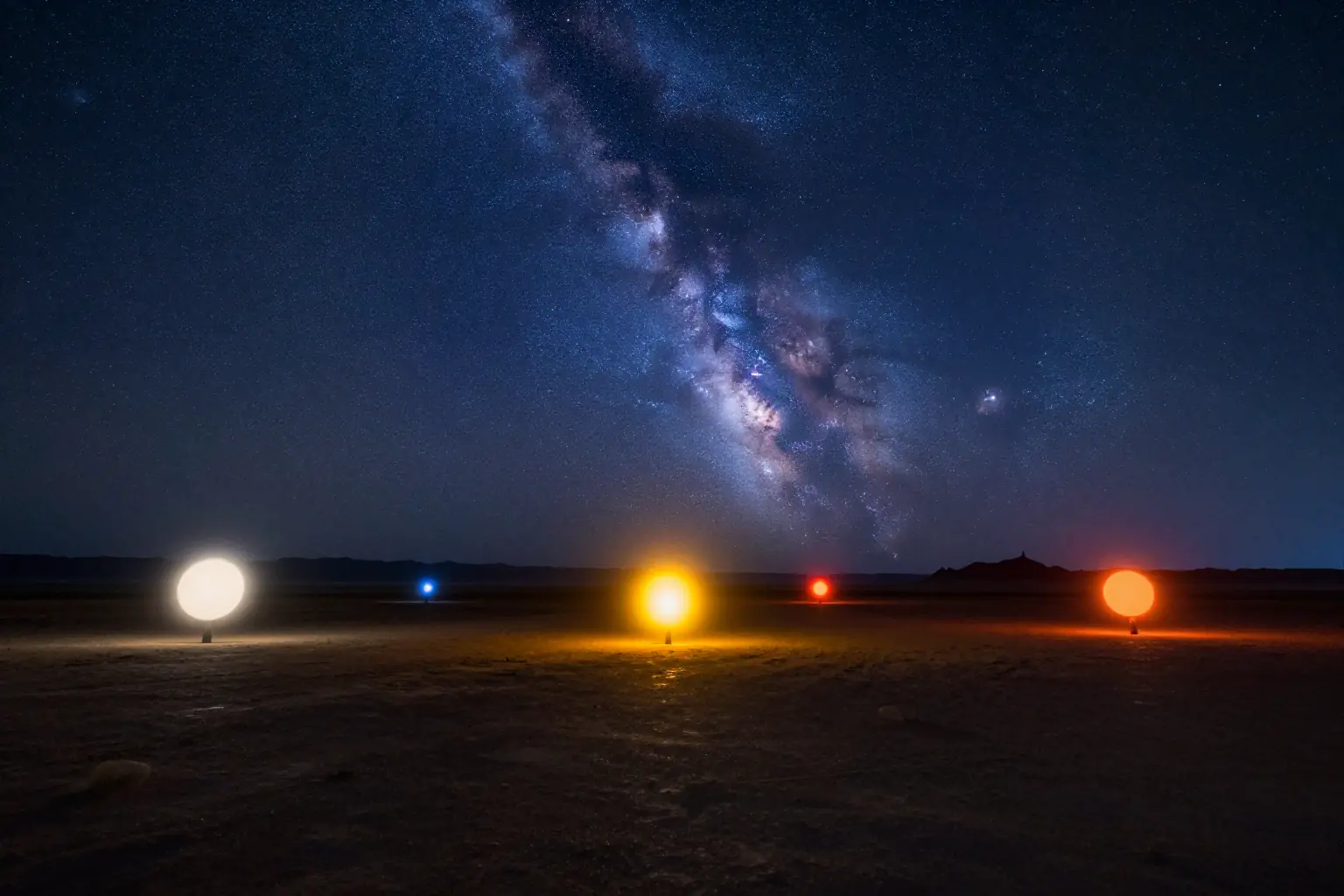
In the vast, high-desert plains of West Texas, where the Chihuahuan Desert stretches to the horizon and the Chinati Mountains rise like broken teeth against an impossibly wide sky, something strange has been happening for well over a century. After dark, mysterious glowing orbs appear over the Mitchell Flat area south of Marfa, Texas — small, luminous points of light that hover, drift, merge, split, change color, and vanish without explanation. They are usually described as white, yellow, or orange, though witnesses have also reported red, blue, and green variants. They range in apparent size from basketball-sized to much larger, and they appear at varying distances, sometimes close enough to seem just beyond the next ridge, sometimes so far away they are barely distinguishable from stars. They move in ways that seem to defy easy categorization — sometimes gliding slowly across the desert floor, sometimes hovering motionless for extended periods, sometimes accelerating and changing direction with startling abruptness. They have been reported by ranchers, pilots, geologists, tourists, physicists, and literally thousands of casual observers who have traveled to the official Marfa Lights Viewing Center on US Highway 90, about nine miles east of Marfa, to see the phenomenon for themselves. Despite over a century of observation and multiple scientific investigations, the Marfa Lights remain one of the most famous and thoroughly documented unexplained light phenomena in the United States.
The town of Marfa, Texas (population approximately 1,700) sits in Presidio County at an elevation of about 4,688 feet in the Trans-Pecos region of West Texas, one of the most sparsely populated areas in the continental United States. The nearest city of any size is El Paso, roughly 200 miles to the northwest. The surrounding landscape is classic high desert — flat, arid grassland broken by volcanic mesas and the dramatic ridgeline of the Chinati Mountains to the south. The isolation, the clarity of the desert air, and the absence of light pollution make the area an ideal natural observatory, and the lights have been a source of local fascination since the earliest settlers arrived in the region. The phenomenon has become deeply woven into the cultural identity of Marfa, celebrated annually at the Marfa Lights Festival and promoted by the Marfa Chamber of Commerce as the town’s premier tourist attraction. The lights share intriguing similarities with other unexplained aerial phenomena around the world, including the Hessdalen Lights in Norway and the famous Phoenix Lights in Arizona, but the Marfa case is distinguished by its longevity, its accessibility to casual observers, and the intensity of the scientific debate it has generated.
The first recorded sighting of the Marfa Lights dates to 1883, when a young rancher named Robert Reed Ellison reported seeing mysterious glowing lights on the Mitchell Flat south of Marfa while driving cattle across the open range. According to local oral history, Ellison initially assumed the lights were Apache campfires, but upon investigation, he found no evidence of any fire, campsite, or human presence. The lights appeared, moved, and disappeared without leaving any physical trace. Other early settlers reported similar sightings, and over the decades, the phenomenon became a fixture of local folklore. Scholars have documented over seventy-five local folk tales dealing with the unexplained lights, reflecting the deep cultural imprint the phenomenon has made on the community. Native American legends in the region also reference mysterious lights in the desert, though these traditions predate written records and are difficult to link definitively to the same phenomenon.
In 1945, during World War II, the Marfa Lights gained a new level of credibility when Fritz Kahl, a pilot stationed at the nearby Marfa Army Air Field, reported seeing the lights while flying over the area. Kahl’s account, given from the perspective of an experienced aviator who was well acquainted with aircraft lights, navigation beacons, and other aerial phenomena, carried weight: he insisted that the lights did not correspond to any known aircraft, vehicle, or navigational aid. The airfield, which had been established to train pilots during the war, brought hundreds of military personnel to the area, many of whom reported seeing the lights during night exercises and training flights. The military sightings added a layer of official documentation to a phenomenon that had previously existed primarily in the realm of rancher folklore. In the post-war decades, the lights continued to be reported regularly, and the construction of the official Marfa Lights Viewing Area by the Texas Department of Transportation in 1986 formalized the phenomenon as a tourist destination. The viewing area has since hosted hundreds of thousands of visitors from around the world. According to the Marfa Chamber of Commerce, the viewing center receives an estimated 30,000 to 40,000 visitors per year, making it one of the most popular tourist attractions in the Big Bend region. The best viewing is typically during fall, winter, and spring evenings, when the desert air is clear and cool.
The Marfa Lights have been the subject of multiple scientific investigations, and the results have been both illuminating and deeply controversial. The most widely publicized study was conducted in 2004 by the Society of Physics Students (SPS) at the University of Texas at Dallas, under the direction of physics professor Dr. Karl Stephan. The research team set up observation posts on Mitchell Flat and used binoculars, telescopes, and spectroscopic equipment to observe and analyze the lights over several nights. Their conclusion was unequivocal: the lights observed during their study matched the position, movement, and spectral signature of automobile headlights on US Highway 67, the road that runs between Marfa and Presidio through the Mitchell Flat area. The team demonstrated that the highway, which curves across the desert floor, creates a variety of optical effects when viewed from the elevated position of the viewing center — lights that appear to hover, merge, split, and change color are consistent with the headlights of cars at varying distances, angles, and atmospheric conditions. The spectroscopic analysis found that the spectra matched the characteristic emissions of incandescent automotive headlights, specifically the thermal emission spectrum of tungsten filaments.
However, the SPS study did not settle the debate. Critics pointed out that the team observed the lights on only a handful of nights and may not have witnessed the full range of the phenomenon. Reports of the Marfa Lights predate the construction of US Highway 67 — Robert Ellison’s 1883 sighting occurred decades before the automobile was common in West Texas, and long before any paved road crossed the Mitchell Flat. Some witnesses have reported lights that behave in ways that are difficult to attribute to car headlights: lights that appear to respond to flashlights, flares, or other stimuli, lights that move at speeds inconsistent with vehicular traffic, and lights that appear in areas where no roads exist. In 2005, Edson Hendricks and a team from Texas State University conducted a separate investigation using side-scan sonar and other instruments to study the Mitchell Flat area. Their findings were less definitive than the SPS study, suggesting that while some lights could be attributed to vehicular traffic, not all observed phenomena were easily explained by headlights alone.
The leading alternative to the car-headlight explanation involves atmospheric refraction — the bending of light as it passes through layers of air at different temperatures and densities. The Mitchell Flat area is particularly susceptible to temperature inversions, in which a layer of warm air sits above a layer of cooler air near the desert floor. This temperature gradient can bend light from distant sources — including the lights of the town of Presidio, Texas, and the Mexican city of Ojinaga, Chihuahua, both located across the border roughly 40 to 60 miles to the south — creating mirages that appear to hover above the desert. This theory, sometimes called the Fata Morgana explanation after the famous mirage phenomenon, can account for many of the lights’ observed behaviors, including their apparent motion caused by shifting atmospheric conditions, their changes in color and intensity, and their tendency to appear and disappear unpredictably. However, the refraction theory also has limitations: it does not easily explain why the lights have been reported for over 140 years, long before the electric lights of Presidio and Ojinaga were bright enough to produce such effects, or why some witnesses report lights that appear to be close rather than far away.
The scientific debate over the Marfa Lights has generated a remarkable range of alternative explanations, each with its own supporters and skeptics. The phosphorescent minerals theory suggested that certain minerals in the desert soil might glow under specific conditions, but geological surveys of the area have not identified minerals capable of producing the observed effects. The swamp gas theory, sometimes invoked for similar phenomena in wetland areas, is a poor fit for the arid Chihuahuan Desert, where standing water and organic decay are extremely rare. A more intriguing theory involves the piezoelectric effect — the generation of electrical charge in certain minerals, particularly quartz, when subjected to mechanical stress. The Mitchell Flat area has quartz-rich geological formations, and tectonic stress in the region could, in theory, generate piezoelectric charges that ionize the air above, producing luminous effects. This is the same mechanism that has been proposed for the Hessdalen Lights in Norway, where quartz-rich geology and fault lines create conditions favorable for piezoelectric charge generation. However, the piezoelectric theory for Marfa remains speculative, as no direct measurements of piezoelectric activity in the Mitchell Flat area have been published. The sheer variety of proposed explanations — from the mundane to the exotic — reflects the difficulty of explaining a phenomenon that has been observed under widely varying conditions by thousands of witnesses over more than a century.
The Marfa Lights have become one of the most celebrated unexplained phenomena in American popular culture, inspiring books, documentaries, films, and festivals. The phenomenon received a significant boost in public awareness when James Dean’s epic film “Giant” (1956), also starring Rock Hudson and Elizabeth Taylor, was filmed on location near Marfa, drawing national attention to the tiny West Texas town and its mysterious lights. Since then, the lights have been featured in numerous television programs, including segments on Unsolved Mysteries and other paranormal investigation shows. Judith M. Brueske’s 1990 book The Marfa Lights remains the most comprehensive published collection of sighting reports, local folklore, and theoretical investigations. The annual Marfa Lights Festival, held each year since 1986, celebrates the phenomenon with live music, food vendors, arts and crafts, and communal light-watching excursions. The Texas Historical Commission erected a historical marker at the viewing site in 1988, officially recognizing the Marfa Lights as a significant part of Texas history and folklore. The town of Marfa has embraced its identity as a destination for both the paranormal and the avant-garde — in addition to the lights, the town is known for the Chinati Foundation, a contemporary art museum founded by artist Donald Judd, and a thriving arts scene that has drawn galleries, restaurants, and hotels to this remote corner of West Texas.
The Marfa Lights are part of a global family of “ghost light” phenomena — unexplained nocturnal lights reported at specific locations around the world over long periods. The Brown Mountain Lights of North Carolina have been reported since at least the early 20th century and, like the Marfa Lights, have been the subject of multiple scientific investigations with inconclusive results. The Hornet Spooklight, observed along the Oklahoma-Missouri border since the late 19th century, shares many characteristics with the Marfa Lights, including apparent motion, color changes, and resistance to definitive explanation. The Naga Fireballs of the Mekong River in Thailand and Laos — glowing balls of light that rise from the river’s surface each October during the Buddhist Lent season — are perhaps the most culturally significant ghost light phenomenon, attracting hundreds of thousands of spectators and defying scientific explanation despite decades of study.
The Marfa Lights remain one of America’s most enduring and beloved mysteries — a phenomenon that has been observed for over 140 years by thousands of witnesses, investigated by physicists and skeptics, debated in scientific journals and roadside conversations, and still refuses to be neatly categorized. The car-headlight explanation, supported by the 2004 SPS study, is persuasive for the common lights visible on most nights — but it cannot account for the full historical record of the phenomenon, including the pre-automobile sightings of the 19th century and the reports of lights that behave in ways inconsistent with vehicular traffic. The atmospheric refraction theory provides an elegant alternative but also has limitations. What is undeniable is that the Marfa Lights have become something far larger than the physical phenomenon itself: they are a cultural institution, a source of community identity, a tourist attraction, and a reminder that even in the age of satellite imagery and spectroscopic analysis, the desert can still produce wonders that resist easy explanation. Whether the lights are headlights, mirages, plasma, or something else entirely, they continue to draw people to the dark desert east of Marfa, where they sit in lawn chairs on the shoulder of Highway 90, watching the horizon with the same mixture of wonder and puzzlement that Robert Ellison felt in 1883. The lights are out there. They always have been. And they are still waiting to be understood.
References & Further Reading
Wikipedia: Brown Mountain Lights — Similar ghost light phenomenon in North Carolina for comparison
Wikipedia: Hessdalen Lights — Norway’s scientifically studied ghost lights with parallels to Marfa
Wikipedia: Marfa, Texas — The town’s history, culture, and connection to the lights phenomenon
📚 Recommended Reading: UFOs: Generals Pilots by Leslie Kean (on Amazon) — As an Amazon Associate, we earn from qualifying purchases.
Editorial note: scientific understanding of the Marfa Lights continues to evolve as new investigations and analytical approaches are applied. See our Editorial Policy.