The Bennington Triangle: Vermont’s Bermuda Triangle
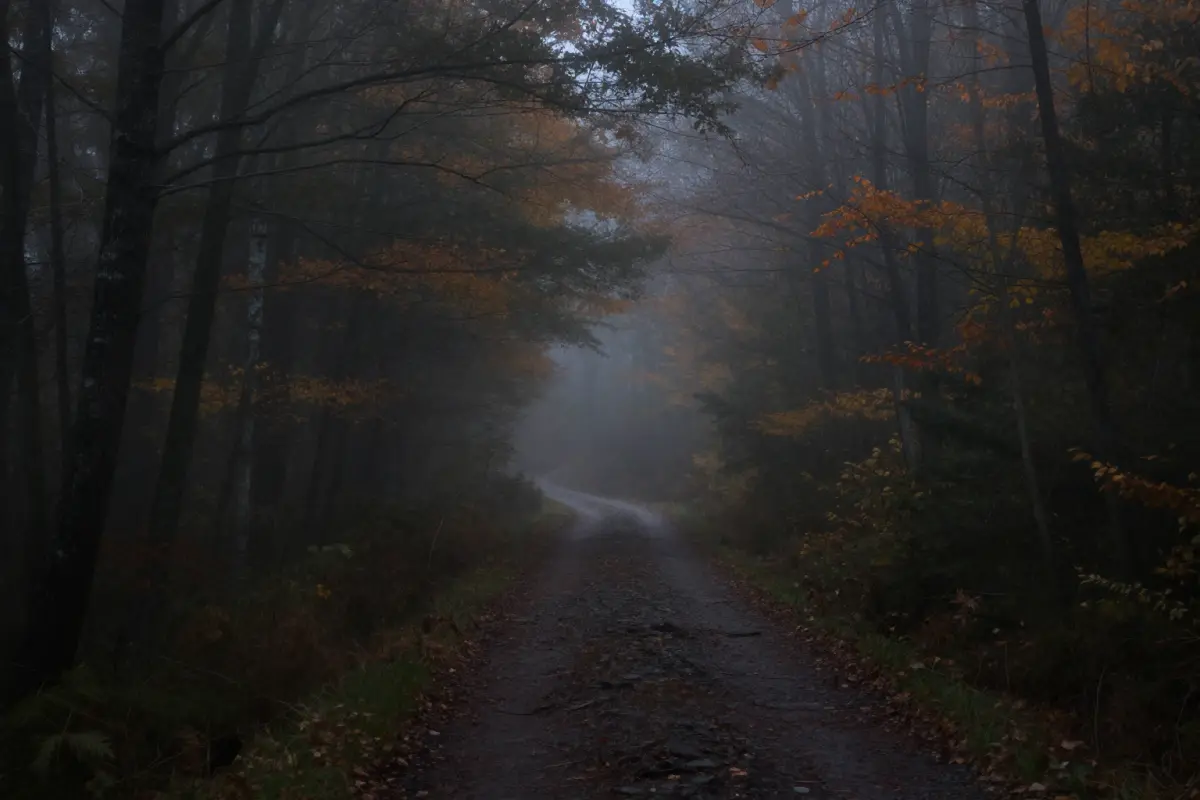
In the dense, dark woodlands of southwestern Vermont, where the Green Mountains rise in ancient, folded ridges and the trees close in overhead like the walls of a cathedral, there is a stretch of wilderness that has earned a reputation as one of the most mysteriously dangerous places in America. Centered on Glastenbury Mountain — a remote, 3,748-foot peak in the Green Mountain National Forest — and encompassing the towns of Bennington, Woodford, Shaftsbury, and the ghost town of Somerset, this area has been called the “Bennington Triangle,” a name coined by Vermont author Joseph A. Citro in his 1992 book Passing Strange: True Tales of New England Hauntings and Horrors. Between 1945 and 1950, in a concentrated five-year window that still defies easy explanation, five people vanished in or near this area. Some were experienced outdoorsmen who knew the terrain. Others were ordinary people going about ordinary days. Two vanished on the exact same calendar date — December 1 — three years apart. One disappeared from a moving bus, leaving behind luggage but no body. Another, an eight-year-old boy in a bright red jacket, vanished while his mother’s back was turned. The only body ever recovered was found in an area that had already been searched.
The landscape of the Bennington Triangle is itself a character in the story. Glastenbury Mountain, the geographic center of the mystery, is the highest point in the area at 3,748 feet. The mountain is located in the Green Mountain National Forest, a vast expanse of rugged, forested terrain that stretches across much of Vermont. The Long Trail, Vermont’s famous 272-mile hiking route that runs the length of the state along the crest of the Green Mountains, passes directly over Glastenbury Mountain — and it was on or near this trail that several of the disappearances occurred. The area was once home to the logging town of Glastenbury, a moderately thriving community in the 19th century that depended on the timber industry. By the late 1800s, the surrounding forests had been clear-cut, the timber exhausted, and the town’s economy collapsed. Glastenbury and Somerset were both unincorporated by an act of the Vermont General Assembly in 1937, leaving behind only the remnants of foundations, cellar holes, and the eerie atmosphere of a place that had been abandoned by the living. The ruins of these ghost towns still dot the landscape — cellar holes, stone walls, and rusting equipment slowly being consumed by the returning forest. The Long Trail, which passes directly through this area, remains one of the most popular hiking routes in Vermont, but the section near Glastenbury Mountain has a reputation among hikers for an eerie quiet — an absence of birdsong and animal activity that some find deeply unsettling.
The first disappearance occurred on November 12, 1945, just months after the end of World War II. Middie Rivers, a 74-year-old experienced hunting guide and lifelong outdoorsman, was leading a party of four hunters through the rugged terrain near Bickford Hollow, approximately four miles west of Bennington and north of Vermont Route 9 near Woodford. Rivers knew this territory intimately — he had hunted and guided in these mountains for decades. At some point during the hunt, Rivers went ahead of the group to scout the terrain. The hunters waited. And waited. Rivers never came back. An eight-day search involving dozens of volunteers, game wardens, and experienced trackers combed the area. They found a single rifle cartridge in a stream bed — the only trace Middie Rivers ever left behind. No body, no clothing, no signs of a struggle. A man who had spent his life in these woods had stepped off the trail and simply ceased to exist.
Just over a year later, on December 1, 1946, the disappearance that would make the Bennington Triangle famous occurred. Paula Jean Welden was an 18-year-old sophomore at Bennington College, a prestigious liberal arts school located at the edge of the wilderness. On the afternoon of December 1, Welden told her roommates she was going for a hike on the Long Trail near Glastenbury Mountain. She was seen by multiple witnesses that afternoon: a local man gave her directions to the trailhead, and a hiker observed her approximately two miles up the trail at around 2:30 PM. She was wearing a red windbreaker, blue jeans, and tennis shoes — inadequate clothing for the December cold but not unusual for a young woman going for an afternoon walk. She never came back. What followed was one of the largest search operations in Vermont history. Hundreds of volunteers, including the Fire Department, State Police, National Guard, and even the FBI, combed the mountain. A $5,000 reward was offered — a substantial sum in 1946. Bloodhounds were brought in. Aircraft were deployed. Despite all of this, not a single trace of Paula Welden was ever found — not a scrap of clothing, not a footprint, not a button. Her case remains one of Vermont’s oldest and most baffling cold cases, and her disappearance directly led to the creation of the Vermont State Police in 1947, because existing law enforcement had proven inadequate to handle such a large-scale investigation.
Three years to the day after Paula Welden walked into the woods and never came back, the Bennington Triangle claimed its third victim in what may be the most inexplicable disappearance of all. On December 1, 1949, James E. Tedford, a 68-year-old World War II veteran, was returning home to St. Albans, Vermont after visiting relatives in Bennington. He boarded a commercial bus at the Bennington station, settled into his seat, and began the journey north through the Green Mountains along the route that skirted the very wilderness where Middie Rivers and Paula Welden had vanished. Other passengers on the bus later confirmed that they had seen Tedford aboard, seated and awake, as the vehicle made its way through the dark December evening. At some point during the journey — most accounts place it between Bennington and the town of Wilmington, a stretch of road that runs directly through the heart of the Bennington Triangle — Tedford simply ceased to be on the bus. When the vehicle arrived at its next scheduled stop, his luggage was still in the cargo hold. His bus schedule was still on his seat. His hat was still on the luggage rack above him. But James Tedford was gone. He had not gotten off at any stop. No passenger had seen him stand up or move toward the door. The bus had made no unscheduled stops on the roadside. There was no evidence of a struggle, no broken window, no emergency exit opened. A man had been sitting in his seat one moment and was simply absent the next, as though the air itself had swallowed him. An extensive search along the bus route turned up nothing. No body was ever found. The coincidence of the date — December 1, exactly three years after Paula Welden’s disappearance — only deepened the sense that something unnatural was at work in the mountains of southwestern Vermont.
Less than a year later, the Bennington Triangle took its youngest victim. On October 12, 1950, Paul Jephson, an eight-year-old boy, accompanied his mother to a dump area near Woodford, just east of Bennington on the edge of the triangle. Paul’s mother had gone to the dump to dispose of garbage — a routine errand in rural Vermont. She left Paul playing near the vehicle while she went about her business, turning her back for only a matter of minutes. When she turned around again, her son was gone. Paul had been wearing a bright red jacket that would have been highly visible against the autumn foliage — a detail that made his sudden, complete disappearance all the more baffling. The search for Paul Jephson was immediate and massive. Hundreds of volunteers, including the Bennington Fire Department, Vermont State Police, and local hunters familiar with the terrain, combed the area. Bloodhounds were brought in to trace the boy’s scent. The dogs reportedly picked up a trail leading into the woods toward Glastenbury Mountain, but the scent trail eventually faded and the handlers lost it. Despite days of intensive searching, not a single trace of Paul Jephson was ever found — no red jacket, no shoe, no scrap of clothing, no footprint in the soft autumn ground. The area where he vanished was not deep wilderness but the edge of a populated area, near a road, within sight of where his mother had been standing.
Sixteen days after Paul Jephson vanished, on October 28, 1950, the Bennington Triangle claimed its fifth and final confirmed victim. Frieda Langer, a 53-year-old woman from North Adams, Massachusetts, was camping with her cousin Herbert Elsner near East Shaftsbury, on the western edge of the Bennington Triangle. On the morning of October 28, Langer and Elsner set out on a hike in the wooded hills above their campsite. At some point, Langer decided to turn back to camp ahead of her cousin. She was last seen walking alone through the woods, heading in the direction of the campsite. She never arrived. When Elsner returned to camp and found her missing, he immediately raised the alarm. The search for Frieda Langer was one of the most extensive in Vermont history up to that point. Search parties scoured the woods for days. Aircraft were deployed. Every trail, ravine, and hollow within a five-mile radius was checked. Nothing was found — not at first. Then, in May 1951, seven months after her disappearance, Langer’s body was discovered in a swampy area near the Long Trail, approximately three miles from where she had last been seen. The location was deeply troubling: it was an area that search teams had already thoroughly combed during the initial search operation. How her body could have been there all along without being found — or whether it had been placed there later — has never been explained. Worse still, the body was in such an advanced state of decomposition that the cause of death could not be determined. The medical examiner found no evidence of gunshot wounds, stab wounds, or blunt-force trauma, but the condition of the remains made a definitive ruling impossible. She was the only one of the five vanished individuals whose remains were ever recovered — and her death provided no answers.
The five disappearances of the Bennington Triangle have generated no shortage of theories over the past seven decades, ranging from the plausible to the paranormal. The most straightforward explanation is natural causes: the Green Mountains are rugged, the weather can turn deadly without warning, and a person caught off-guard by hypothermia, a fall, or a sudden medical emergency in remote terrain can die quickly and be difficult to find. Vermont’s wilderness, while not as vast as the western mountains, is dense enough to conceal a body indefinitely — particularly in the deep ravines, sinkholes, and abandoned mine shafts that dot the region. Middie Rivers, at 74, could have suffered a heart attack or stroke. Paula Welden, dressed inadequately for December cold, could have succumbed to exposure. Frieda Langer could have fallen and been injured in the swamp where her body was found.
But the natural-causes theory struggles to account for several unsettling details. James Tedford did not vanish in the wilderness — he vanished from a moving bus with other passengers present. Paul Jephson did not wander into remote backcountry — he vanished from the edge of a populated area while his mother’s back was turned. The sheer concentration of disappearances — five people in five years, in a sparsely populated rural area — is statistically unusual, though skeptics note that disappearances do happen in wild country and that the clustering may be partly coincidental. Some researchers have pointed to foul play as the most likely explanation for at least some of the cases. A serial killer operating in the area during the late 1940s is not impossible, though no suspect was ever identified and the diversity of the victims — an elderly hunter, a young college woman, a veteran on a bus, a child, a middle-aged camper — does not fit the typical profile of a serial predator.
The paranormal theories are where the Bennington Triangle legend truly takes flight. Some have attributed the disappearances to a large, unidentified creature inhabiting the deep woods around Glastenbury Mountain. Others have proposed UFO abductions, citing the suddenness and completeness of the vanishings as evidence of non-human intervention. Time slips, interdimensional portals, and curse theories rooted in the idea that the land itself — once home to the Mahican people and later the abandoned logging towns — carries some malevolent force have all been proposed. Joseph A. Citro himself documented local folklore about a “Bennington Monster” — a large, hairy, man-like creature reportedly seen in the area — and stories of strange lights, sounds, and atmospheric anomalies on Glastenbury Mountain that long predated the 1940s disappearances. None of these theories has ever been substantiated with physical evidence, but the absence of conventional explanations has kept them alive in the popular imagination.
The term “Bennington Triangle” did not exist during the actual disappearances. It was coined decades later by Joseph A. Citro, a Vermont author and folklorist sometimes called the “Bard of the Bizarre” by the Boston Globe, in his 1992 book Passing Strange. Citro drew parallels between the Vermont disappearances and the better-known Bermuda Triangle, noting that both involved clusters of unexplained vanishings in a roughly triangular geographic area. The name stuck, and over the following decades the legend grew — fueled by books, documentaries, podcasts, and internet forums that transformed a real series of unsolved cases into a full-blown American myth. Today, the Bennington Triangle attracts hikers, folklore enthusiasts, and true crime aficionados to the Green Mountain National Forest. Glastenbury Mountain remains a remote, atmospheric peak on the Long Trail, and the ghost towns of Glastenbury and Somerset — with their cellar holes, stone walls, and reforested clearings — still evoke the eerie feeling of a place that the world has passed by. The families of the vanished — particularly the Welden family, who never stopped searching for answers — have had to navigate the strange territory between genuine grief and public fascination. The Vermont State Police, created in direct response to the Paula Welden case, remains one of the most tangible legacies of the Bennington Triangle — a reminder that sometimes the most lasting consequences of a mystery are not the answers that are found, but the institutions that are built in the absence of them.
References & Further Reading
📚 Recommended Reading: Passing Strange: True Tales of New England Hauntings and Horrors by Joseph A. Citro (on Amazon) — As an Amazon Associate, we earn from qualifying purchases.
Editorial note: The Bennington Triangle disappearances are documented through contemporary news reports, Vermont State Police records, and the work of folklorist Joseph A. Citro. See our Editorial Policy.