Ball Lightning: The Ghost Orbs of Storms
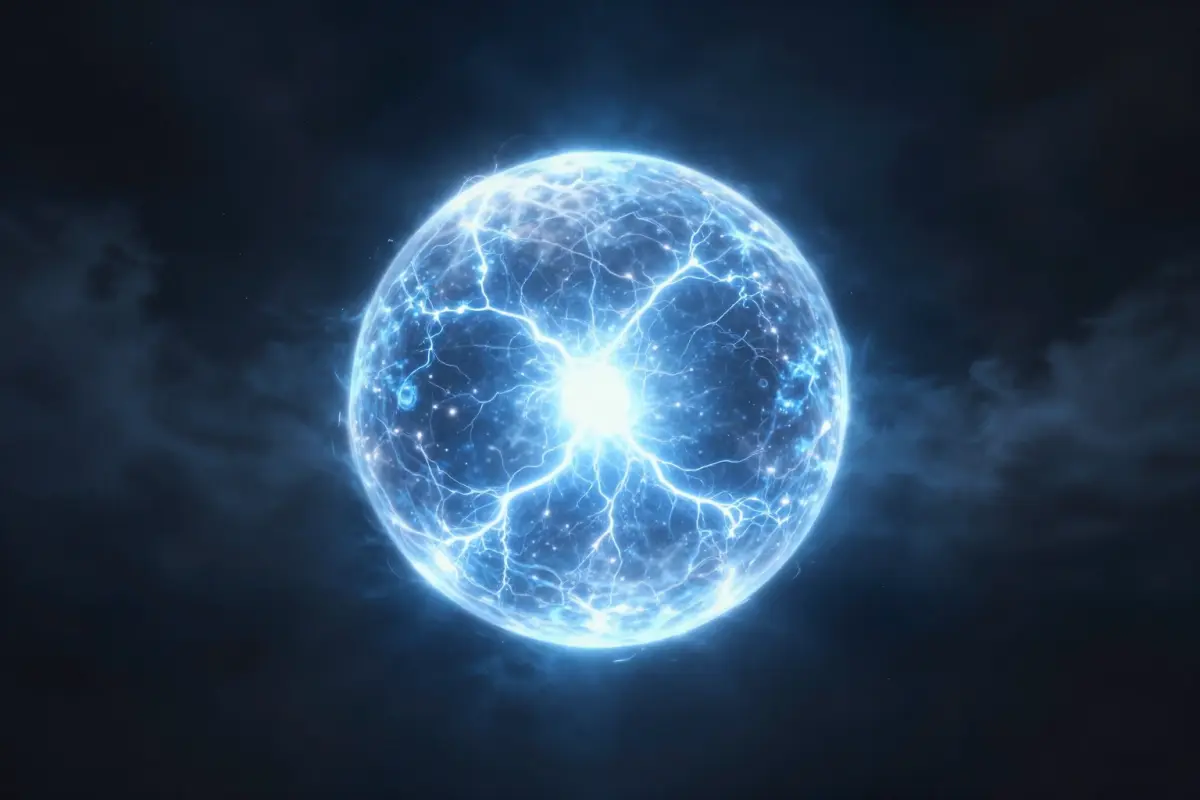
Ball lightning — a glowing sphere of electricity that appears during thunderstorms and defies scientific explanation
On the afternoon of October 21, 1638, the congregation of St. Pancras Church in Widecombe-in-the-Moor, a tiny village on Dartmoor in Devon, England, was gathered for Sunday service when a strange and terrible darkness fell over the building. The 300 worshippers inside could no longer see to read their prayer books. Then came a thunderous roar, “like unto the sound and report of many great cannons,” and a blinding flash of light. According to contemporary accounts published within months of the event, a “great fiery ball” tore through a window, rebounded through the church, and unleashed devastation. Four people were killed. Approximately sixty were injured. The minister’s wife had her clothing and flesh burned “in a very pitiful manner.” A dog ran out the door, was whipped around by an unseen force, and fell dead. Some victims were terribly burned on their skin but their clothing remained untouched — not a single thread singed. The building was extensively damaged. It was one of the most terrifying and well-documented encounters between human beings and one of nature’s most enigmatic phenomena: ball lightning.
Ball lightning is one of the most perplexing and enduring mysteries in atmospheric science. Described as a luminescent, spherical object that appears almost exclusively during or immediately after thunderstorms, it has been reported by thousands of witnesses over at least eight centuries, including scientists, military personnel, airline pilots, and ordinary citizens around the world. Surveys suggest that approximately 5 percent of the world’s population claims to have witnessed ball lightning at some point in their lives, a figure that translates to hundreds of millions of people. Yet despite centuries of reports and decades of scientific investigation, ball lightning remains unexplained. No laboratory experiment has fully replicated the phenomenon under natural conditions, and no single scientific theory has achieved consensus. The objects witnesses describe are deeply strange: glowing spheres that range from pea-sized to several meters in diameter, typically between 10 and 40 centimeters across, that persist for anywhere from one second to over a minute before vanishing — sometimes silently, sometimes with a loud bang or explosion. They are usually reported as red, orange, or yellow, but white, blue, and green variants have also been documented. They can appear indoors or outdoors, hover motionless or move with apparent purpose, pass through solid walls and windows without damaging them, and even move against the wind.
The earliest known written account of ball lightning dates to the thirteenth century. The English chronicler Gervase of Tilbury recorded a remarkable sighting in his “Chronica” around 1211, describing a luminous sphere that descended from the sky during a thunderstorm and entered a house, passing through without causing damage. Gervase’s account anticipates almost every element of the modern ball lightning description: the association with a thunderstorm, the spherical shape, the luminous quality, the ability to pass through solid structures, and the eventual dissipation. The Great Thunderstorm of Widecombe-in-the-Moor in 1638 remains the most dramatic and thoroughly documented historical incident, but it is far from unique. In 1725, the crew of the sloop Catherine and Mary reported a ball of fire that descended from the rigging during a storm, moved slowly across the deck, and exploded, killing one crewman. In 1749, the crew of HMS Montague witnessed a blue ball of fire that rolled along the deck during a storm, split into two halves, and vanished with a violent explosion.
One of the most famous scientific casualties of ball lightning was Georg Wilhelm Richmann, a German physicist working in St. Petersburg, Russia. In 1753, Richmann was conducting experiments on atmospheric electricity — a field that had been electrified by Benjamin Franklin’s famous kite experiment. Richmann had constructed a device to measure electrical charge in the atmosphere. During a thunderstorm on August 6, 1753, a ball of fire reportedly jumped from the apparatus and struck Richmann in the head, killing him instantly. His assistant, who was standing nearby, was knocked unconscious but survived. Richmann’s death is often cited as the first known fatality directly attributable to ball lightning, though some historians argue that he may have been killed by a conventional lightning strike. In more modern times, the phenomenon has continued to be reported by credible witnesses. In 1972, multiple residents of Hardwick, Vermont, independently reported seeing a luminous ball hovering near a church during a thunderstorm, moving slowly before disappearing. In the 1960s, crew members of the USS Eagle, a U.S. Coast Guard training ship, reported ball lightning entering the ship’s bridge during a storm at sea, moving through the enclosed space, and exiting without causing damage.
One of the most dramatic eyewitness accounts comes from an unexpected source: Tsar Nicholas II of Russia, the last Emperor of Russia. In his memoirs, Nicholas described witnessing ball lightning during a summer thunderstorm at his estate. According to his account, a glowing sphere of fire descended from the sky during a violent electrical storm and moved slowly across the grounds, passing near where he and his family were sheltering. The Tsar described the object as a ball of fire approximately the size of a football that moved with a calm, deliberate motion before dissipating harmlessly. Nicholas’s account is particularly valuable because it comes from a head of state who had no obvious motive to fabricate or embellish — and because it was recorded in his private memoirs rather than for public consumption.
For centuries, the scientific establishment was deeply skeptical of ball lightning. The phenomenon was so strange — glowing spheres that passed through walls? — that many physicists dismissed it as optical illusion, afterimage, or hallucination caused by the bright flash of conventional lightning. This skepticism began to erode in the late twentieth century, as the sheer volume of credible reports from trained observers became impossible to ignore. The turning point came in 2012, when a team of Chinese researchers led by Jianyong Zheng and Xiao Yang at Northwest Normal University in Lanzhou made the first-ever spectroscopic observation of natural ball lightning. The team was conducting observations of conventional lightning during a thunderstorm in Qinghai Province, China, when a ball lightning event occurred near a struck transmission line tower. Their spectrograph captured the emission spectrum of the glowing sphere as it persisted for approximately 1.6 seconds. The spectrum revealed the presence of silicon, iron, and calcium — elements consistent with the hypothesis that ball lightning is formed when a lightning strike vaporizes silicon dioxide (sand or soil) on the ground, creating a luminous plasma of silicon vapor.
The Chinese spectroscopic observation was a landmark because it provided the first direct physical evidence of ball lightning’s composition, published in the prestigious journal Physical Review Letters. The presence of silicon in the spectrum lent powerful support to the vaporized silicon hypothesis, first proposed by New Zealand chemists John Abrahamson and James Dinniss in 2000. Abrahamson and Dinniss suggested that when a lightning bolt strikes soil, the enormous energy vaporizes silicon dioxide in the ground, creating a cloud of tiny silicon nanoparticles that oxidize in the air, producing a self-sustaining luminous ball. The hypothesis elegantly explains several key features of ball lightning: its association with thunderstorms, its spherical shape, its duration, and its color. The 2012 observation was not a perfect match to the model, but it was close enough to galvanize the research community.
Scientists have also attempted to create ball lightning in the laboratory. In the 1970s and 1980s, researchers experimented with microwave cavity effects, attempting to create stable plasma balls using focused microwave radiation. Laboratory experiments with microwave ovens have indeed produced small, short-lived plasma balls — but these fade within a fraction of a second, far shorter than the minutes-long duration reported in many natural sightings. In the 2000s, researchers at the University of Innsbruck in Austria investigated the role of microwave radiation from lightning in creating ball lightning-like phenomena. Water discharge experiments — in which high-voltage electricity is discharged across or through water — have produced luminous spherical objects that persist for several seconds, offering another possible analog. None of these experiments has produced a convincing, sustained, large-scale ball lightning event under controlled conditions.
The scientific literature contains an extraordinary range of proposed explanations, reflecting the difficulty of accounting for a phenomenon with so many contradictory characteristics. The vaporized silicon hypothesis is currently the leading candidate. However, it does not easily explain reports of ball lightning appearing indoors, inside aircraft, or high above the ground, where no soil is present to be vaporized. The microwave cavity hypothesis proposes that ball lightning is a self-sustaining sphere of microwave radiation trapped in a spherical plasma shell. When a lightning bolt ionizes the air, it creates a burst of microwave radiation that becomes trapped in a cavity formed by the ionized air itself. The trapped microwaves sustain the plasma, which in turn sustains the cavity, creating a self-reinforcing system that can persist for seconds or even minutes. This theory can account for indoor sightings and for the ability of ball lightning to pass through windows, but laboratory experiments have not produced long-lasting microwave-cavity plasma balls.
The soliton hypothesis proposes that ball lightning is a type of electromagnetic soliton — a self-reinforcing wave packet that maintains its shape as it propagates through a medium. The buoyant plasma hypothesis suggests that ball lightning is simply a self-contained pocket of ionized air — a plasma — that is buoyant enough to float and stable enough to persist. The challenge for all plasma-based theories is explaining how a plasma ball can persist for tens of seconds in the open air without dissipating, since laboratory plasmas typically collapse within milliseconds when the energy source is removed.
A provocative alternative theory, proposed by researchers including Joseph Peer and Alexander Kendl at the University of Innsbruck in a 2014 study, suggests that at least some ball lightning reports may be visual hallucinations caused by the powerful magnetic fields generated by nearby lightning strikes. According to this hypothesis, the rapidly changing magnetic field from a lightning bolt can induce transcranial magnetic stimulation (TMS) in the visual cortex of nearby observers, producing the perception of a glowing, moving ball of light. The hallucination hypothesis can explain why ball lightning is often seen by multiple witnesses simultaneously and why the “ball” sometimes appears to move in ways that defy physical law. However, the theory cannot account for reports of ball lightning causing physical damage — burned clothing, charred wood, melted metal — or for the 2012 spectroscopic observation, which captured physical light from an external source. Most researchers believe that ball lightning is a real physical phenomenon, not a hallucination, though the hallucination hypothesis may explain some subset of reports.
Surveys conducted across multiple countries have consistently found that approximately 5 percent of the population reports having seen ball lightning at some point in their lives. A frequently cited survey by Stanley Singer in the 1960s collected over 2,000 reports from witnesses in multiple countries. If the estimate is accurate, it implies that over 400 million people alive today have witnessed the phenomenon. The typical ball lightning event involves a luminous sphere approximately 10 to 40 centimeters in diameter, lasting 10 to 30 seconds, appearing during or immediately after a thunderstorm. The most common colors reported are orange and yellow, followed by red, white, blue, and green. About half of all reported events end with the ball simply fading away, while the other half end with a loud bang or explosion. The consistency of these statistics across decades of reports and dozens of countries is one of the strongest arguments that ball lightning is a real, repeatable physical phenomenon rather than a collection of misidentifications.
Ball lightning remains one of the most stubbornly enigmatic phenomena in the natural world. Despite the landmark 2012 spectroscopic observation, the development of the vaporized silicon hypothesis, and decades of laboratory experimentation, we still cannot predict when or where ball lightning will appear, we cannot reliably create it under controlled conditions, and we cannot fully explain the astonishing range of behaviors reported by witnesses over the last eight centuries. The phenomenon sits at the intersection of atmospheric physics, plasma science, electromagnetism, and even neuroscience — a puzzle that draws on virtually every branch of physical science and still refuses to be solved. The International Committee on Ball Lightning (ICBL), which has organized scientific symposia on the subject since 1988, continues to coordinate research and debate among the small but dedicated community of scientists who study the phenomenon. Yet the mystery endures. The next time you are caught in a thunderstorm, and the lightning flashes, and the thunder rolls — look carefully. You might just see something that science is still struggling to explain. A glowing sphere, drifting through the storm like a ghost.
References & Further Reading
Wikipedia: The Great Thunderstorm (1638) — Detailed account of the Widecombe-in-the-Moor incident
Britannica: Ball Lightning — Encyclopedic overview of the atmospheric phenomenon
Wikipedia: Lightning — Background on the parent phenomenon that produces ball lightning
Wikipedia: Plasma (Physics) — The state of matter relevant to most ball lightning theories
📚 Recommended Reading: Ball Lightning: An Unsolved Problem in Atmospheric Physics by Mark Stenhoff (on Amazon) — As an Amazon Associate, we earn from qualifying purchases.
Editorial note: scientific understanding of ball lightning continues to advance with new spectroscopic data and laboratory experiments. See our Editorial Policy.