The Voynich Manuscript: The Most Mysterious Book in the World
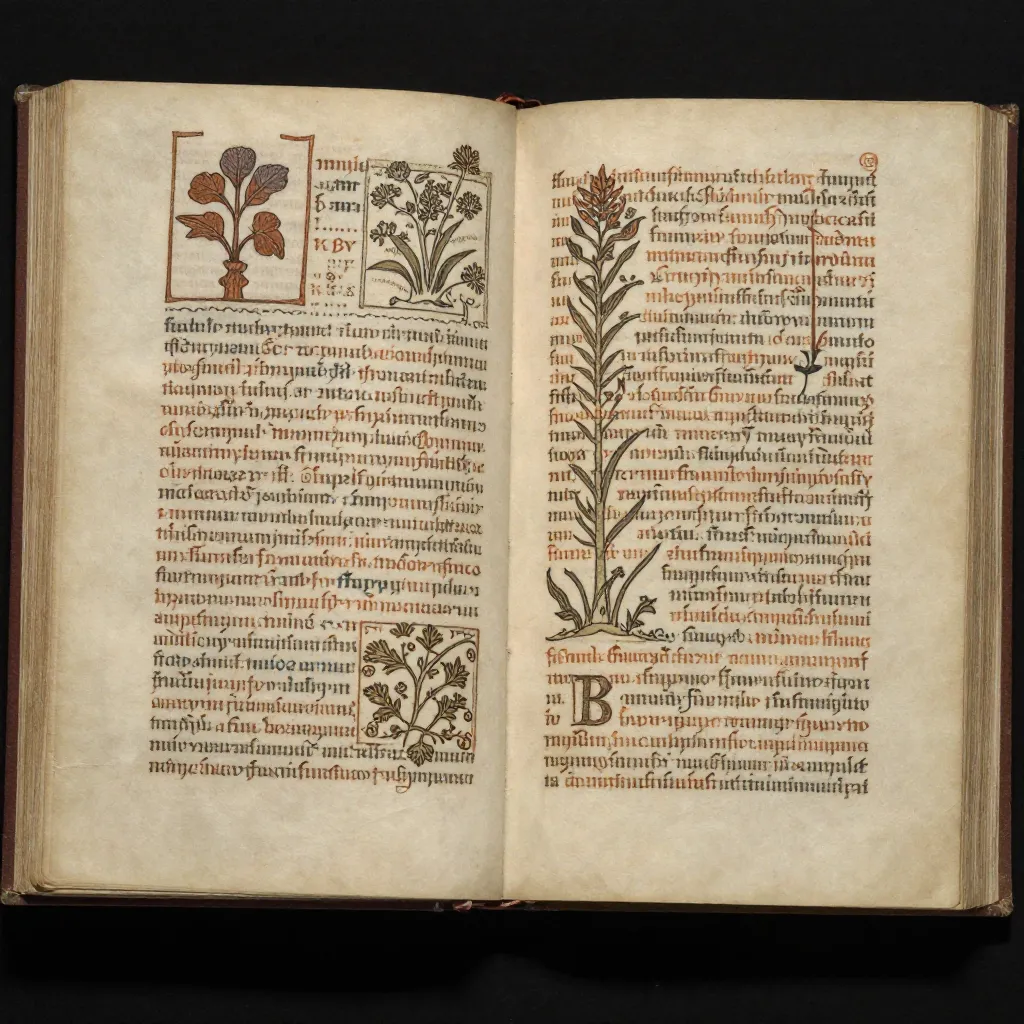
In 1912, a Polish-American antiquarian book dealer named Wilfrid Voynich was rummaging through a chest of manuscripts in the library of the Villa Mondragone, a Jesuit college near Rome, when he found something that would obsess scholars, cryptanalysts, and eccentrics for more than a century. It was a book — approximately 240 pages of fine vellum, roughly the size of a modern paperback, filled with dense text written in an alphabet that nobody on Earth could read. The pages were decorated with illustrations that were, if anything, even more unsettling than the script: drawings of plants that match no known species, astronomical diagrams featuring impossible star systems, and — most disturbingly — dozens of tiny naked female figures bathing in pools of green liquid connected by a network of tubes, pipes, and biological-looking conduits that resemble nothing so much as a medieval vision of a plumbing system for the human body. The book was clearly old, carefully made, and entirely incomprehensible. Voynich purchased it from the Jesuits and brought it to America, where it attracted the attention of the greatest codebreakers of the twentieth century — including the cryptanalysts who cracked Enigma during World War II. None of them could read a single word. Over the decades, the manuscript has been subjected to every known form of analysis: statistical, computational, linguistic, chemical, radiographic. Radiocarbon dating has confirmed that the vellum dates to between 1404 and 1438, making it a genuine medieval artifact, not a modern forgery. The ink and pigments are consistent with the same period. And yet the text — written in an unknown alphabet of approximately 20 to 25 characters, in a script that flows with the confidence and regularity of a natural language — remains completely undeciphered. The Voynich Manuscript is, by a wide margin, the most mysterious book in the world.
What makes the Voynich Manuscript so maddening is that it looks like it should be readable. The text is not random — statistical analysis shows that it follows patterns characteristic of natural language: certain characters appear more frequently than others, words follow regular length distributions, and there are discernible patterns of repetition and structure that suggest grammar, syntax, and meaning. The illustrations, while bizarre, are organized into clear sections that suggest the manuscript was created for a practical purpose — perhaps a medical or alchemical treatise. And yet every attempt to match the text to a known language, to identify a cipher system, or to extract meaningful content has failed. The Voynich Manuscript sits in a climate-controlled vault at Yale University’s Beinecke Rare Book and Manuscript Library (catalogued as MS 408), defying the best efforts of the world’s most brilliant minds.
The Voynich Manuscript is organized into five distinct sections, each characterized by a different type of illustration. The herbal section is the largest, filling roughly half the manuscript, with each page displaying one or two plants accompanied by descriptive text. The illustrations are detailed and skillfully drawn, but the vast majority of the plants do not match any known species — some appear to be composites, fantastical combinations of leaves, flowers, and roots from different real plants. The astronomical section contains diagrams of stars, suns, moons, and zodiac symbols, including circular diagrams with radiating segments reminiscent of medieval astronomical tables. The biological section is the strangest and most famous part of the manuscript, containing dozens of drawings of small nude female figures immersed in pools or tubs of green liquid, connected by an elaborate network of pipes and channels that have been interpreted as everything from a medieval gynecological treatise to an alchemical diagram to a representation of the human circulatory system. The cosmological section features complex circular diagrams and foldout pages with rosette-shaped designs that may represent a medieval model of the universe. The pharmaceutical section shows drawings of roots, herbs, and medicinal preparations along with containers resembling apothecary jars, most closely resembling known medieval herbal-pharmaceutical manuscripts.
The documented history of the Voynich Manuscript reads like a thriller. Based on a letter found tucked inside the manuscript and on later research, scholars have traced its ownership back to the early seventeenth century. The letter, written in 1666, indicates that the manuscript was once owned by Emperor Rudolf II of Bohemia (1552–1612), the reclusive Habsburg ruler who was obsessed with alchemy, astrology, and the occult. Rudolf reportedly paid the equivalent of 600 gold ducats for the book — an enormous sum — and believed it was the work of the English polymath Roger Bacon. After Rudolf’s death, the manuscript passed to his physician, Jacobus Sinapius, and eventually to the Jesuit scholar Athanasius Kircher in Rome, one of the most learned men of the seventeenth century, who published some of the manuscript’s zodiac illustrations but was unable to decipher the text. The trail then goes cold for more than two centuries until Voynich found it in the Jesuit library in 1912. The manuscript was purchased by the book dealer Hans Kraus in 1961 and donated to Yale University in 1969.
The history of attempts to decode the Voynich Manuscript is a chronicle of brilliant, persistent, occasionally desperate failure. The first serious modern analysis was conducted in the 1920s by William Romaine Newbold, a professor of philosophy at the University of Pennsylvania, who claimed to have deciphered the text as a microscopic cipher revealing that Roger Bacon had possessed a telescope and knowledge of the Andromeda galaxy. Newbold’s claims were demolished by later scholars, who showed that his method was essentially arbitrary and that he was reading meaning into random features of the manuscript’s letterforms. In the 1940s and 1950s, the manuscript attracted the attention of professional cryptanalysts — including William Friedman, the chief cryptologist of the U.S. National Security Agency and the man who broke the Japanese PURPLE code during World War II. Friedman assembled a team of codebreakers, including several who had worked on Enigma, and spent years studying the manuscript. Their conclusion, delivered with obvious frustration, was that the Voynich text was not any known cipher system and could not be broken by standard cryptanalytic techniques. Friedman himself eventually speculated that the text might be a constructed artificial language — a guess that remains one of the most plausible explanations.
The arrival of computational analysis in the late twentieth century brought new tools but no breakthroughs. Statistical studies confirmed that the Voynich text exhibits properties of natural language — Zipf’s Law (a statistical pattern found in all natural languages), character frequency distributions, and word-length regularities — but matched no known language. In 2014, researchers at the University of Bedfordshire published a study arguing that the manuscript’s text is consistent with a constructed language — an artificial tongue designed by the author, following its own internal rules but not corresponding to any natural language. In 2019, a team led by computer scientist Greg Kondrak at the University of Alberta used artificial intelligence to analyze the text and concluded that it most closely resembles Hebrew in its statistical patterns, suggesting it might be an encoded Hebrew text — though their proposed translations were unconvincing to most scholars. Also in 2019, a Turkish researcher named Ahmet Ardıç claimed that the manuscript was written in a lost Turkic language using a phonemic cipher, but this claim has not been independently verified.
The possibility that the Voynich Manuscript is an elaborate medieval forgery or hoax has been debated since Voynich first brought it to public attention. The radiocarbon dating of the vellum to 1404–1438 eliminates the possibility that it is a modern forgery by Voynich himself. But the vellum being medieval does not prove that the text is meaningful. In 2003, the computer scientist Gordon Rugg published a provocative paper demonstrating that the statistical properties of the Voynich text could be reproduced using a simple grid-based cardan grille system — a sixteenth-century technique for generating meaningless text that looks like language. Rugg argued that a medieval forger could have used this method to create a convincing-looking book of gibberish, perhaps to sell to a wealthy patron like Emperor Rudolf II. However, subsequent analyses have shown that the Voynich text exhibits certain higher-order statistical properties — patterns beyond simple character frequencies — that are not easily reproduced by Rugg’s method, suggesting that the text is more complex than a simple hoax would produce.
The script of the Voynich Manuscript is unique in the history of writing. It uses approximately 20 to 25 distinct characters, written from left to right in a flowing, confident hand. The characters are elegantly formed and remarkably consistent throughout the manuscript, suggesting a single scribe or a small group of trained writers. There are no crossed-out words, no corrections, and no signs of hesitation — as if the scribe was writing fluently in a script they knew well. The alphabet does not match any known writing system — not Latin, not Greek, not Hebrew, not Arabic, not Cyrillic, not any of the hundreds of scripts documented from the medieval period. The text includes a number of “weird words” — extremely rare or unique terms that appear only once in the entire manuscript — as well as repeating phrases and formulas that suggest some kind of structure. The word entropy of the text is lower than that of most natural languages, which has led some researchers to suggest that it may be a reduction or simplification of a natural language rather than a full language in itself.
The Voynich Manuscript is not just a puzzle — it is a challenge to our understanding of the medieval world. If the text is ever deciphered, it could reveal medical, botanical, or astronomical knowledge that was lost to Western civilization for centuries. The herbal section, if it describes real plants and their uses, could represent a pharmacological tradition that was never absorbed into the mainstream of European medicine. The biological section, with its bizarre bathing figures, could illuminate aspects of medieval alchemy, medicine, or natural philosophy that have left no other trace in the historical record. Alternatively, the manuscript could turn out to be a medieval fantasy — an alchemical dream journal, a work of creative fiction written in a private language, or an elaborate con job perpetrated on a credulous emperor. Either answer would be extraordinary. If it is genuine, it is a lost encyclopedia of medieval knowledge. If it is a hoax, it is the most sophisticated and enduring literary fraud in history — a book that has fooled the world’s greatest minds for over a century.
The Voynich Manuscript continues to attract new researchers armed with ever more powerful tools. In 2014, the entire manuscript was digitized and made freely available online by the Beinecke Library, allowing anyone in the world to examine high-resolution images of every page. Machine learning algorithms have been trained on the text, searching for patterns invisible to human analysts. None of these efforts has produced a decipherment that has gained widespread scholarly acceptance. The manuscript remains what it has been since 1912: a locked room with no door, a message from the medieval world that we can see but cannot hear. It has been called the most mysterious book in the world, and for good reason. It is a medieval artifact of confirmed authenticity, written in an unknown script, illustrated with images that defy explanation, and resistant to every decipherment technique invented in the past hundred years. The greatest codebreakers of the twentieth century failed to read it. The most powerful computers of the twenty-first century have failed to read it. The text sits there, on 240 pages of vellum in a vault at Yale, as opaque and tantalizing as the day Wilfrid Voynich first pulled it from a chest in a Roman villa. The Voynich Manuscript does not care whether we understand it. It has waited six hundred years. It can wait six hundred more.
References & Further Reading
Wikipedia: Wilfrid Voynich — The book dealer who discovered the manuscript in 1912
Wikipedia: Cryptanalysis — The science of codebreaking and its application to the Voynich Manuscript
📚 Recommended Reading: The Voynich Manuscript by Raymond Clemens (on Amazon) — As an Amazon Associate, we earn from qualifying purchases.
Editorial note: decipherment claims are continuously evaluated by the scholarly community as new analytical methods emerge. See our Editorial Policy.