Zodiac Killer: The Unsolved Murders That Terrified California and Defied the FBI
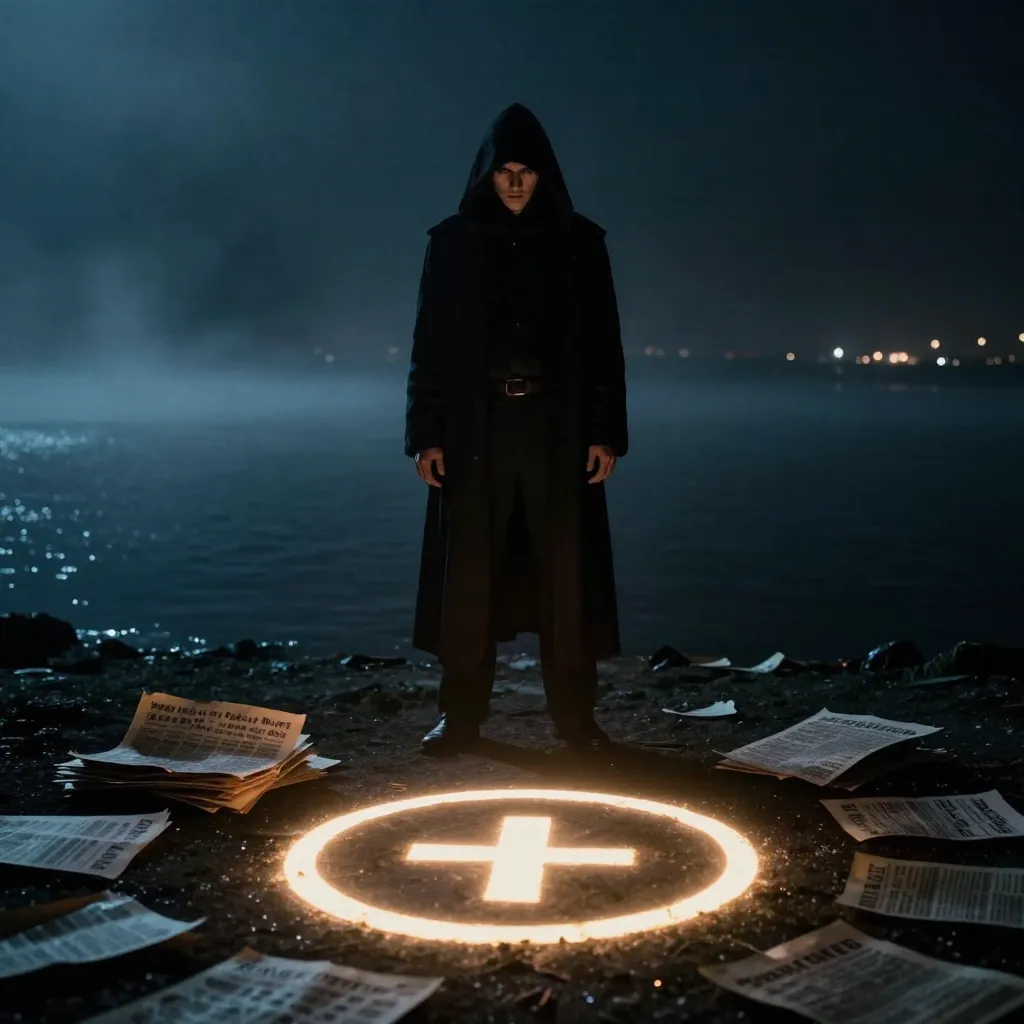
In the summer of 1969, as hundreds of thousands of young people converged on a farm in upstate New York for a music festival called Woodstock, and as the Apollo 11 astronauts walked on the surface of the Moon, a very different kind of American story was unfolding in the valleys and hills of Northern California. A killer was stalking the young couples who parked on lonely roads and remote lakesides in the counties around San Francisco Bay — and he was not content simply to murder. He wanted to be known. Between December 1968 and October 1969, he killed at least five people and seriously injured two others. He sent letters to major newspapers — letters that included cryptograms, taunting messages, and details of the crimes that only the killer could have known. He wore a bizarre hooded costume adorned with a crossed-circle symbol. He made phone calls to the police from payphones to report his own crimes. He claimed 37 victims in total, though only seven were ever confirmed. He called himself the Zodiac, and more than half a century later, despite one of the most extensive investigations in American criminal history, no one has ever been charged with his crimes. The Zodiac Killer remains the most famous unsolved serial murder case in United States history.
Northern California in the late 1960s was a region defined by contrasts — the counterculture revolution of Haight-Ashbury, the anti-war protests at UC Berkeley, the technological boom of Silicon Valley’s early days, and the conservative working-class communities of the North Bay and Vallejo. It was a place of wide-open spaces, winding rural roads, and isolated lakeshores — terrain that provided the Zodiac with the privacy he needed to stalk, attack, and vanish. The San Francisco Bay Area was served by multiple overlapping law enforcement agencies — the San Francisco Police Department, the Vallejo Police Department, the Napa County Sheriff’s Office, the Solano County Sheriff’s Office, and the FBI — a jurisdictional complexity that the killer exploited with apparent relish.
The Zodiac’s confirmed attacks began on December 20, 1968, on a lonely stretch of Lake Herman Road on the outskirts of Vallejo, California. David Faraday, age 17, and his girlfriend Betty Lou Jensen, age 16, were high school students who had driven to the remote gravel turnout to talk. At approximately 10:15 PM, another vehicle pulled up alongside theirs. A man emerged with a firearm and opened fire. Faraday was shot once in the head as he attempted to exit the car. Jensen fled on foot but was shot five times in the back as she ran across the road. Both teenagers were killed. There were no witnesses, no fingerprints, no leads. The case went cold within weeks.
Seven months later, on July 4, 1969, Michael Mageau, age 19, and Darlene Ferrin, age 22, were sitting in Ferrin’s car at Blue Rock Springs Park in Vallejo when a man drove up, shined a flashlight into their eyes, and opened fire with a 9mm semi-automatic pistol. Both were hit multiple times. Ferrin died at the scene. Mageau, despite being shot in the face, neck, and chest, survived and provided the first physical description of the attacker: a white male, approximately 26–30 years old, stocky build, about 5’8″. Shortly after the shooting, at approximately 12:40 AM on July 5, a man called the Vallejo Police Department from a payphone to claim responsibility for both the Blue Rock Springs attack and the Lake Herman Road murders — the Zodiac’s first direct communication with law enforcement.
The third confirmed attack occurred on September 27, 1969, at Lake Berryessa, a large reservoir in Napa County approximately 70 miles north of San Francisco. Bryan Hartnell, age 20, and his girlfriend Cecelia Shepard, age 22, were picnicking on a remote lakeshore when a man approached wearing a bizarre hooded executioner’s costume — a black hood with a crossed-circle symbol on the chest and a bib that read “By Knife”. The man tied Hartnell and Shepard with clothesline and then stabbed them repeatedly with a long knife. Shepard was stabbed ten times; Hartnell six. After the attack, the killer used a marker to write a message on the victims’ car door, claiming responsibility for the Lake Herman Road and Blue Rock Springs attacks and including his crossed-circle symbol. Shepard died of her wounds two days later; Hartnell survived and provided a detailed description of the costume and the attack. The Lake Berryessa assault was the most theatrical of the Zodiac’s crimes — a performance as much as a murder, suggesting a killer who craved notoriety as much as destruction.
The Zodiac sent at least four cryptograms to newspapers between 1969 and 1970. The first, known as Z 408, was a 408-symbol cipher sent in three parts to the Vallejo Times-Herald, the San Francisco Examiner, and the San Francisco Chronicle in late July and early August 1969. It was cracked within one week by Donald and Bettye Harden, a schoolteacher and his wife from Salinas, California, who used frequency analysis and guessed that the killer would use the word “killing.” The decoded message began: “I like killing people because it is so much fun” — and included the chilling explanation that his victims would become his slaves in the afterlife. The second and most famous cipher, Z 340, was a 340-symbol cryptogram mailed to the San Francisco Chronicle on November 8, 1969. It remained unsolved for 51 years — one of the most enduring cryptographic puzzles in history — until it was finally cracked in December 2020 by an international team including David Oranchak, Sam Blake, and Jarl Van Eycke. The decoded message began: “I hope you are having lots of fun in trying to catch me” — but contained no identifying information about the killer. Other ciphers, including the Z 13 (which begins “My name is___”) and Z 32, remain unsolved or only partially decoded.
The fourth and final confirmed Zodiac attack occurred on October 11, 1969, in the affluent Presidio Heights neighborhood of San Francisco. Paul Stine, a 29-year-old taxi driver, picked up a passenger near the intersection of Geary and Masonic Streets. At approximately 9:55 PM, Stine was found slumped behind the wheel of his cab at the intersection of Washington and Cherry Streets, shot once in the head at point-blank range. The killer had taken Stine’s wallet, his keys, and had torn strips from the victim’s bloodstained shirt — pieces of which would later be mailed to the San Francisco Chronicle as proof of authorship. Three teenage witnesses across the street saw a man wiping down the cab and then walking east on Maple Street toward the Presidio. They described the man as a white male, 25–30 years old, 5’8″ to 5’9″, reddish-brown hair in a crew cut, heavy build. But the investigation was immediately hampered by a catastrophic error: the police dispatcher, relaying the witness description, reportedly told officers to look for a Black male suspect — a mistake that may have given the real killer the crucial minutes he needed to disappear into the darkness of the Presidio.
SFPD Inspector Dave Toschi — who would become one of the most famous detectives in American history and the model for Clint Eastwood’s Dirty Harry — arrived at the scene within minutes. A massive manhunt was launched, with police dogs and officers sweeping the Presidio. But the Zodiac was gone. Two days later, a letter arrived at the San Francisco Chronicle containing a piece of Paul Stine’s shirt and a detailed account of the murder. The letter also included a threat to shoot school children from a moving bus and to “pick off” people in the streets. The letter was signed with the crossed-circle symbol and the name “the Zodiac” — the first time the killer had used this name in a confirmed communication.
Between July 1969 and January 1974, the Zodiac sent at least 21 confirmed letters to newspapers, police departments, and individuals. The letters were handwritten in a distinctive, angular script, often accompanied by the crossed-circle symbol, and contained a mixture of cryptograms, crime details, threats, and taunts directed at the police. “I am crackproof,” he wrote in one letter. In another: “I am not afraid of the gas chamber because it will send me to paradise.” He threatened to blow up school buses, to shoot people on the street, and to torture his victims’ souls in the afterlife. The letters transformed the Zodiac from a murderer into a psychological terrorist — a figure who used fear as a weapon as effectively as he used guns and knives. The last confirmed Zodiac letter was sent in January 1974, after which the communications ceased.
Over the half-century since the murders, dozens of suspects have been investigated. The most famous is Arthur Leigh Allen (1933–1992), a Vallejo schoolteacher and convicted child molester who was investigated extensively by multiple law enforcement agencies. Allen was a physically large man who resembled the composite sketch. He owned weapons consistent with the Zodiac’s firearms. He was known to have been in the vicinity of several of the attacks. He reportedly told a friend, before the murders began, that he intended to kill couples at lovers’ lanes and to taunt the police with letters — a claim that, if true, is remarkably prescient. However, DNA evidence extracted from the stamps on Zodiac letters in the 2000s did not match Allen, and handwriting analysis consistently excluded him as the author of the letters. Allen died of a heart attack in 1992 before he could be charged. The mismatch between the strong circumstantial case and the absence of forensic confirmation has made Allen the most debated suspect in the case.
Other suspects have attracted varying levels of attention. Richard Gaikowski, a newspaper editor and anti-war activist, was investigated by Detective Narlow and shared physical characteristics with the composite sketch. Lawrence Kane was linked to the case through Kathleen Johns, a woman who claimed the Zodiac abducted her and her infant daughter near Modesto in March 1970. Gary Francis Poste was named by the volunteer cold-case group “Case Breakers” in 2021 as the Zodiac, claiming that his name was embedded in the Z 340 cipher — but this claim has been met with widespread skepticism. Robert Graysmith, a cartoonist at the San Francisco Chronicle who became obsessed with the case and wrote the seminal books Zodiac (1986) and Zodiac Unmasked (2002), ultimately pointed to Allen — but Graysmith’s work has been criticized for overstating the evidence and for errors in his analysis.
The Zodiac Killer’s cultural footprint is enormous. The case directly inspired the 1971 film Dirty Harry, in which Clint Eastwood’s Inspector “Dirty” Harry Callahan hunts a Zodiac-like killer called “Scorpio.” The 2007 film Zodiac, directed by David Fincher and starring Jake Gyllenhaal, Robert Downey Jr., and Mark Ruffalo, is widely regarded as one of the most accurate and atmospheric true crime films ever made. The Zodiac has also influenced countless other works of fiction, from Thomas Harris’s The Silence of the Lambs to the television series Mindhunter, and has become the archetypal “clever serial killer who taunts the police” — a trope that now pervades the true crime genre.
The Zodiac case has been the subject of repeated attempts to apply modern forensic techniques to evidence collected in the late 1960s. In the 2000s, DNA testing was performed on saliva found on the stamps and envelopes of Zodiac letters, producing a partial DNA profile that did not match prime suspect Arthur Leigh Allen. However, the reliability of this DNA evidence has been questioned: the letters were handled by numerous people over the decades, and the DNA may have been contaminated. In 2020, the breakthrough solution of the Z 340 cipher demonstrated that advanced computational techniques could still yield new insights. Some investigators have suggested that forensic genealogy — the same technique used to identify the Golden State Killer in 2018 — could potentially be applied to the partial Zodiac DNA profile. The case remains officially open with the SFPD, the Vallejo Police Department, and the FBI.
The Zodiac Killer case is, at its core, a story about absence — the absence of a name, a face confirmed beyond doubt, a conviction, a resolution. The killer constructed his identity from letters and symbols, from cryptograms and crossed-circle signs, from taunts and threats and pieces of a dead man’s shirt. He created a persona that has endured for more than half a century. The confirmed attacks lasted only ten months, but the Zodiac’s shadow has stretched across decades, inspiring films, books, documentaries, websites, and an army of amateur investigators who continue to pore over the evidence, the ciphers, and the theories. The Z 13 cipher — “My name is___” — remains unsolved. The DNA remains partial and inconclusive. The suspects remain circumstantial. The case remains open. And the question that the Zodiac posed to the world in his own coded language — Who am I? — remains, after all these years, the most tantalizing unsolved puzzle in American criminal history.
References & Further Reading
Wikipedia: Zodiac Killer — Comprehensive article covering the murders, ciphers, suspects, and legacy
📚 Recommended Reading: Zodiac (on Amazon) — As an Amazon Associate, we earn from qualifying purchases.
Editorial note: The Zodiac Killer case is documented through police files from the SFPD, Vallejo PD, Napa County Sheriff's Office, and the FBI, as well as contemporary newspaper accounts and the killer's own letters. See our Editorial Policy.