The Princes in the Tower: England's Most Enduring Royal Mystery
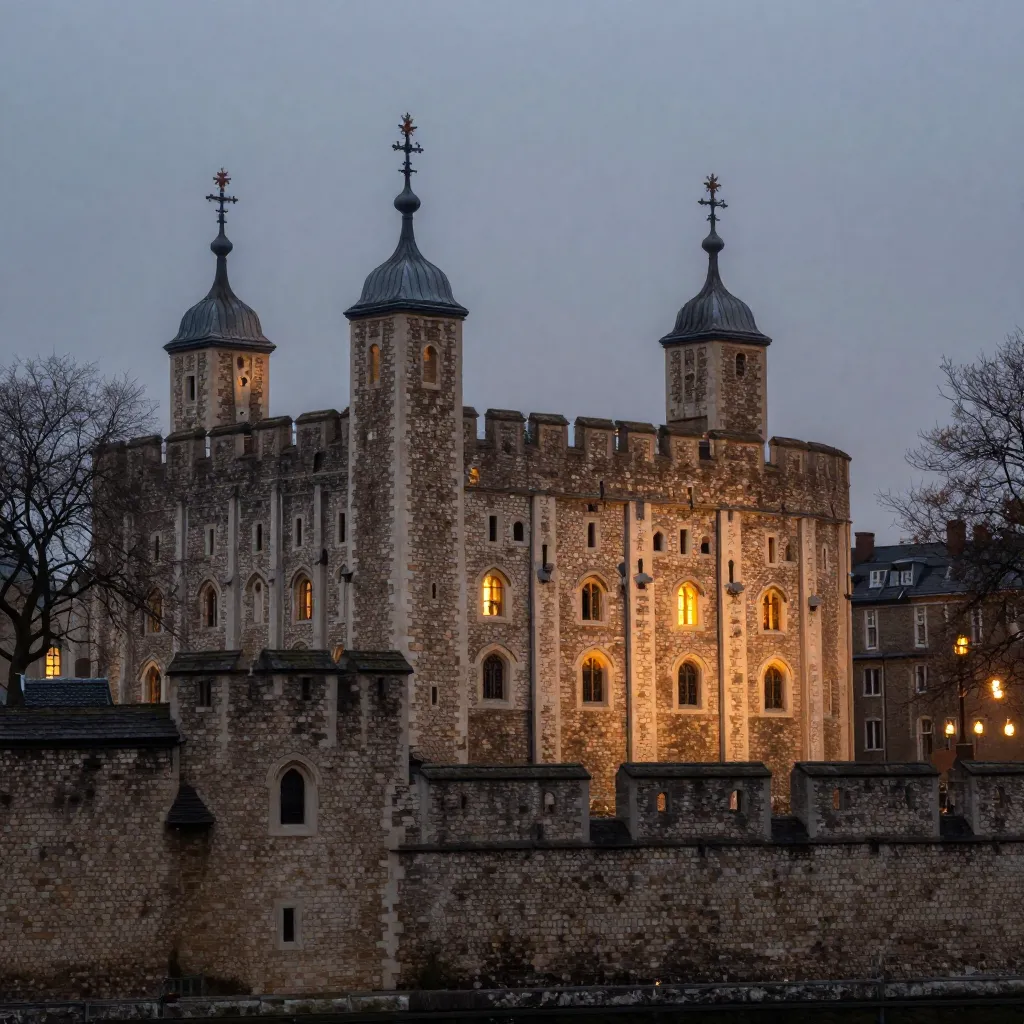
In the summer of 1483, two boys — one twelve years old, the other just nine — vanished from the most heavily guarded building in England. Edward V, the newly proclaimed king, and his younger brother Richard, Duke of York, had been lodged in the Tower of London by their paternal uncle, Richard, Duke of Gloucester, in preparation for the young Edward’s coronation. The coronation never happened. Within weeks, the boys had been declared illegitimate by an act of Parliament known as the Titulus Regius, their uncle had seized the throne as King Richard III, and the two princes — the sons of King Edward IV and Elizabeth Woodville, the rightful heirs to the English crown — were never seen in public again. Their disappearance is the oldest, most debated, and most emotionally charged unsolved mystery in English history. For over five hundred years, historians, novelists, playwrights, and amateur sleuths have argued about who killed the princes, whether they were killed at all, and what really happened behind the walls of the Tower during that fateful summer.
The Princes in the Tower is not merely a whodunit. It is a story about the nature of power in medieval England — a world where the throne was the ultimate prize, where dynastic rivalry was settled with blood, and where the fate of two children could determine the direction of an entire nation’s history. It is a story that inspired William Shakespeare’s most chilling villain, that divided the historical community into passionate camps, and that was dramatically reignited in 2012 when the remains of Richard III himself were discovered beneath a car park in Leicester. And it is a story that, despite five centuries of investigation, remains stubbornly, maddeningly unresolved.
The chain of events that led to the princes’ disappearance began on April 9, 1483, when King Edward IV died unexpectedly at the age of forty, probably of a stroke or pneumonia, after twenty-two years on the English throne. His death triggered an immediate constitutional crisis. Edward’s eldest son and heir, Edward V, was just twelve years old — old enough to be king in name, but far too young to rule in practice. Edward IV had designated his trusted brother, Richard, Duke of Gloucester, as Lord Protector — the man who would govern the kingdom until the young king came of age. The young Edward V was at Ludlow Castle in the Welsh Marches, under the care of his maternal uncle, Anthony Woodville, Earl Rivers. As Edward’s entourage began the journey south to London for the coronation, Gloucester intercepted them at Stony Stratford in Northamptonshire. In a swift and decisive move, Gloucester arrested Rivers and several of the young king’s closest companions, effectively seizing control of Edward’s person. He escorted the boy to London and installed him in the Tower of London — not as a prisoner, initially, but as the future king preparing for his coronation.
But Gloucester’s ambitions were rapidly becoming clear. In June, the young king’s younger brother, Richard, Duke of York, was also brought to the Tower — ostensibly to keep his brother company. Then, in an extraordinary session of Parliament, the Titulus Regius was promulgated, declaring that Edward IV’s marriage to Elizabeth Woodville had been invalid because Edward had previously contracted to marry Eleanor Talbot. Under this interpretation, both princes were bastards, ineligible to inherit the throne. With the legitimate Yorkist heirs removed from the succession, the path was clear for Gloucester. On June 26, 1483, Parliament offered him the crown. He accepted and was crowned King Richard III on July 6, 1483.
The last confirmed sighting of the two princes alive occurred sometime in the summer of 1483, likely in late June or early July. Multiple contemporary and near-contemporary sources report that the boys were seen less and less frequently in the Tower’s grounds during this period, and eventually not at all. The Croyland Chronicle, a near-contemporary source written by a monk associated with the royal court, reports that by late summer, the princes were no longer visible. The Italian friar Dominic Mancini, who was in London during the summer of 1483, wrote that he had heard the princes had been withdrawn from public view and that there were rumors of their death. What happened next is the heart of the mystery. There are no contemporary accounts of the princes’ deaths. No confession, no witness, no body, no murder weapon. The historical record simply stops. The princes were alive in the Tower in early summer 1483. By autumn, they were never seen again.
The question of who was responsible has generated one of the most passionate debates in English historical scholarship. Richard III is the traditional suspect. As the princes’ uncle and the man who had both declared them illegitimate and seized their throne, he had the clearest motive: so long as the princes lived, they were potential focal points for rebellion. He controlled the Tower and had absolute access to the boys. Most historians from the Tudor period to the present have considered Richard the most likely culprit. But alternative suspects have been proposed. Henry Stafford, Duke of Buckingham, Richard’s cousin and former ally who later turned against him and led a rebellion, may have acted independently, killing the princes either on Richard’s secret orders or on his own initiative. Henry VII (Henry Tudor), the Lancastrian claimant who defeated Richard III at the Battle of Bosworth in 1485 and founded the Tudor dynasty, has been suggested by some “Ricardian” historians as the true culprit — though this theory requires the princes to have survived in the Tower for over two years under Richard’s custody, an unlikely scenario. Some researchers have even argued that one or both princes may have survived, pointing to later historical figures who claimed to be the princes, including Perkin Warbeck, who claimed to be Richard, Duke of York, and led a significant rebellion against Henry VII in the 1490s.
In 1674, nearly two centuries after the princes’ disappearance, workmen demolishing a staircase in the Tower of London discovered a wooden chest containing the skeletons of two children. The bones were widely assumed to be those of the princes and were subsequently interred in Westminster Abbey in an urn bearing the inscription: “Here lie interred the remains of Edward V King of England, and Richard, Duke of York.” In 1933, the bones were examined by the archivist Lawrence Tanner and the anatomist William Wright, who concluded that they belonged to two children of approximately the right ages and showed evidence of congenital dental conditions consistent with the Yorkist royal family. However, the examination was conducted with the limited forensic techniques of the 1930s, and many modern experts have questioned its conclusions. DNA analysis has never been performed on the remains — a fact that continues to frustrate researchers. The bones may be the princes. They may be Roman-era burials, which are common in the Tower area. Without DNA testing, certainty is impossible.
On August 22, 1485, Richard III was killed at the Battle of Bosworth Field, the last English king to die in battle. His body was stripped, thrown across a horse, and brought to Leicester, where it was buried in the church of the Greyfriars monastery. When Henry VIII dissolved the monasteries in the 1530s, Greyfriars was demolished and Richard’s grave was lost. For over five centuries, the location of England’s most controversial king remained unknown. In August 2012, a team led by the writer and researcher Philippa Langley and the archaeologist Richard Buckley of the University of Leicester excavated a car park in central Leicester, where historical maps suggested the Greyfriars church had stood. On the very first day of the dig, human remains were found. The skeleton showed severe scoliosis of the spine — a curvature consistent with the historical descriptions of Richard’s condition — and multiple battle injuries, including a fatal wound to the back of the head. DNA analysis confirmed the identity beyond reasonable doubt: this was King Richard III. The discovery was a global media sensation, and Richard’s remains were reinterred in Leicester Cathedral in March 2015.
The discovery of Richard III’s remains transformed the debate about the princes. Philippa Langley subsequently launched the Missing Princes Project, a ten-year research initiative aimed at re-examining the evidence for the princes’ fate using original archival sources rather than relying on later Tudor-era accounts. Langley’s research has challenged the traditional narrative, arguing that contemporary evidence suggests the princes may have survived beyond 1483 and that their disappearance was exploited by political enemies of Richard III to tarnish his reputation. Her work has been both praised and criticized: supporters argue that she has uncovered neglected evidence, while critics contend that she has overstated the significance of fragmentary sources. The Richard III Society, founded in 1924, has argued for over a century that Richard has been the victim of a deliberate Tudor propaganda campaign, designed to legitimize Henry VII’s seizure of the throne by painting his predecessor as a monster. The Society points out that many of the most damning accounts of Richard’s crimes — including Sir Thomas More’s history and Shakespeare’s play — were written during the Tudor period, decades after the events, by authors with strong political incentives to vilify the last Yorkist king.
The Princes in the Tower is the coldest of cold cases — a crime (if it was a crime) committed over five hundred years ago, for which no forensic evidence survives, no witness was ever produced, and no confession was ever recorded. The most likely explanation, supported by the majority of historians, is that Richard III ordered the deaths of his nephews to eliminate them as threats to his throne. It was a ruthless, pragmatic act in a ruthless, pragmatic age, no different in kind from the many other acts of dynastic murder that punctuated English medieval history. But “most likely” is not “certain,” and the gap between probability and proof is where the mystery lives. Perhaps one day, DNA analysis of the bones in Westminster Abbey will finally settle the question. Perhaps new archival discoveries will illuminate the dark summer of 1483. Or perhaps the princes will remain what they have been for over five centuries: a question mark at the heart of English history, a reminder that the past does not always yield its secrets willingly. Two boys walked into the Tower of London and became ghosts. Five hundred years later, their ghosts still haunt us.
References & Further Reading
Wikipedia: Edward V — Biography of the uncrowned boy-king who vanished from the Tower of London
📚 Recommended Reading: The Princes in the Tower by Alison Weir (on Amazon) — As an Amazon Associate, we earn from qualifying purchases.
Editorial note: the fate of the Princes in the Tower remains unresolved. Primary sources include the Croyland Chronicle, Dominic Mancini's account, and the Titulus Regius. See our Editorial Policy.