Machu Picchu: The Lost Citadel of the Incas That Was Never Really Lost
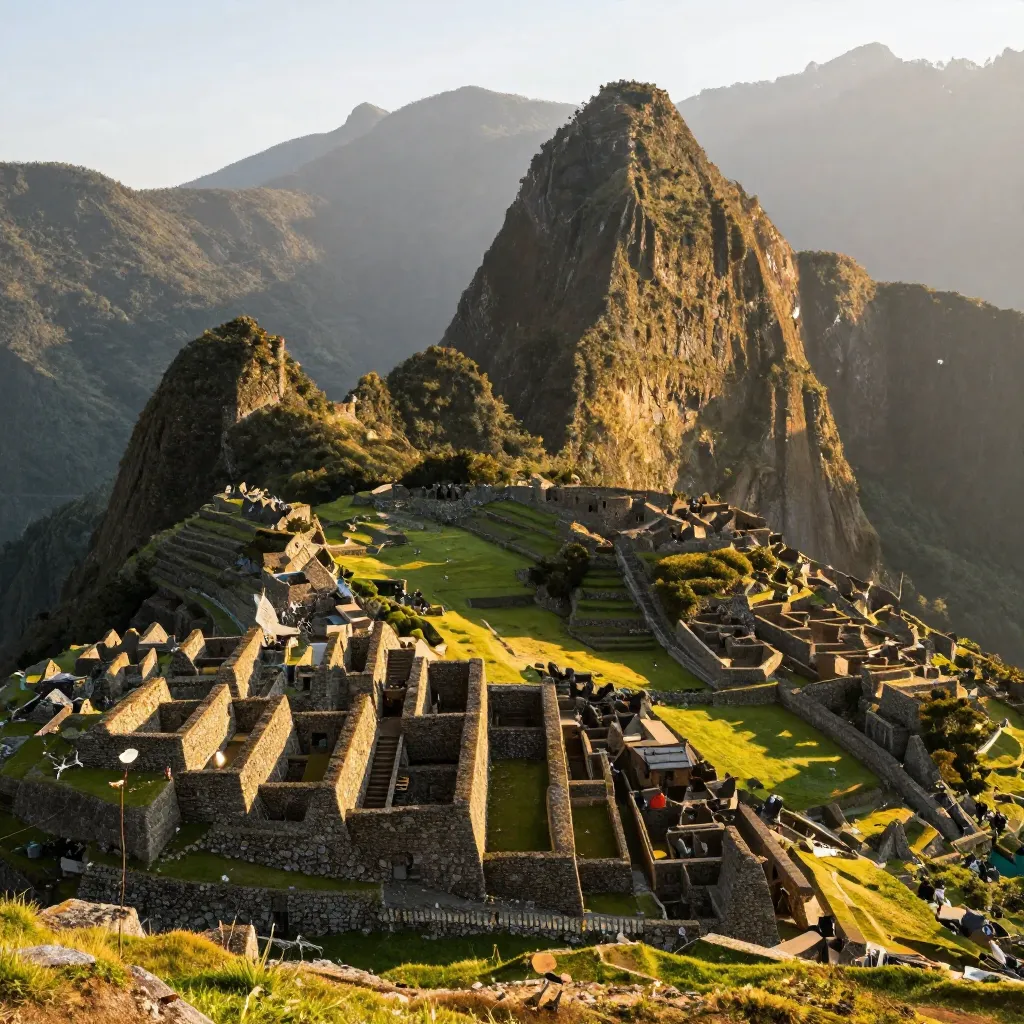
On the morning of July 24, 1911, a 35-year-old Yale lecturer named Hiram Bingham III scrambled up a steep, muddy slope in the Peruvian Andes, guided by a local farmer who had promised him some ruins on the ridge above. Bingham was not looking for a lost city. He was searching for Vitcos, the last capital of the Neo-Inca resistance, when a melon farmer named Melchor Arteaga told him about some old stone walls on a nearby peak. What Bingham found when he crested the ridge would change his life and reshape the world’s understanding of the Inca Empire: an entire city of granite blocks, astonishingly preserved, draped across a narrow saddle between two peaks at 2,430 meters (7,970 feet) above sea level, with the Urubamba River thundering through the gorge 600 meters below.
Bingham would later claim he had “discovered” Machu Picchu. In truth, the site was never truly lost. Local Quechua-speaking farmers had been living among the ruins for generations, growing crops on the ancient terraces and grazing livestock in the stone plazas. Several explorers had visited the site before Bingham, and maps from the late 19th century marked its location. What Bingham did was bring Machu Picchu to the attention of the world, orchestrating a massive National Geographic-sponsored expedition in 1912 that excavated thousands of artifacts and photographically documented the site for an astonished global audience. More than a century later, Machu Picchu draws over 1.5 million visitors per year and is recognized as one of the New Seven Wonders of the World. Yet for all its fame, fundamental questions about the citadel remain unanswered. Why was it built on a nearly inaccessible mountain ridge? What was its true purpose? And why was it abandoned barely a century after construction, left to be swallowed by cloud forest while the Spanish conquistadors destroyed every other major Inca city?
Machu Picchu was built around 1450 CE during the reign of Pachacuti Inca Yupanqui (r. 1438–1471), the ninth Sapa Inca and the ruler most responsible for transforming the Inca state from a regional kingdom into the largest empire in pre-Columbian America. The name Pachacuti means “Earth-Shaker” in Quechua, and his reign lived up to the title. He conquered vast territories, reorganized the imperial administration, and commissioned some of the most ambitious building projects in Andean history, including the reconstruction of Cusco and the construction of the fortress of Sacsayhuamán. Most archaeologists believe Machu Picchu was built as a royal estate — a country palace where the emperor and his court could retreat from the capital for religious ceremonies, astronomical observations, and seasonal recreation. The site’s remote location, dramatic setting, and elaborate religious architecture all support this interpretation. But the estate theory does not explain everything. Machu Picchu contains features more consistent with a sacred sanctuary or an astronomical observatory than a simple pleasure palace, and some researchers have proposed that it served multiple functions simultaneously.
The citadel contains approximately 200 structures arranged on broad parallel terraces around a vast central square. The buildings are constructed from precisely cut granite blocks fitted together without mortar so tightly that not even a knife blade can be inserted between them — a technique known as ashlar masonry that is the hallmark of imperial Inca architecture. The site is divided into two main sectors: the agricultural sector, with its spectacular terracing that cascades down the mountainside, and the urban sector, which contains temples, residences, workshops, and storage buildings. The urban sector is further divided into the Hanan (upper) and Hurin (lower) districts, a dual organization that mirrored the structure of the Inca capital at Cusco. The most impressive structures include the Intihuatana stone, a carved granite pillar that served as a solar clock and astronomical instrument, precisely aligned to mark the equinoxes and solstices; the Temple of the Sun, a semicircular tower built around a massive natural rock formation with windows aligned to the June solstice sunrise; and the Room of the Three Windows, a structure whose trapezoidal openings frame views of the surrounding mountains in a manner that may have had cosmological significance.
The engineering required to build Machu Picchu at this location is almost as remarkable as the architecture itself. The site sits on a ridge between two peaks in one of the most seismically active and geologically unstable regions on Earth. Heavy rainfall — the area receives nearly 2,000 mm per year — threatens to wash everything down the mountain. The Inca engineers solved these problems with extraordinary sophistication. They built an extensive drainage system beneath the entire site, layering crushed rock and soil to create a stable, well-drained foundation. The terraces were constructed not merely for agriculture but as massive retaining walls that stabilized the slope and prevented landslides. The stone buildings were designed with slightly inclined walls and trapezoidal doorways and windows that made them highly resistant to earthquakes — so effective that Machu Picchu has survived over 550 years of seismic activity with minimal structural damage. The site also featured an ingenious water management system that channeled fresh spring water from the mountain above through a series of stone-lined canals and fountains that cascade through the urban sector, providing a reliable water supply for hundreds of residents.
At its peak, an estimated 750 to 1,000 people lived at Machu Picchu, most of them support staff, artisans, and religious specialists serving the royal court. The skeletal evidence recovered during Bingham’s excavations suggests a diverse population that included individuals from various parts of the empire, consistent with the interpretation of Machu Picchu as an imperial center drawing personnel from across the Tawantinsuyu, as the Inca Empire was known in Quechua. The agricultural terraces produced maize, potatoes, and other crops sufficient to feed the resident population, and additional supplies could have been brought up from the valley below along the well-maintained Inca road network.
One of the most enduring mysteries of Machu Picchu is why it was abandoned. The site was occupied for less than a century — from roughly 1450 to around 1530 — before it was evacuated and left to the encroaching cloud forest. The timing coincides with the Spanish conquest of the Inca Empire, which began in 1532 when Francisco Pizarro captured the Inca emperor Atahualpa at Cajamarca. However, there is no evidence that the Spanish ever reached Machu Picchu. Unlike Cusco, which was sacked and rebuilt, and the other major Inca cities, which were systematically destroyed, Machu Picchu shows no signs of battle damage, burning, or deliberate destruction. The most likely explanation is that the site was quietly abandoned as the empire collapsed around it — its inhabitants simply left, perhaps fleeing to join the Neo-Inca resistance at Vilcabamba, perhaps dispersing to their home provinces, and perhaps succumbing to the European diseases that swept through the Andes in the decades after contact. Smallpox, in particular, may have devastated the population of Machu Picchu even before the Spanish arrived in force, killing up to 90 percent of the indigenous population in some areas and collapsing the social and economic systems that sustained such remote imperial outposts.
When Hiram Bingham arrived in 1911, he found a site that had been largely reclaimed by vegetation but was structurally intact. Four Quechua families were living among the ruins, farming the terraces just as their ancestors had. Bingham’s account of his “discovery” was shaped by the assumptions of his era — a time when European and American explorers routinely claimed to have “found” places that local people had known about all along. The artifacts Bingham removed from the site, including human remains, ceramics, and metalwork, were shipped to Yale University, where they remained for nearly a century before being returned to Peru in 2011 after a lengthy legal dispute. The repatriation was seen as a landmark in the decolonization of archaeological heritage, and the artifacts are now housed at the Casa Concha museum in Cusco. Bingham himself became a professor, a United States Senator, and one of the most famous explorers of the twentieth century — but his legacy remains complicated, marked by both genuine scientific achievement and the colonial attitudes that shaped his work.
Today, Machu Picchu faces a different set of challenges. The enormous volume of visitors — over 1.5 million per year before the pandemic, and numbers that have since recovered — places immense pressure on the fragile stone structures and the surrounding environment. The Peruvian government has implemented a ticket system with timed entry and restricted daily visitor numbers, but erosion, wear on the stone pathways, and the degradation of the terraces remain serious concerns. Climate change is also affecting the site, with shifting rainfall patterns and increasing temperatures threatening both the ruins and the cloud forest ecosystem that surrounds them. Yet despite these challenges, Machu Picchu remains one of the most awe-inspiring archaeological sites on Earth — a testament to the vision, engineering, and spiritual ambition of a civilization that built one of the greatest cities in human history on a mountain ridge so remote that the conquistadors who destroyed its builders never even knew it existed.
References & Further Reading
Britannica: Machu Picchu — History, description, and significance of the Inca citadel
World History Encyclopedia: Machu Picchu — Detailed analysis by Mark Cartwright
History.com: Machu Picchu — Peru, Elevation & Facts
History.com: This Day in History — Machu Picchu Discovered (July 24, 1911)
History.com: The Engineering Secret Behind Machu Picchu’s Stonework
Wikipedia: Hiram Bingham III — Biography of the explorer who brought Machu Picchu to world attention
📚 Recommended Reading: The Last Days of the Incas by Kim MacQuarrie (on Amazon) — As an Amazon Associate, we earn from qualifying purchases.
Editorial note: reconstructions are continuously revised as imaging and inscription studies improve. See our Editorial Policy.