Jack the Ripper: The Victorian Killer Whose Identity Remains a Mystery
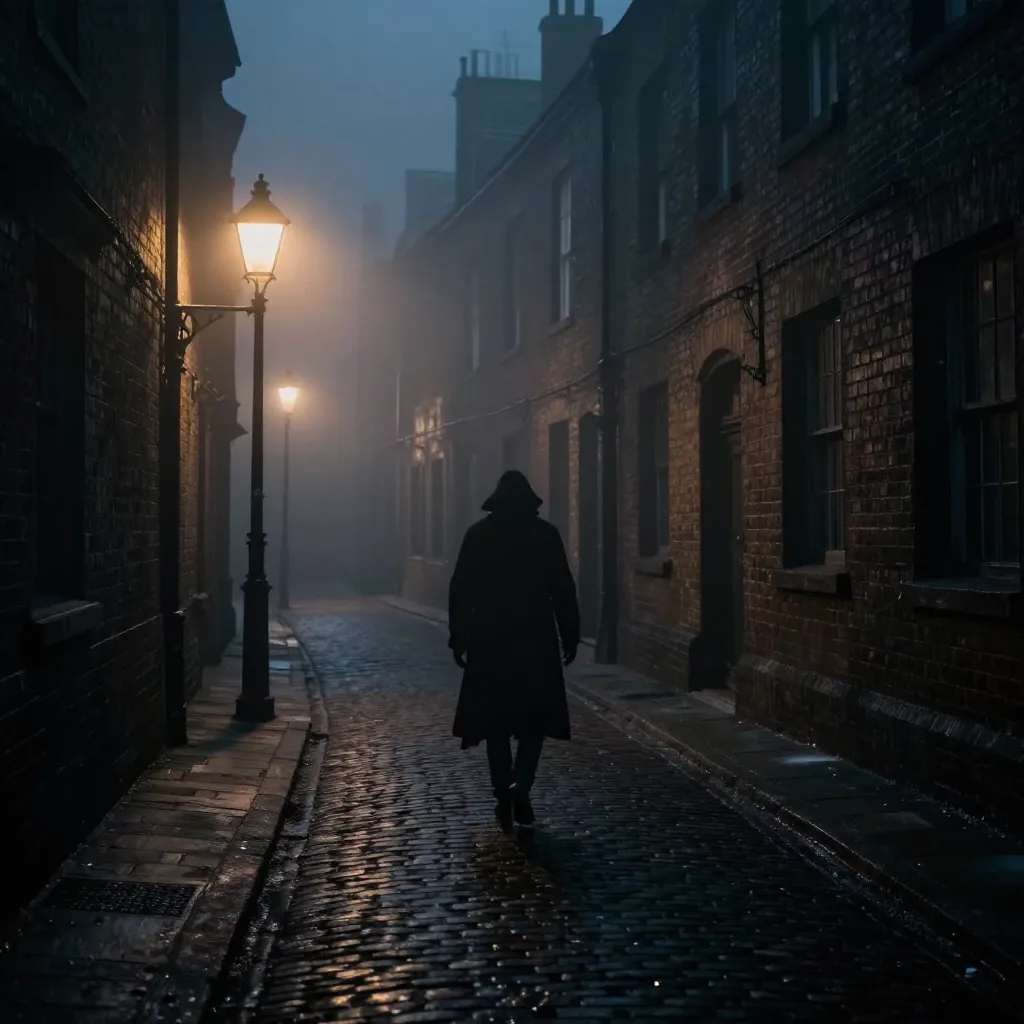
In the early hours of August 31, 1888, a cart driver named Charles Allen Cross was walking to work along Buck’s Row, a dim, narrow street in the Whitechapel district of London’s East End, when he saw what he thought was a tarpaulin lying in the street gateway. It was not a tarpaulin. It was the body of a woman — Mary Ann Nichols, age 43 — lying on her back with her skirts raised above her waist. Her throat had been cut so deeply that the wound nearly severed her head from her body. Her abdomen had been ripped open with a series of long, jagged incisions. She was the first of the so-called “Canonical Five” — the five women most commonly attributed to a single killer who, within a span of just ten weeks, would terrorize London, captivate the world, and become the most famous unidentified serial killer in history: Jack the Ripper. The name itself was born in a letter — likely a journalistic hoax — sent to the Central News Agency in September 1888, signed “Yours truly, Jack the Ripper.” It was a name that would endure for 137 years and counting, synonymous with unsolved horror, with the fog-choked streets of Victorian London, with the limits of forensic science, and with the enduring human fascination with the question: Who?
The East End of London in the 1880s was a world apart from the gleaming, prosperous city of the West End. Whitechapel, Spitalfields, and Aldgate were overcrowded, impoverished districts where an estimated 900,000 people lived in grinding poverty, many in squalid common lodging houses where a night’s bed cost four pence and was shared with strangers. The streets were poorly lit, poorly policed, and rife with crime, disease, and desperation. The women who fell victim to the Ripper were not prostitutes in the modern sense — they were impoverished women, many of them widowed or separated from husbands, who occasionally resorted to casual sex work to pay for a bed for the night. They were the most vulnerable members of a desperately poor society, and they were targeted in the dark streets and alleys of a district that the wealthier citizens of London preferred to ignore. The murders would force Victorian society to confront the conditions of the East End — and would spark debates about poverty, housing, policing, and social responsibility that would echo for decades.
The first canonical victim was Mary Ann “Polly” Nichols, aged 43, found dead in Buck’s Row (now Durward Street) at approximately 3:40 AM on August 31, 1888. Her throat had been cut twice, and her abdomen had been slashed open with a series of jagged incisions. The second was Annie Chapman, aged 47, discovered at approximately 6:00 AM on September 8, 1888, in the backyard of 29 Hanbury Street. Chapman’s murder was more surgically precise: her throat had been cut, her abdomen opened, and her uterus had been removed and taken from the scene — the first indication that the killer possessed anatomical knowledge and was taking trophies. The third and fourth murders occurred on the same night — the infamous “Double Event” of September 30, 1888. Elizabeth Stride, aged 44, was found at approximately 1:00 AM in Dutfield’s Yard off Berner Street. Her throat had been cut but her body was not mutilated, leading investigators to believe the killer was interrupted before he could complete his work. Less than an hour later, approximately a mile away, Catherine Eddowes, aged 46, was found dead in Mitre Square, a small, dark courtyard within the City of London jurisdiction. Eddowes’ murder was the most surgically destructive yet: her throat was cut, her abdomen was opened, her intestines were placed over her right shoulder, and her left kidney and part of her uterus had been removed and taken from the scene. The facial mutilations were also more extensive — her eyelids were cut, her cheeks and the tip of her nose were severed.
The fifth and final canonical victim was Mary Jane Kelly, aged approximately 25 — the youngest of the five and the only one murdered indoors. Kelly was found dead in her ground-floor room at 13 Miller’s Court, off Dorset Street, at approximately 10:45 AM on November 9, 1888. Her murder was by far the most brutal. The killer had virtually destroyed her body — her throat had been cut to the bone, her abdomen emptied of its organs, her face hacked beyond recognition, and her heart removed and taken from the scene. The room was splattered with blood from floor to ceiling. The contrast with the earlier murders was stark: whereas the previous victims had been killed in the open streets, Kelly was killed in the privacy of her own room, giving the killer unlimited time to indulge in his destruction. Her landlord’s assistant, Thomas Bowyer, discovered the body when he called to collect overdue rent. The brutality of Kelly’s murder — and the fact that it was the last of the canonical killings — has led to endless speculation about why the killer stopped after this, his most destructive, act.
During the autumn of 1888, the police and newspapers received hundreds of letters claiming to be from the killer. Most were hoaxes, but three have become part of the Ripper legend. The “Dear Boss” letter, received by the Central News Agency on September 27, 1888, was the first to use the name “Jack the Ripper” — a name that would become one of the most famous in criminal history. The letter was written in red ink and promised to “clip the ladys ears off.” It is now widely believed to have been written by a journalist to generate sensational copy. The “Saucy Jacky” postcard, received on October 1, 1888, referenced the Double Event and taunted police. The most chilling communication was the “From Hell” letter, received on October 16, 1888, by George Lusk, chairman of the Whitechapel Vigilance Committee. The letter was accompanied by a small box containing half a human kidney — preserved in ethanol. The writer claimed to have “fried and ate” the other half. Eddowes’ missing left kidney was never found, and some experts have argued that the kidney sent to Lusk was consistent with hers in terms of age and condition. The “From Hell” letter is considered by many researchers to be the most likely genuine of all the Ripper correspondence — though this too remains debated.
Over the 137 years since the murders, more than one hundred suspects have been proposed — a list that includes doctors, aristocrats, artists, butchers, slaughterers, teachers, and even members of the British royal family. The investigation was led by Inspector Frederick Abberline of Scotland Yard, an experienced detective who had spent years working undercover in the East End. Despite his expertise, despite the mobilization of hundreds of police officers, despite the formation of the Whitechapel Vigilance Committee by local businessmen frustrated by the police’s failure to catch the killer, and despite one of the largest manhunts in Victorian history, no one was ever charged with the murders. Aaron Kosminski was a Polish Jewish barber living in Whitechapel who was identified by a witness but never charged. He was committed to an insane asylum in 1891. In 2014, author Russell Edwards claimed that DNA analysis of a shawl allegedly found at the Eddowes murder scene pointed to Kosminski — but the shawl’s provenance and the testing methodology have been widely criticized. Montague John Druitt was a barrister and schoolteacher found dead in the Thames on December 31, 1888 — his death by drowning was ruled suicide. Sir Melville Macnaghten, Assistant Chief Constable of the Metropolitan Police, named Druitt as his preferred suspect in an 1894 memorandum, noting that Druitt’s family believed he was the killer. George Chapman (born Severin Kłosowski) was a Polish-born serial poisoner who murdered three of his common-law wives. Inspector Abberline himself reportedly favored Chapman as the Ripper.
Other notable suspects include Francis Tumblety, an American “quack doctor” who was arrested in London in 1888 on charges related to homosexuality and fled to the United States. Walter Sickert, the renowned Anglo-Irish painter, was proposed as a suspect by author Patricia Cornwell in her 2002 book Portrait of a Killer, in which she spent an estimated $2 million investigating the theory — but the case against Sickert is circumstantial and relies heavily on thematic connections between his paintings and the murders. Prince Albert Victor, Duke of Clarence, the grandson of Queen Victoria, has been proposed by conspiracy theorists as the killer or as part of a royal cover-up — but this theory has no credible evidentiary basis and is rejected by all serious historians. James Maybrick, a Liverpool cotton merchant, became a suspect when the so-called “Ripper Diary” surfaced in 1992, purporting to be his confession — but the diary is widely considered a modern forgery. The sheer range of suspects — from Polish barbers to princes — illustrates both the depth of the investigation and the fundamental problem: no theory is supported by enough evidence to be conclusive.
The Jack the Ripper investigation was hampered by limitations that are almost incomprehensible from a modern perspective. Fingerprint analysis did not exist as a forensic tool in 1888 — it would not be adopted by Scotland Yard until 1901. DNA testing was more than a century away. Photography was available but limited: crime scene photographs were taken, but the techniques were crude and the images often inadequate. Blood typing had not yet been developed. The police relied on witness statements, house-to-house inquiries, and physical description-based searches — methods that were essentially unchanged from the early 19th century. To make matters worse, the murders straddled two separate police jurisdictions. The murders of Nichols, Chapman, Stride, and Kelly occurred within the territory of the Metropolitan Police, while the murder of Eddowes in Mitre Square fell within the City of London Police — a separate force with its own chain of command. The two forces did not always cooperate effectively, and critical information may have been lost in the gap between them. The police also faced a public relations disaster: sensational press coverage, mass panic in the East End, anti-immigrant sentiment directed at the Jewish community, and growing political pressure to solve the case.
One of the most debated aspects of the case is the killer’s anatomical knowledge. The post-mortem examinations of the Canonical Five victims revealed wounds that were, in some cases, remarkably precise — particularly the removal of specific organs such as the uterus (Chapman), the left kidney and part of the uterus (Eddowes), and the heart (Kelly). Dr. Thomas Bond, the police surgeon who examined Eddowes and Kelly, argued that the killer had no professional surgical training, noting that the cuts were rough and indicated “no anatomical skill.” However, Dr. George Bagster Phillips, who examined Chapman, believed the organ removal was performed with sufficient skill to suggest medical knowledge. The debate has fueled theories that the killer was a surgeon, a medical student, a butcher, or a slaughterer — all occupations that would have provided familiarity with dismemberment. Modern criminologists tend to agree that the killer’s anatomical knowledge was imperfect but purposeful — sufficient to locate and remove specific organs, but not the work of a trained surgeon.
The Jack the Ripper murders occurred at a pivotal moment in media history — the rise of mass-circulation newspapers. The 1880s saw the emergence of affordable daily newspapers with large readerships, and the Whitechapel murders provided the perfect story: graphic violence, sexual undertones, a mysterious killer, a vulnerable population, and a backdrop of urban poverty and social inequality. The newspapers covered the murders with an intensity that was unprecedented — publishing detailed descriptions of the crime scenes, printing facsimiles of the Ripper letters, conducting their own investigations, and writing editorials demanding police action. The result was that Jack the Ripper became the first modern media celebrity criminal — a figure whose notoriety was created as much by the press as by the crimes themselves. The name “Jack the Ripper” — almost certainly a journalistic invention — became a household word within weeks, and the killer’s image as a shadowy figure in a top hat and black cloak, stalking the fog-choked streets of Whitechapel, was born in the pages of newspapers rather than in any eyewitness account.
The media frenzy had real consequences. It inflamed public panic in the East End, leading to mob attacks on innocent people suspected of being the Ripper. It directed anti-immigrant hostility at the Jewish community of Whitechapel, particularly after the police investigated theories that the killer was a Jewish immigrant — a “Leather Apron” scare that targeted local Jewish workers. It embarrassed the police and the government, contributing to political pressure that led to the resignation of Sir Charles Warren, the Commissioner of the Metropolitan Police, in November 1888. And it created a template for the coverage of serial killers that persists to this day: the obsessive focus on the killer’s identity, the detailed descriptions of the crime scenes, the speculation about motives, the creation of a mythic persona. The Ripper case established the genre of true crime as a form of popular entertainment — a legacy that has produced everything from Sherlock Holmes to Serial to the endless stream of true crime documentaries and podcasts that dominate modern media.
In modern London, Jack the Ripper is big business. An estimated dozens of Ripper walking tours operate nightly in the Whitechapel area, guiding tourists through the dark alleys and courtyards where the murders occurred. The Jack the Ripper Museum, which opened on Cable Street in 2015, offers visitors a recreation of the crime scenes and the Victorian police investigation — though the museum has been criticized for commercializing the murders of vulnerable women. Countless books — numbering in the hundreds — have been published on the case, along with films, television series, novels, and video games. This commercialization has sparked a legitimate ethical debate: is it appropriate to build a tourism industry around the brutal murders of impoverished women? Critics argue that the Ripper tours and museums reduce the victims to props in a horror story while elevating the killer to the status of a dark celebrity. Defenders counter that the tours bring attention to the social conditions of Victorian Whitechapel and the history of the East End. The debate remains unresolved — but the fact that it is happening at all, more than 130 years after the murders, is a testament to the extraordinary power of the Ripper case to generate fascination, controversy, and profit.
The Jack the Ripper case remains officially unsolved. The Metropolitan Police file is open. No one was ever charged, tried, or convicted of the Whitechapel murders. In the 137 years since the killings, advances in forensic science — fingerprint analysis, DNA profiling, psychological profiling, geographic profiling — have revolutionized criminal investigation, but they have not solved the Ripper case. The crime scenes have been built over. The evidence has degraded or been lost. The witnesses are long dead. The killer’s identity, which haunted Victorian London and has fascinated the world ever since, has become the most famous cold case in criminal history — a mystery that has survived every attempt at resolution, from Sir Melville Macnaghten’s 1894 memorandum to Patricia Cornwell’s $2 million investigation to Russell Edwards’ controversial DNA analysis. The Ripper’s greatest achievement was not the murders themselves — terrible as they were — but the creation of an enduring myth: the figure in the fog, the knife in the dark, the question that will never be answered. “Who?” The fog of Whitechapel has long since been cleared by the passage of time and the transformation of the East End, but the fog of the Ripper’s identity has never lifted. It hangs over the case still — permanent, impenetrable, and endlessly, irresistibly mysterious.
References & Further Reading
Wikipedia: Frederick Abberline — The Scotland Yard inspector who led the Ripper investigation
📚 Recommended Reading: Jack the Ripper (History Makers) by John Townsend (on Amazon) — As an Amazon Associate, we earn from qualifying purchases.
Editorial note: The Jack the Ripper case is documented through Metropolitan Police files, coroners' inquest records, contemporary newspaper accounts, and extensive subsequent research. See our Editorial Policy.