The Bermuda Triangle: Why Do Ships and Planes Keep Disappearing?
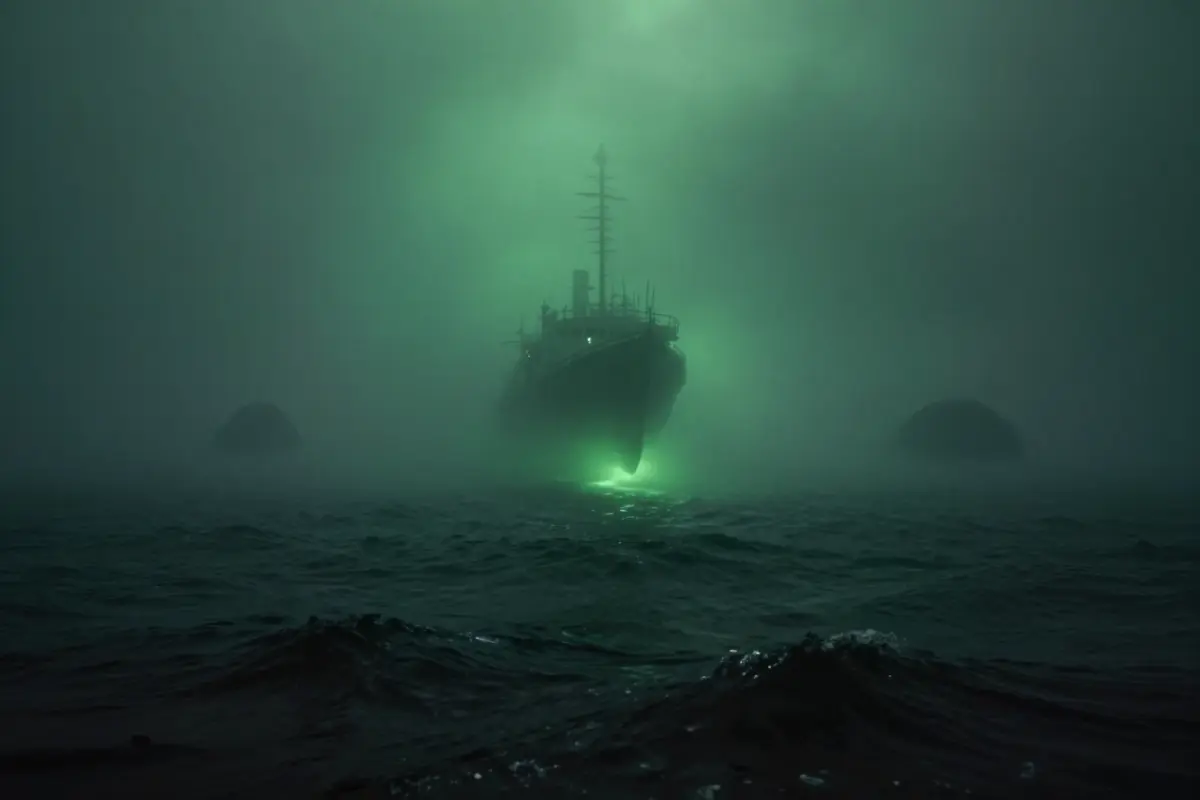
The Bermuda Triangle stretches between Miami, Bermuda, and Puerto Rico - covering 500,000 square miles of ocean!
Between Miami, Bermuda, and Puerto Rico lies a stretch of ocean where ships vanish without a trace, planes disappear from radar, and entire crews are never seen again. This area, known as the Bermuda Triangle, has been blamed for hundreds of mysterious disappearances over the past century.
What makes this 500,000-square-mile region so dangerous? Is it supernatural forces, alien abductions, or something far more ordinary — and far more terrifying?
Overview
A Region of Disappearances
The Bermuda Triangle (also called the Devil's Triangle) covers roughly 500,000 square miles of the Atlantic Ocean. The term was coined in 1964 by writer Vincent Gaddis, but reports of strange occurrences in this area go back centuries.
Christopher Columbus himself reported seeing strange lights and unusual compass behavior while sailing through the region in 1492. But it was the 20th century that brought the most famous — and most chilling — disappearances.

The USS Cyclops vanished in 1918 with 309 crew members - no wreckage was ever found!
📊 The Numbers
While exact counts vary, researchers have documented at least 50 ships and 20 aircraft that have disappeared in the Triangle under unusual circumstances. The area is also one of the most heavily traveled shipping lanes in the world!
Evidence
A useful way to read this evidence is by confidence level. High-confidence points are independently confirmed by multiple sources; medium-confidence points are plausible but debated; low-confidence points stay provisional until stronger data appears.
Research on the Bermuda Triangle is strongest when maritime records, Coast Guard data, and scientific oceanographic studies converge. This approach helps separate genuinely unexplained vanishings from routine maritime accidents.
The Most Famous Cases
Several disappearances stand out for their baffling circumstances:
- 🚢 USS Cyclops (1918): A 542-foot Navy cargo ship with 309 crew members vanished without sending a distress signal. No wreckage has ever been found.
- ✈️ Flight 19 (1945): Five Navy torpedo bombers disappeared during a training flight. The last radio message: "We can't find west. Everything is wrong."
- 🛩️ Star Tiger (1948): A British passenger plane vanished with 31 people aboard while approaching Bermuda. The pilot's last message reported normal conditions.
- 🚢 SS Marine Sulphur Queen (1963): A tanker carrying molten sulfur disappeared with 39 crew. Only a few life jackets and small pieces of debris were found.
Competing Explanations
Competing explanations usually persist because each one fits part of the evidence while missing another part. Researchers test these models against chronology, physical constraints, and independent documentation to identify which interpretation requires the fewest assumptions.
Science vs. Supernatural

Flight 19 - five Navy torpedo bombers vanished during a routine training flight in December 1945!
Scientists have proposed several natural explanations for the Triangle's reputation:
Methane hydrate eruptions: Massive bubbles of methane gas rising from the ocean floor could reduce water density, causing ships to sink rapidly. Rogue waves: The area is prone to sudden, enormous waves that can reach 100 feet tall. Gulf Stream weather: The powerful warm current creates unpredictable storms and waterspouts.
On the more speculative side, some theorists suggest magnetic anomalies that interfere with compasses (the Triangle is one of the few places where true north and magnetic north align), or even underwater alien bases. The U.S. Coast Guard, however, does not recognize the Bermuda Triangle as a hazard zone.
🌊 Methane Bubble Theory
Scientists have demonstrated in labs that methane bubbles rising from the seafloor can sink scale-model ships. If enough methane erupts at once, it could theoretically sink a full-size vessel in seconds!
Open Questions
Open questions remain because source quality is uneven across time: some records are direct and detailed, while others are fragmentary or second-hand. Future archival discoveries, improved imaging, and more precise dating methods may refine conclusions without overturning well-supported core findings.
Is It Really More Dangerous?
Statistically, the Bermuda Triangle does not have significantly more disappearances than any other comparably busy region of ocean. The U.S. Coast Guard and major insurance companies do not charge higher rates for vessels passing through the area.
But some cases genuinely defy easy explanation. The USS Cyclops was a large, well-maintained Navy ship that simply ceased to exist. Flight 19's disappearance involved experienced pilots in good weather. These cases keep the mystery alive.
Whether explained by science or not, the Bermuda Triangle remains one of the most compelling mysteries of the modern world!
📖 Recommended Reading
Want to learn more? Check out Into the Bermuda Triangle: Pursuing the Truth Behind the World's Greatest Mystery on Amazon for a deeper dive into this fascinating topic. (As an Amazon Associate, we earn from qualifying purchases.)
References & Further Reading
- Britannica overview of the Bermuda Triangle
- History.com feature on Bermuda Triangle mysteries
- NOAA Ocean Service official fact page
- National Geographic science-based investigation
- Google Scholar literature search
Editorial note: reconstructions are continuously revised as imaging and inscription studies improve. See our Editorial Policy.