The Baghdad Battery
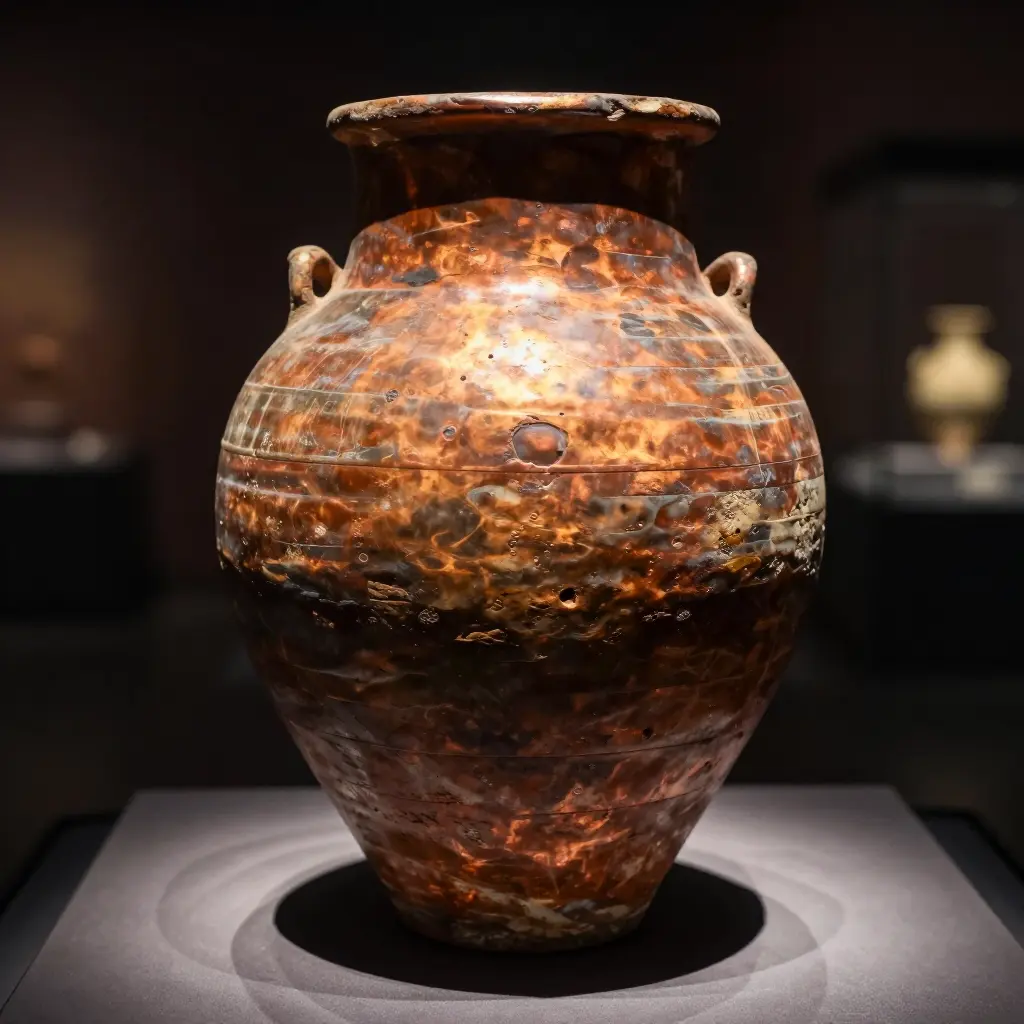
The Baghdad Battery - a 2,000-year-old jar that might have produced electricity!
Imagine finding an ancient battery from the time of the Roman Empire! In 1938, archaeologists discovered exactly that in modern-day Iraq - a clay jar that some believe could generate electricity over 1,500 years before Alessandro Volta invented the modern battery!
But here's the mystery: if ancient civilizations had electricity, why did this technology disappear for so many centuries? And what exactly did they use these batteries for?
Overview
The Strange Discovery
In 1938, German archaeologist Wilhelm König was working at the National Museum of Iraq in Baghdad when he made a puzzling discovery. Among the ancient artifacts was a small clay jar, about 5 inches tall, containing something very unusual inside.
Inside the jar was a copper cylinder, and inside that was an iron rod. The iron rod had been corroded by something acidic - maybe vinegar or wine. To König, this setup looked suspiciously like the components of an electric battery!
🔋 How It Works
Fill the jar with an acidic liquid like vinegar, and the copper and iron create a small electric current - just like a lemon battery you might make in science class!
How Old Is It?

Archaeologists examining artifacts from ancient Mesopotamia, the cradle of civilization.
The jar was found near artifacts from the Parthian period, which ruled the region from about 250 BCE to 250 CE. That makes this mysterious object roughly 2,000 years old!
But some scientists argue it might be even older. The style of the clay suggests it could date back to the Persian Empire, around 500 BCE. If true, that would make it over 2,500 years old!
⏳ Before Its Time
If this really is a battery, it predates the officially recognized invention of the battery by over 1,500 years!
Evidence
Historical work on The Baghdad Battery is strongest when primary records, material traces, and later peer-reviewed analysis point in the same direction. This layered approach helps separate observations from retellings and reduces the risk of repeating popular but unsupported claims.
What Were They Used For?
If ancient people had batteries, what did they do with them? Scientists have proposed several fascinating theories:
- Electroplating: Using electricity to coat objects with a thin layer of gold or silver. Ancient jewelry might have been made this way!
- Medical treatment: Some ancient cultures used electric fish to treat pain. Could batteries have been used similarly?
- Religious rituals: Priests might have used hidden batteries to create mysterious "magical" effects in temples.
⚡ The Shocking Touch
Imagine an ancient priest touching a statue and giving a worshipper a tiny shock - it would seem like divine power!
The Skeptics' View
Not everyone believes the Baghdad Battery was actually a battery. Skeptics point out that:
- No wires or electrical devices were found with the jars
- It could have simply been a scroll storage container
- The acidic corrosion might be accidental, not intentional
However, no scrolls have ever been found in similar jars, and the design does seem perfectly suited for generating electricity.
Competing Explanations
Competing explanations usually persist because each one fits part of the evidence while missing another part. Researchers test these models against chronology, physical constraints, and independent documentation to identify which interpretation requires the fewest assumptions.
Testing the Theory
Several scientists have built replicas of the Baghdad Battery to test if it actually works. The results? These replicas do produce a small electrical current - about 0.5 to 1 volt!

Modern reconstructions prove the jar can indeed produce electricity!
That's not enough power to light a lightbulb, but it's enough to give you a tiny shock. More importantly, it's enough electricity for some practical uses.
Open Questions
Open questions remain because source quality is uneven across time: some records are direct and detailed, while others are fragmentary or second-hand. Future archival discoveries, improved imaging, and more precise dating methods may refine conclusions without overturning well-supported core findings.
The Mystery Continues
Unfortunately, the original Baghdad Battery was lost during looting at the Iraq Museum in 2003. Scientists can only study replicas and photographs now.
Whether it was really an ancient battery or just a simple storage jar, the Baghdad Battery reminds us that ancient civilizations may have been far more advanced than we give them credit for!
References & Further Reading
Editorial note: We cross-check claims across multiple independent sources. See our Editorial Policy.